
Sebastião Salgado. Children
en Limba Engleză Hardback – iul 2016
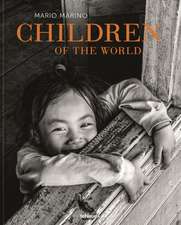
Deși publicul larg percepe adesea crizele umanitare prin prisma statisticilor reci sau a imaginilor de grup dezolante, viziunea lui Sebastião Salgado forțează o intimitate tulburătoare. În Sebastião Salgado. Children, observăm cum fotograful refuză spectacolul mizeriei în favoarea demnității individuale. Ne-a atras atenția modul în care artistul reușește să surprindă momentul exact în care un copil încetează să se mai joace pentru a privi fix spre aparat, asumându-și o maturitate impusă prematur de circumstanțe. Apreciem textura senzorială a acestui volum publicat de TASCHEN GmbH; fiecare pagină redă cu o claritate aproape tactilă contrastul dintre fragilitatea palmelor mici și asprimea hainelor uzate. Această atenție pentru detaliul uman se regăsește și în alte lucrări fundamentale ale sale, precum Sebastião Salgado. Africa sau Sebastião Salgado. Genesis. 45th Ed.. Dacă în 'Genesis' autorul semna o scrisoare de dragoste către planetă, aici el documentează costul uman al eșecurilor politice, menținând însă aceeași estetică impecabilă a albului și negrului. Colecționarii care au apreciat Sutkus, A: Children vor găsi aici aceeași calitate de reproducere și o fascinație similară pentru universul copilăriei, însă Sebastião Salgado adaugă o dimensiune politică și documentară mult mai acută. Spre deosebire de Marino, M: Children of the world, care explorează diversitatea culturală globală, Salgado se concentrează pe o singură stare de fapt: incertitudinea viitorului pentru cei 90 de copii portretizați. Ritmul lecturii vizuale este unul meditativ, impunând pauze lungi între cadre pentru a procesa întrebările mute care se descifrează în ochii subiecților din Angola până în Irak.
Preț: 317.38 lei
Carte disponibilă
Livrare economică 17 noiembrie-01 decembrie
Livrare express 31 octombrie-06 noiembrie pentru 91.34 lei
Specificații
ISBN-10: 3836561360
Pagini: 124
Dimensiuni: 260 x 338 x 25 mm
Greutate: 1.55 kg
Editura: TASCHEN GmbH
V-ar putea interesa
-
 Where Angels Fear to TreadSally BeckerPreț: 147.25 lei
 -
 Sebastião Salgado (Photofile)Sebastião Salgado-18%Preț: 87.62 lei107.34 lei
 -
 SahelSebastiao Salgado-14%Preț: 399.90 lei465.00 lei
 -
 Child ISteve TasanePreț: 56.59 lei
 -
 Refugees and MigrantsCeri RobertsPreț: 46.22 lei
 -
 Children in Our World: Refugees and MigrantsCeri Roberts-36%Preț: 47.15 lei73.87 lei
 -
 What Strange ParadiseOmar El Akkad-35%Preț: 40.05 lei61.68 lei
 -
 Sebastião Salgado. Genesis. 45th Ed.Lélia Wanick SalgadoPreț: 208.79 lei
 -
 Sebastião Salgado. AmazôniaLélia Wanick SalgadoPreț: 208.79 lei
 -
 Sebastião Salgado. AfricaMia Couto-18%Preț: 743.61 lei906.84 lei
 -
 GenesisLélia Wanick Salgado-8%Preț: 599.54 lei651.68 lei
 -
 Sebastião Salgado. ExodusSebastiao Salgado-8%Preț: 660.51 lei717.94 lei
 -
 Sebastião SalgadoLélia Wanick SalgadoPreț: 130.62 lei
 -
 Sebastião Salgado. Workers. An Archaeology of the Industrial AgeLélia Wanick Salgado-8%Preț: 589.00 lei640.21 lei
 -
 24022022Frank GaudlitzPreț: 279.28 lei
 -
 Marino, M: Children of the worldMario MarinoPreț: 399.53 lei
 -
 The Family of MigrantsJoumana El Zein Khoury-16%Preț: 404.71 lei479.25 lei
De ce să citești această carte
Recomandăm acest album oricărui pasionat de fotografie documentară care dorește să înțeleagă dincolo de titlurile de știri. Cititorul câștigă o perspectivă umanistă profundă, mediată de ochiul unuia dintre cei mai mari fotografi ai lumii. Este o achiziție esențială pentru cei care colecționează albume TASCHEN GmbH și caută o lucrare care îmbină rigoarea jurnalistică cu arta vizuală de cel mai înalt nivel.
Descriere scurtă
Descriere
In every crisis situation, children are the greatest victims. Physically weak, they are often the first to succumb to hunger, disease, and dehydration. Innocent to the workings and failings of the world, they are unable to understand why there is danger, why there are people who want to hurt them, or why they must leave, perhaps quite suddenly, and abandon their schools, their friends, and their home.
In this companion series to Exodus, Sebastião Salgado presents 90 portraits of the youngest exiles, migrants, and refugees. His subjects are from different countries, victims to different crises, but they are all on the move, and all under the age of 15. Through his extensive refugee project, what struck Salgado about these boys and girls was not only the implicit innocence in their suffering but also their radiant reserves of energy and enthusiasm, even in the most miserable of circumstances. From roadside refuges in Angola and Burundi to city slums in Brazil and sprawling camps in Lebanon and Iraq, the children remained children: they were quick to laugh as much as to cry, they played soccer, splashed in dirty water, got up to mischief with friends, and were typically ecstatic at the prospect of being photographed.
For Salgado, the exuberance presented a curious paradox. How can a smiling child represent circumstances of deprivation and despair? What he noticed, though, was that when he asked the children to line up, and took their portraits one by one, the group giddiness would fade. Face to face with his camera, each child would become much more serious. They would look at him not as part of a noisy crowd, but as an individual. Their poses would become earnest. They looked into the lens with a sudden intensity, as if abruptly taking stock of themselves and their situation. And in the expression of their eyes, or the nervous fidget of small hands, or the way frayed clothes hung off painfully thin frames, Salgado found he had a refugee portfolio that deserved a forum of its own.
The photographs do not try to make a statement about their subjects’ feelings, or to spell out the particulars of their health, educational, and housing deficits. Rather, the collection allows 90 children to look out at the viewer with all the candor of youth and all the uncertainty of their future. Beautiful, proud, pensive, and sad, they stand before the camera for a moment in their lives, but ask questions that haunt for years to come. Will they remain in exile? Will they always know an enemy? Will they grow up to forgive or seek revenge? Will they grow up at all?