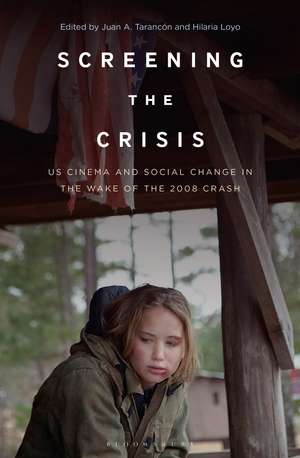
Screening the Crisis: US Cinema and Social Change in the Wake of the 2008 Crash
Editat de Dr. Hilaria Loyo, Professor Juan A. Tarancónen Limba Engleză Paperback – 22 feb 2024
Preț: 209.19 lei
Preț vechi: 279.91 lei
-25%
Puncte Express: 314
Carte tipărită la comandă
Livrare economică 20 noiembrie-04 decembrie
Livrare prin curier în România Termenul estimat este afișat lângă disponibilitate.
Transport gratuit de la 400.00 lei Plată online sau ramburs, în funcție de opțiunile comenzii.
Retur gratuit în 14 zile Comandă securizată și suport în română.
Specificații
ISBN-13: 9781501388163
ISBN-10: 1501388169
Pagini: 344
Ilustrații: 13 bw illus
Dimensiuni: 152 x 229 x 25 mm
Greutate: 0.45 kg
Editura: Bloomsbury Publishing
Colecția Bloomsbury Academic
Locul publicării:New York, United States
ISBN-10: 1501388169
Pagini: 344
Ilustrații: 13 bw illus
Dimensiuni: 152 x 229 x 25 mm
Greutate: 0.45 kg
Editura: Bloomsbury Publishing
Colecția Bloomsbury Academic
Locul publicării:New York, United States
V-ar putea interesa
-
 Head West! Issue TwoBen BridgesPreț: 76.78 lei
 -
 Halloween Machine - Fall 2018Paul CounelisPreț: 61.53 lei
 -
 Preț: 102.39 lei
 -
 Preț: 65.96 lei
 -
 Preț: 63.18 lei
 -
 Preț: 86.28 lei
 -
 MR FabulousSteven CapozzolaPreț: 33.94 lei
 -
 The Methuen Book of Shakespeare AnecdotesRalph BerryPreț: 264.19 lei
 -
 Scenic Automation HandbookGareth Conner-8%Preț: 506.84 lei550.90 lei
 -
 Gillian ArmstrongJulia Erhart-10%Preț: 115.74 lei128.37 lei
 -
 The Manson Family on Film and TelevisionIan CooperPreț: 295.25 lei
 -
 Selling the Movie: The Art of the Film PosterIan Haydn SmithPreț: 328.13 lei
 -
 The Weirdest Movie Ever MadePhil HallPreț: 136.73 lei
 -
 The Merv Griffin ShowSteve RandisiPreț: 284.99 lei
 -
 Preț: 230.54 lei
 -
 The Dead StageDan WeathererPreț: 151.75 lei
 -
 A Promise for DemocracyJohn LoriaPreț: 132.41 lei
 -
 Preț: 67.78 lei
 -
 Preț: 71.21 lei
 -
 Preț: 105.24 lei
 -
 -18%Preț: 790.03 lei963.45 lei
 -
 Preț: 61.21 lei
Cuprins
List of Figures
Acknowledgements
Notes on Contributors
Foreword: Crisis and Critique
Timothy Corrigan (University of Pennsylvania, USA)
Introduction: Cinema and the Age of Crisis
Juan A. Tarancón (University of Zaragoza, Spain) and Hilaria Loyo (University of Zaragoza, Spain)
I. US Cinema in the Age of Crisis
1. It's Always Been Crisis: Hollywood History
Toby Miller (University of California, Riverside, USA) and Bill Grantham (Loughborough University, UK)
2. Independent Films in an Age of Crisis: Illuminating the Lives of Outsiders in Neoliberal America
Cynthia Baron (Bowling Green State University, USA)
II. Labor Crisis and the Neoliberal Subject
3. Limitless?: Neoliberal Femininity in the Post-recessionary Chick Flick
Beatriz Oria (University of Zaragoza, Spain)
4. Screening Recessions through a Gendered Lens: Nostalgic and Critical Revisions of the Past from the Post-2008 Crisis Perspective
Elena Oliete-Aldea (University of Zaragoza, Spain)
5. Screening Neoliberlism in Nightcrawler and The Wolf of Wall Street
Stephen Felder (Irvine Valley College, USA)
III. Technology and the State of Surveillance
6. The Shock Doctrines of The Social Network: Zuckerberg, Trump, and Surveillance Capitalism in Big-tech Cinema
Ian Scott (Manchester University, UK)
7. "I Figured You were Probably Watching Us": Performing Gender and Citizen Surveillance in Ex-Machina
Kayla Meyers (Independent Scholar, USA)
IV. The Housing Crisis and the Home Question
8. Stand Your Ground: Neoliberal Horrors, The Purge Franchise, and the Allegorical Moment of US Trauma
Tony Grajeda (University of Central Florida, USA)
9. Horror, Race, and the Economics of Interiority: Homeowners in the Blumhouse Universe
Leah Pérez (University of Southern California, USA) and William J. Simmons (University of Southern California, USA)
10. Resignifying the National Home: Gendered Domopolitics and Neoliberal Geographies of Exclusion in Debra Granik's Cinema
Hilaria Loyo (University of Zaragoza, Spain)
V. Politics, Affect, and the Crisis of Public Values
11. S. Craig Zahler and White Identity Auteurism in the Age of Trump
Carlos Gallego (St. Olaf College, USA)
12. A Crisis of Confidence: Fracture and Malaise in the US Polity in Dragged Across Concrete
Fabián Orán Llarena (University of La Laguna, Spain)
13. "I Guess It Comes from Being Poor": Inequality, Affect, and Point of View in The Florida Project
Juan A. Tarancón (University of Zaragoza, Spain)
VI. Ecological Crisis and Visions of the Future
14. Who the Earth Is for: Reframing Rural Landscapes as Collective Polities in Leave No Trace and Beasts of the Southern Wild
Tim Lindemann (Queen Mary University of London, UK)
15. Turning Over a New Leaf: Exploring Human-Tree Relationships in Film
Virginia Luzón Aguado (University of Zaragoza, Spain)
VII. Crisis and Violence in the Borderlands
16. "No One to Call Around Here. These Boys Is on Their Own": The Postindustrial Frontier in Hell or High Water and the Western as a Landscape of the Crisis
Luis Freijo (University of Birmingham, UK)
17. Bad Hombres at the Border: Masculinity and Mexico in Rambo: Last Blood
Gregory Frame (Bangor University, UK)
18. We're No Longer Here: Ya no estoy aquí as an Example of Neoliberalism and Economic Crisis in the US-Mexico Borderlands
Roberto Avant-Mier (The University of Texas at El Paso, USA)
Bibliography
Index
Acknowledgements
Notes on Contributors
Foreword: Crisis and Critique
Timothy Corrigan (University of Pennsylvania, USA)
Introduction: Cinema and the Age of Crisis
Juan A. Tarancón (University of Zaragoza, Spain) and Hilaria Loyo (University of Zaragoza, Spain)
I. US Cinema in the Age of Crisis
1. It's Always Been Crisis: Hollywood History
Toby Miller (University of California, Riverside, USA) and Bill Grantham (Loughborough University, UK)
2. Independent Films in an Age of Crisis: Illuminating the Lives of Outsiders in Neoliberal America
Cynthia Baron (Bowling Green State University, USA)
II. Labor Crisis and the Neoliberal Subject
3. Limitless?: Neoliberal Femininity in the Post-recessionary Chick Flick
Beatriz Oria (University of Zaragoza, Spain)
4. Screening Recessions through a Gendered Lens: Nostalgic and Critical Revisions of the Past from the Post-2008 Crisis Perspective
Elena Oliete-Aldea (University of Zaragoza, Spain)
5. Screening Neoliberlism in Nightcrawler and The Wolf of Wall Street
Stephen Felder (Irvine Valley College, USA)
III. Technology and the State of Surveillance
6. The Shock Doctrines of The Social Network: Zuckerberg, Trump, and Surveillance Capitalism in Big-tech Cinema
Ian Scott (Manchester University, UK)
7. "I Figured You were Probably Watching Us": Performing Gender and Citizen Surveillance in Ex-Machina
Kayla Meyers (Independent Scholar, USA)
IV. The Housing Crisis and the Home Question
8. Stand Your Ground: Neoliberal Horrors, The Purge Franchise, and the Allegorical Moment of US Trauma
Tony Grajeda (University of Central Florida, USA)
9. Horror, Race, and the Economics of Interiority: Homeowners in the Blumhouse Universe
Leah Pérez (University of Southern California, USA) and William J. Simmons (University of Southern California, USA)
10. Resignifying the National Home: Gendered Domopolitics and Neoliberal Geographies of Exclusion in Debra Granik's Cinema
Hilaria Loyo (University of Zaragoza, Spain)
V. Politics, Affect, and the Crisis of Public Values
11. S. Craig Zahler and White Identity Auteurism in the Age of Trump
Carlos Gallego (St. Olaf College, USA)
12. A Crisis of Confidence: Fracture and Malaise in the US Polity in Dragged Across Concrete
Fabián Orán Llarena (University of La Laguna, Spain)
13. "I Guess It Comes from Being Poor": Inequality, Affect, and Point of View in The Florida Project
Juan A. Tarancón (University of Zaragoza, Spain)
VI. Ecological Crisis and Visions of the Future
14. Who the Earth Is for: Reframing Rural Landscapes as Collective Polities in Leave No Trace and Beasts of the Southern Wild
Tim Lindemann (Queen Mary University of London, UK)
15. Turning Over a New Leaf: Exploring Human-Tree Relationships in Film
Virginia Luzón Aguado (University of Zaragoza, Spain)
VII. Crisis and Violence in the Borderlands
16. "No One to Call Around Here. These Boys Is on Their Own": The Postindustrial Frontier in Hell or High Water and the Western as a Landscape of the Crisis
Luis Freijo (University of Birmingham, UK)
17. Bad Hombres at the Border: Masculinity and Mexico in Rambo: Last Blood
Gregory Frame (Bangor University, UK)
18. We're No Longer Here: Ya no estoy aquí as an Example of Neoliberalism and Economic Crisis in the US-Mexico Borderlands
Roberto Avant-Mier (The University of Texas at El Paso, USA)
Bibliography
Index
Recenzii
Examining the dynamic interplay between screen cultures and various crises underpinning American society - poverty, homelessness, racism, ecological disaster, terrorism, war, and more - this book suggests ways in which mainstream and independent cinema alike have been exploring multiple intersecting dark undersides of contemporary American society. Contributors adopt a cultural studies approach to consider a wide variety of 21st-century films as archives of precarity, barometers of the affective experience of crisis, and, potentially, harbingers of change.
Screening the Crisis' editors have assembled a volume that significantly updates the literature on cinema, crisis and austerity. Comprised of richly textured genre, industry and social histories, the book will be of use to both students and scholars alike.
Screening the Crisis is an excellent, and very timely, new volume of scholarly essays that examines the impact of the post-2008 financial crisis as it has played out in American cinema. Engaging with some of the most important films of the 21st century, the collection provides impressive accounts of the multilayered ways in which the crisis took hold of, and shaped, American society.
Screening the Crisis' editors have assembled a volume that significantly updates the literature on cinema, crisis and austerity. Comprised of richly textured genre, industry and social histories, the book will be of use to both students and scholars alike.
Screening the Crisis is an excellent, and very timely, new volume of scholarly essays that examines the impact of the post-2008 financial crisis as it has played out in American cinema. Engaging with some of the most important films of the 21st century, the collection provides impressive accounts of the multilayered ways in which the crisis took hold of, and shaped, American society.