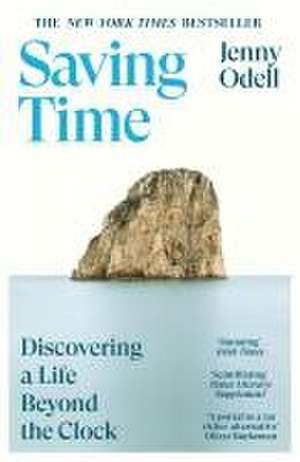
Saving Time
Autor Jenny Odellen Limba Engleză Paperback – 4 ian 2024
În Saving Time, Jenny Odell extinde investigația începută în lucrarea sa anterioară, How to Do Nothing, mutând accentul de la rezistența în fața economiei atenției la o deconstrucție radicală a modului în care măsurăm și trăim timpul. Remarcăm modul în care autoarea identifică originea anxietății noastre contemporane în „timpul standardizat”, un instrument creat pentru eficiență industrială și profit, care a transformat până și momentele de răgaz în unități ce trebuie procesate. Suntem de părere că forța acestui volum rezidă în capitolul dedicat ritmurilor ecologice și geologice, unde Odell ne îndeamnă să privim dincolo de cadranul ceasului către ciclurile migrației păsărilor sau eroziunea stâncilor. Această perspectivă oferă o alternativă la Time, Consumption and the Coordination of Everyday Life de Dale Southerton pentru cursurile de sociologia muncii, cu avantajul unei abordări interdisciplinare ce îmbină observația naturalistă cu critica socială. Spre deosebire de How to Do Nothing, care se concentra pe deconectare, Saving Time recunoaște că mulți oameni nu își permit luxul de a nu face nimic, analizând modul în care inechitățile sociale dictează accesul la timp. Stilul este analitic, dar plin de speranță, propunând o „administrare” a ritmurilor vieții în locul unei simple gestionări a programului.
Preț: 66.53 lei
Preț vechi: 94.31 lei
-29%
Carte disponibilă
Livrare economică 12-18 noiembrie
Livrare express 24-30 octombrie pentru 52.75 lei
Specificații
ISBN-10: 1529924618
Pagini: 400
Dimensiuni: 126 x 196 x 33 mm
Greutate: 0.32 kg
Editura: Random House
Colecția Vintage
De ce să citești această carte
Această carte este esențială pentru oricine simte presiunea constantă a eficienței și dorește să înțeleagă rădăcinile sociologice ale acestei stări. Cititorul câștigă o nouă „alfabetizare temporală”, învățând să recunoască ritmurile naturale și sociale care nu pot fi cuantificate în bani. Este o recomandare excelentă pentru cei interesați de sociologie, ecologie și de modul în care structurile economice ne modelează viața privată.
Despre autor
Jenny Odell este o scriitoare și artistă americană a cărei activitate explorează intersecția dintre tehnologie, natură și percepția umană. A devenit cunoscută la nivel internațional odată cu volumul How to Do Nothing (tradus în germană ca Nichts tun), o lucrare care a redefinit rezistența în era digitală. În Saving Time, ea își continuă misiunea de a chestiona sistemele dominante de gândire, folosindu-și experiența de observator atent al mediului înconjurător pentru a propune modele de existență mai umane și mai sustenabile.
Descriere scurtă
“Saving Time’s real triumph lies in her road map for experiencing time outside the capitalist clock. . . . Expect to feel changed by this radical way of seeing.”—Esquire
In her first book, How to Do Nothing, Jenny Odell wrote about the importance of disconnecting from the “attention economy” to spend time in quiet contemplation. But what if you don’t have time to spend?
In order to answer this seemingly simple question, Odell took a deep dive into the fundamental structure of our society and found that the clock we live by was built for profit, not people. This is why our lives, even in leisure, have come to seem like a series of moments to be bought, sold, and processed ever more efficiently. Odell shows us how our painful relationship to time is inextricably connected not only to persisting social inequities but to the climate crisis, existential dread, and a lethal fatalism.
This dazzling, subversive, and deeply hopeful book offers us different ways to experience time—inspired by pre-industrial cultures, ecological cues, and geological timescales—that can bring within reach a more humane, responsive way of living. As planet-bound animals, we live inside shortening and lengthening days alongside gardens growing, birds migrating, and cliffs eroding; the stretchy quality of waiting and desire; the way the present may suddenly feel marbled with childhood memory; the slow but sure procession of a pregnancy; the time it takes to heal from injuries. Odell urges us to become stewards of these different rhythms of life in which time is not reducible to standardized units and instead forms the very medium of possibility.
Saving Time tugs at the seams of reality as we know it—the way we experience time itself—and rearranges it, imagining a world not centered on work, the office clock, or the profit motive. If we can “save” time by imagining a life, identity, and source of meaning outside these things, time might also save us.