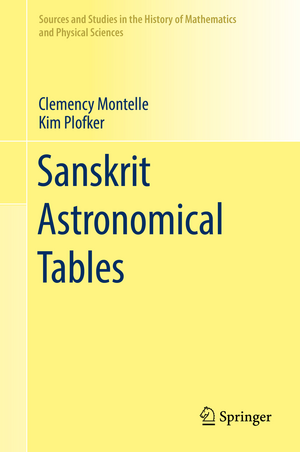
Sanskrit Astronomical Tables: Sources and Studies in the History of Mathematics and Physical Sciences
Autor Clemency Montelle, Kim Plofkeren Limba Engleză Hardback – 19 mar 2019
Remarcăm în Sanskrit Astronomical Tables o rigoare metodologică rară în abordarea componentelor practice ale astronomiei pre-moderne. Autorii propun o analiză detaliată a metodelor de construcție și utilizare a tabelelor, oferind cititorului instrumentele necesare pentru a descifra modul în care astronomii indieni procesau datele observaționale. Subliniem importanța celor trei anexe, care transformă volumul dintr-o simplă expunere istorică într-un instrument de lucru activ: un inventar exhaustiv al genului, o referință pentru sistemele calendaristice și notaționale, plus un glosar tehnic de termeni sanskriți. Structura volumului este una progresivă, pornind de la fundamentele astronomiei matematice indiene, trecând prin taxonomia manuscriselor și culminând cu evoluția istorică a genului și impactul său asupra disciplinei Sanskrit jyotiṣa. Clemency Montelle și Kim Plofker continuă aici cercetările începute în lucrări precum From Samarqand to Jaipur sau Bhāskara-prabhā, rafinând analiza transmiterii metodelor matematice în tradiția sanskrită. Spre deosebire de A Cultural History of Mathematics in the Medieval Age, care oferă o perspectivă culturală largă, acest volum se concentrează strict pe aspectul tehnic și computațional al tabelelor. Apreciem că această lucrare acoperă aceeași arie tematică precum The Sanskrit Astronomical Table Text Brahmatulyasāraṇī de Anuj Misra, dar cu o abordare mult mai sistematică și generalistă. În timp ce volumul lui Misra este o ediție critică a unui text specific din secolul al XVII-lea, Sanskrit Astronomical Tables oferă un cadru de referință global pentru întregul corpus de manuscrise științifice sanskrite, fiind indispensabilă pentru înțelegerea evoluției științelor astrale în Asia de Sud.
Din seria Sources and Studies in the History of Mathematics and Physical Sciences
- 18%
 Preț: 1173.37 lei
 - 18%
 Preț: 941.25 lei
 - 18%
 Preț: 950.58 lei
 - 18%
 Preț: 1158.29 lei
 - 18%
 Preț: 1127.07 lei
 - 18%
 Preț: 1466.96 lei
 - 15%
 Preț: 666.18 lei
 - 15%
 Preț: 627.14 lei
 - 18%
 Preț: 936.15 lei
 - 15%
 Preț: 614.19 lei
 - 18%
 Preț: 1158.41 lei
 - 15%
 Preț: 719.82 lei
 -
 Preț: 387.02 lei
 - 18%
 Preț: 858.62 lei
 -
 Preț: 393.24 lei
 - 15%
 Preț: 667.40 lei
 - 15%
 Preț: 583.04 lei
 - 18%
 Preț: 896.92 lei
 - 15%
 Preț: 644.82 lei
 - 24%
 Preț: 3934.57 lei
 - 18%
 Preț: 919.16 lei
 - 15%
 Preț: 690.23 lei
 - 24%
 Preț: 1423.81 lei
 - 15%
 Preț: 675.58 lei
 - 15%
 Preț: 641.76 lei
 - 18%
 Preț: 1293.77 lei
 - 15%
 Preț: 615.59 lei
 - 18%
 Preț: 1118.70 lei
 - 18%
 Preț: 1001.10 lei
 - 18%
 Preț: 919.32 lei
 - 15%
 Preț: 644.73 lei
 -
 Preț: 404.83 lei
 - 15%
 Preț: 584.13 lei
 - 18%
 Preț: 765.46 lei
 -
 Preț: 390.50 lei
 - 15%
 Preț: 662.83 lei
 - 18%
 Preț: 2189.31 lei
Preț: 816.69 lei
Preț vechi: 995.97 lei
-18%
Carte tipărită la comandă
Livrare economică 08-22 decembrie
Specificații
ISBN-10: 3319970364
Pagini: 320
Ilustrații: X, 308 p. 140 illus., 55 illus. in color.
Dimensiuni: 160 x 241 x 23 mm
Greutate: 0.6 kg
Ediția:1st edition 2018
Editura: Springer
Colecția Sources and Studies in the History of Mathematics and Physical Sciences
Seria Sources and Studies in the History of Mathematics and Physical Sciences
Locul publicării:Cham, Switzerland
V-ar putea interesa
-
 The Unreal Life of Oscar ZariskiCarol ParikhPreț: 401.27 lei
 -
 The Map of My LifeGoro Shimura-18%Preț: 754.91 lei920.62 lei
 -
 -21%Preț: 223.32 lei284.40 lei
 -
 -23%Preț: 909.30 lei1180.91 lei
 -
 Mathematics in IndiaKim Plofker-23%Preț: 523.60 lei680.00 lei
 -
 Episodes in the Mathematics of Medieval IslamJ. L. Berggren-15%Preț: 585.56 lei688.89 lei
 -
 Œuvres Complètes—Collected WorksWolfgang Doeblin-15%Preț: 590.98 lei695.27 lei
 -
 -18%Preț: 808.14 lei985.54 lei
 -
 Alfonso's Rectifying the CurvedRuth Glasner-15%Preț: 728.17 lei856.68 lei
 -
 Giovanni Battista GucciaBenedetto BongiornoPreț: 344.43 lei
 -
 Nine Chapters on Mathematical ModernityAndrea Bréard-15%Preț: 556.19 lei654.33 lei
 -
 Th¿bit ibn Qurra's Restoration of Euclid's DataNathan Sidoli-18%Preț: 763.38 lei930.96 lei
 -
 A History of Abstract AlgebraJeremy GrayPreț: 314.44 lei
 -
 Preț: 257.68 lei
 -
 Yesterday and Long AgoVladimir I. ArnoldPreț: 235.23 lei
 -
 Preț: 460.54 lei
 -
 Preț: 110.51 lei
 -
 Preț: 297.60 lei
 -
 Preț: 396.96 lei
De ce să citești această carte
Această primă ediție publicată de Springer este esențială pentru cercetătorii istoriei științei și ai matematicii indiene. Cititorul câștigă o înțelegere profundă a modului în care erau structurate datele astronomice înainte de era modernă. Este un ghid accesibil care transformă manuscrisele complexe în resurse inteligibile, oferind un aparat critic complet pentru studiul textelor jyotiṣa.
Despre autor
Clemency Montelle și Kim Plofker sunt autorități recunoscute în istoria matematicii, cu o expertiză vastă în tradițiile științifice din Asia de Sud și Orientul Apropiat. Kim Plofker este cunoscută pentru contribuțiile sale fundamentale la înțelegerea matematicii indiene, fiind premiată pentru cercetările sale. Clemency Montelle s-a specializat în analiza textelor matematice și astronomice sanskrite, colaborând la volume precum From Samarqand to Jaipur. Împreună, aceștia aduc o perspectivă interdisciplinară ce îmbină filologia sanskrită cu analiza matematică riguroasă.