Cărți de Rudolf Steiner
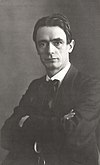
Rudolf Joseph Lorenz Steiner (27 or 25 February 1861 – 30 March 1925) was an Austrian occultist philosopher, social reformer, architect, esotericist, and claimed clairvoyant. Steiner gained initial recognition at the end of the nineteenth century as a literary critic and published philosophical works including The Philosophy of Freedom. At the beginning of the twentieth century he founded an esoteric spiritual movement, anthroposophy, with roots in German idealist philosophy and theosophy; other influences include Goethean science and Rosicrucianism. His ideas are largely pseudoscientific. Others call them parascience. He was also prone to pseudohistory.
In the first, more philosophically oriented phase of this movement, Steiner attempted to find a synthesis between science and spirituality. His philosophical work of these years, which he termed "spiritual science", sought to apply the clarity of thinking characteristic of Western philosophy to spiritual questions,: 291 differentiating this approach from what he considered to be vaguer approaches to mysticism. In a second phase, beginning around 1907, he began working collaboratively in a variety of artistic media, including drama, the movement arts (developing a new artistic form, eurythmy) and architecture, culminating in the building of the Goetheanum, a cultural centre to house all the arts. In the third phase of his work, beginning after World War I, Steiner worked to establish various practical endeavors, including Waldorf education, biodynamic agriculture, and anthroposophical medicine.
Steiner advocated a form of ethical individualism, to which he later brought a more explicitly spiritual approach. He based his epistemology on Johann Wolfgang Goethe's world view, in which "thinking… is no more and no less an organ of perception than the eye or ear. Just as the eye perceives colours and the ear sounds, so thinking perceives ideas." A consistent thread that runs from his earliest philosophical phase through his later spiritual orientation is the goal of demonstrating that there are no essential limits to human knowledge.
Start Now!
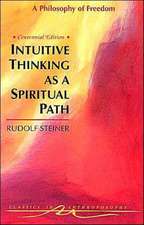
Intuitive Thinking as a Spiritual Path
Calendar of the Soul
An Outline of Esoteric Science
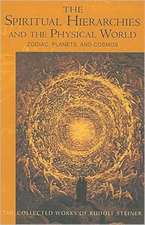
The Spiritual Hierarchies and the Physical World
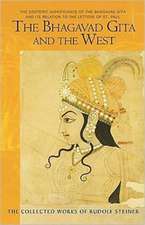
The Bhagavad Gita and the West
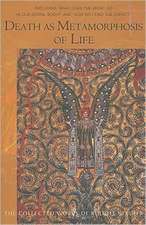
Death as Metamorphosis of Life
Anthroposophy in Everyday Life
The Time Is at Hand!
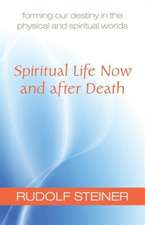
Spiritual Life Now and After Death
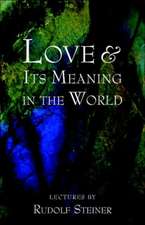
Love and Its Meaning in the World
Consciousness - Life - Form

The Hour of Decision
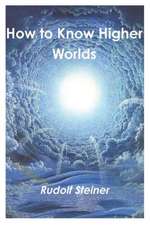
How to Know Higher Worlds
Life Between Death and Rebirth
The Language of the Cosmos
The Gospel of St. Mark
According to Matthew
Human Values in Education
The Karma of Vocation
The Education of the Child
The Secret Stream
The Spiritual Guidance of the Individual and Humanity
The Light Course
Theosophy
The Principle of Spiritual Economy
The Genius of Language
Anthroposophy (a Fragment)
The Kingdom of Childhood
Balance in Teaching
How Can Mankind Find the Christ Again?
The Presence of the Dead on the Spiritual Path
Education as a Force for Social Change
Soul Economy
Rhythms of Learning

Necessity and Freedom
The Effects of Esoteric Development
Freud, Jung, and Spiritual Psychology

The Inner Nature of Music
Esoteric Development
The Tension Between East and West
On Philosophy, History, and Literature
COSMIC MEMORY
From the History and Contents of the First Section of the Esoteric School
What Is Necessary in These Urgent Times
Soul Exercises
Mantric Sayings
Interdisciplinary Astronomy
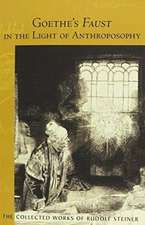
Goethe's Faust in the Light of Anthroposophy
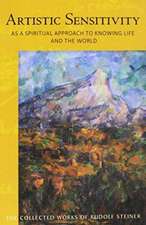
Artistic Sensitivity as a Spiritual Approach to Knowing Life and the World
Art and Theory of Art
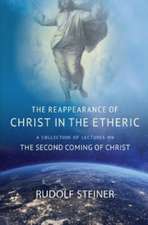
The Reappearance of Christ in the Etheric
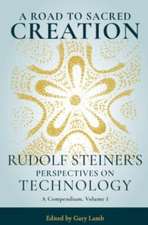
A Road to Sacred Creation
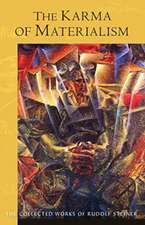
The Karma of Materialism
Christ and the Human Soul
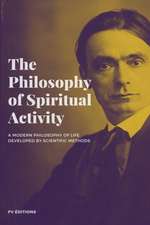
The Philosophy of Spiritual Activity
Art as Spiritual Activity
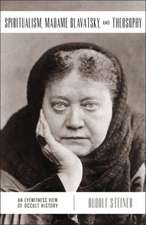
Spiritualism, Madame Blavatsky, and Theosophy
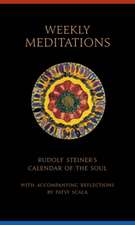
Weekly Meditations
The Origins of Natural Science
What Is Anthroposophy?
Introducing Anthroposophical Medicine
Knowledge of the Higher Worlds and Its Attainment
An Outline of Occult Science
The Mysteries of Christianity
Learning to See Into the Spiritual World
Michaelmas and the Soul-Forces of Man
The Spiritual Foundation of Morality
The Boundaries of Natural Science
Broken Vessels
The Cycle of the Year
Self-Consciousness
The Inner Nature of Music and the Experience of Tone
Mystics After Modernism
Sleep and Dreams
The Healing Process
The Universal Human
The Child's Changing Consciousness
A Modern Art of Education
The Bridge Between Universal Spirituality and the Physical Constitution of Man
Cosmosophy
The Apocalypse of St. John
Education for Adolescents
At Home in the Universe
Cosmic and Human Metamorphosis
The Gospel of St. John
The Redemption of Thinking
Earthly Knowledge and Heavenly Wisdom
Discussions with Teachers
The Essentials of Education
The Renewal of Education
First Steps in Inner Development
Truth-Wrought-Words
- 1
- 2