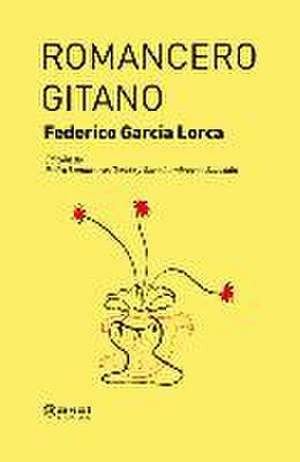
Romancero gitano
Autor Federico García Lorcaes Limba Spaniolă Paperback – mar 2012
-Luis Alberto Ambroggio
Preț: 120.45 lei
Puncte Express: 181
Comandă specială
Livrare economică 05-11 noiembrie
Livrare prin curier în România Termenul estimat este afișat lângă disponibilitate.
Transport gratuit de la 400.00 lei Plată online sau ramburs, în funcție de opțiunile comenzii.
Retur gratuit în 14 zile Comandă securizată și suport în română.
Specificații
ISBN-13: 9788446035350
ISBN-10: 8446035359
Pagini: 256
Dimensiuni: 139 x 216 x 20 mm
Greutate: 0.33 kg
Editura: Ediciones Akal
ISBN-10: 8446035359
Pagini: 256
Dimensiuni: 139 x 216 x 20 mm
Greutate: 0.33 kg
Editura: Ediciones Akal
V-ar putea interesa
-
 Poesía Completa / Complete Poetry BorgesJorge Luis BorgesPreț: 128.56 lei
 -
 Ficciones / FictionsJorge Luis BorgesPreț: 99.64 lei
 -
 Introduction to Spanish PoetryVarious-19%Preț: 43.41 lei53.36 lei
 -
 Bodas de SangreFederico Garcia LorcaPreț: 38.89 lei
 -
 Bodas de Sangre (Spanish Edition)Federico Garcia LorcaPreț: 40.06 lei
 -
 Campos de CastillaAntonio MachadoPreț: 61.36 lei
 -
 La Casa de Bernarda AlbaFederico Garcia LorcaPreț: 39.41 lei
 -
 Preț: 310.07 lei
 -
 El ingenioso hidalgo Don Quijote de la ManchaMiguel de CervantesPreț: 63.38 lei
 -
 Manolito GafotasElvira LindoPreț: 52.21 lei
 -
 GedichtePablo NerudaPreț: 123.22 lei
 -
 Preț: 504.24 lei
 -
 Poeta En Nueva YorkFederico García LorcaPreț: 48.75 lei
 -
 Poema del Cante Jondo / Romancero gitanoFederico Garcia LorcaPreț: 122.51 lei
 -
 Bodas de sangreFederico García LorcaPreț: 112.84 lei
 -
 Cronica de una muerte anunciadaGabriel Garcia MarquezPreț: 118.33 lei
 -
 -24%Preț: 86.69 lei114.22 leiRecomandat