Richland
Autor Elizabeth Gibsonen Limba Engleză Hardback – 5 sep 2002
Preț: 187.05 lei
Puncte Express: 281
Carte disponibilă
Livrare economică 01-15 decembrie
Livrare prin curier în România Termenul estimat este afișat lângă disponibilitate.
Transport gratuit de la 400.00 lei Plată online sau ramburs, în funcție de opțiunile comenzii.
Retur gratuit în 14 zile Comandă securizată și suport în română.
Specificații
ISBN-13: 9781531614102
ISBN-10: 1531614108
Pagini: 130
Dimensiuni: 175 x 250 x 12 mm
Greutate: 0.41 kg
Editura: Arcadia Publishing Library Editions
ISBN-10: 1531614108
Pagini: 130
Dimensiuni: 175 x 250 x 12 mm
Greutate: 0.41 kg
Editura: Arcadia Publishing Library Editions
Descriere
Descriere de la o altă ediție sau format:
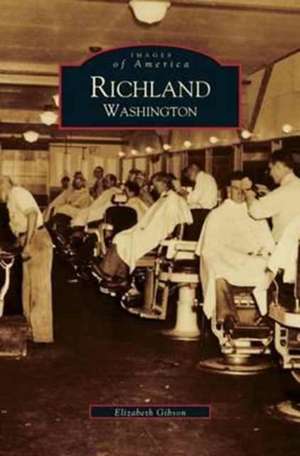
The Columbia Basin was dusted only with sagebrush and bunchgrass before settlers harnessed the power of the mighty Columbia River. With irrigation came the small town of Richland, and its sister towns of White Bluffs and Hanford. On the advent of U.S. involvement in the Second World War, Richland was discovered by government scientists. Breaking ground in March of 1943, through one of the fastest-built government operations ever, the first nuclear reactor went "critical" in September of that year. Most of the workers did not understand what they had produced until after Nagasaki was destroyed. The local paper announced, "Peace! Our Bomb Clinched It!" This book, the first to cover the history of the small town that played a part in one of the most earth-shattering events of United States history, captures the people and events that have shaped Richland's character, including the Flood of 1948, the Atomic Frontier Days Festival, the relocation of the town to make way for the Hanford site's construction camp, and pictures gathered from Richland Bomber alumni.
The Columbia Basin was dusted only with sagebrush and bunchgrass before settlers harnessed the power of the mighty Columbia River. With irrigation came the small town of Richland, and its sister towns of White Bluffs and Hanford. On the advent of U.S. involvement in the Second World War, Richland was discovered by government scientists. Breaking ground in March of 1943, through one of the fastest-built government operations ever, the first nuclear reactor went "critical" in September of that year. Most of the workers did not understand what they had produced until after Nagasaki was destroyed. The local paper announced, "Peace! Our Bomb Clinched It!" This book, the first to cover the history of the small town that played a part in one of the most earth-shattering events of United States history, captures the people and events that have shaped Richland's character, including the Flood of 1948, the Atomic Frontier Days Festival, the relocation of the town to make way for the Hanford site's construction camp, and pictures gathered from Richland Bomber alumni.
Notă biografică
Elizabeth Gibson, a third generation Hanford worker, has published two books and dozens of articles on the history of America's western frontier, as well as worked as an editor for the East Benton County Historical Society publication.