
Reviving Ancient Chinese Mathematics: Mathematics, History and Politics in the Work of Wu Wen-Tsun: Needham Research Institute Series
Autor Jiri Hudeceken Limba Engleză Hardback – 22 iun 2014
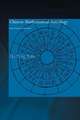
Reviving Ancient Chinese Mathematics is a study of the life of one of modern China’s most admired scientific figures, the mathematician Wu Wen-Tsun. Negotiating the conflict between progress and tradition, he found a path that not only ensured his political and personal survival, but which also brought him renown as a mathematician of international status who claimed that he stood outside the dominant western tradition of mathematics. Wu Wen-Tsun’s story highlights crucial developments and contradictions in twentieth -century China, the significance of which extends far beyond the field of mathematics. On one hand lies the appeal of radical scientific modernity, "mechanisation" in all its forms, and competitiveness within the international scientific community. On the other is an anxiety to preserve national traditions and make them part of the modernisation project. Moreover, Wu’s intellectual development also reflects the complex relationship between science and Maoist ideology, because his turn to history was powered by his internalisation of certain aspects of Maoist ideology, including its utilitarian philosophy of science.
This book traces how Wu managed to combine political success and international scientific eminence, a story that has wider implications for a new century of increasing Chinese activity in the sciences. As such, it will be of great interest to students and scholars of Chinese history, the history of science and the history and philosophy of mathematics.
Din seria Needham Research Institute Series
-
 Preț: 521.83 lei
 - 15%
 Preț: 450.06 lei
 - 15%
 Preț: 427.71 lei
 - 18%
 Preț: 1132.95 lei
 - 15%
 Preț: 462.79 lei
 -
 Preț: 466.27 lei
 - 5%
 Preț: 518.87 lei
 - 15%
 Preț: 459.67 lei
 - 15%
 Preț: 422.92 lei
 - 5%
 Preț: 456.75 lei
 -
 Preț: 487.26 lei
 -
 Preț: 407.84 lei
 -
 Preț: 411.72 lei
 - 15%
 Preț: 458.46 lei
 -
 Preț: 410.87 lei
 -
 Preț: 462.95 lei
 - 23%
 Preț: 1510.06 lei
 - 50%
 Preț: 266.30 lei
Preț: 1307.68 lei
Preț vechi: 1594.73 lei
-18%
Puncte Express: 1962
Carte tipărită la comandă
Livrare economică 28 noiembrie-12 decembrie
Livrare prin curier în România Termenul estimat este afișat lângă disponibilitate.
Transport gratuit pentru acest produs Plată online sau ramburs, în funcție de opțiunile comenzii.
Retur gratuit în 14 zile Comandă securizată și suport în română.
Specificații
ISBN-13: 9780415702966
ISBN-10: 0415702968
Pagini: 222
Ilustrații: 12 black & white illustrations, 18 black & white tables, 12 black & white line drawings
Dimensiuni: 156 x 234 x 18 mm
Greutate: 0.57 kg
Ediția:New.
Editura: Taylor & Francis
Colecția Routledge
Seria Needham Research Institute Series
Locul publicării:Oxford, United Kingdom
ISBN-10: 0415702968
Pagini: 222
Ilustrații: 12 black & white illustrations, 18 black & white tables, 12 black & white line drawings
Dimensiuni: 156 x 234 x 18 mm
Greutate: 0.57 kg
Ediția:New.
Editura: Taylor & Francis
Colecția Routledge
Seria Needham Research Institute Series
Locul publicării:Oxford, United Kingdom
V-ar putea interesa
-
 Gandhi: A Very Short IntroductionBhikhu Parekh-20%Preț: 57.12 lei71.12 lei
 -
 -11%Preț: 386.45 lei433.60 lei
 -
 Politics and Culture in Wartime JapanBen-Ami Shillony-33%Preț: 658.94 lei980.47 lei
 -
 Contemporary TaiwanDavid Shambaugh-18%Preț: 247.30 lei302.70 lei
 -
 Preț: 379.51 lei
 -
 -18%Preț: 1252.71 lei1527.70 lei
 -
 Preț: 486.05 lei
 -
 -15%Preț: 463.52 lei545.32 lei
 -
 -18%Preț: 1308.91 lei1596.24 lei
 -
 -15%Preț: 422.47 lei497.01 lei
 -
 The Cambridge History of ChinaDenis C. Twitchett-23%Preț: 995.86 lei1293.33 lei
 -
 The Great Hedge of IndiaRoy Moxham-27%Preț: 67.74 lei92.76 lei
 -
 The Ottoman Empire: 1300-1600Halil Inalcik-26%Preț: 79.45 lei107.04 lei
 -
 Jungle Soldier: The true story of Freddy Spencer ChapmanBrian Moynahan-25%Preț: 69.31 lei93.03 lei
Public țintă
Postgraduate and UndergraduateCuprins
1. Introduction 2. The Making of a Prominent Chinese Mathematician 3. Mathematics and Chinese Socialist Construction 4. The Transformative Effect of the Cultural Revolution 5. Wu Wen-Tsun's Construction of Traditional Chinese Mathematics 6. Independence and Inspiration: Wu Wen-Tsun's Work Since 1977 7. Saving the Nation with Mathematics and its History
Notă biografică
Jiri Hudecek is a Researcher at Charles University, Czech Republic.
Descriere
This book is a study of the life of one of modern China’s most admired scientific figures, the mathematician Wu Wen-Tsun. Negotiating the conflict between progress and tradition, he found a path that not only ensured his political and personal survival, but which also brought him renown as a mathematician of international status who claimed that he stood outside the dominant western tradition of mathematics. This book traces how Wu managed to combine political success and international scientific eminence, a story which has wider implications for a new century of increasing Chinese activity in the sciences.