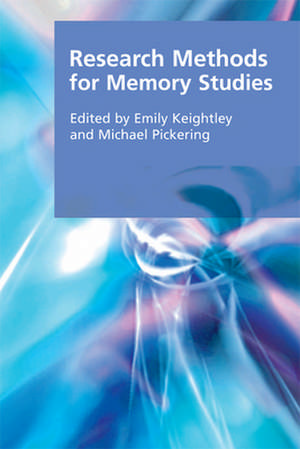
Research Methods for Memory Studies
Editat de Emily Keightley, Michael Pickeringen Limba Engleză Paperback – 31 mai 2013
Înțelegerea modului în care comunitățile și indivizii își gestionează trecutul necesită un aparat metodologic riguros, iar Research Methods for Memory Studies vine să umple exact această lacună academică. Ne-a atras atenția în mod deosebit capitolul dedicat analizei dinamicii rememorării în confesiuni publice și mărturii ale supraviețuitorilor Holocaustului, un subiect care demonstrează necesitatea unei unități teoretice în acest domeniu emergent. Volumul nu se rezumă la o simplă trecere în revistă a tehnicilor de lucru, ci oferă evaluări de expert asupra modului în care memoria este comunicată în interacțiunile cotidiene și cum se manifestă aceasta în cadrul etniilor emergente. Putem afirma că structura cărții, publicată sub egida EDINBURGH UNIVERSITY PRESS, este concepută pentru a ghida cercetătorul de la narativele personale și amintirile comunitare până la analize complexe ale „peisajelor memoriei” (memoryscapes) naționale. Merită menționat că autorii explorează și dimensiunea dureroasă a trecutului, investigând memoriile perturbate și impactul lor asupra patrimoniului cultural. Cititorii familiarizați cu Doing Memory Research de Danielle Drozdzewski vor aprecia aici accentul pus pe coerența metodologică aplicată specific artelor și științelor umaniste, oferind o structură mai formalizată pentru studiul memoriei sociale. Această lucrare consolidează direcția de cercetare începută de Emily Keightley și Michael Pickering în volume precum Memory and the Management of Change, trecând de la utilizarea resurselor creative (fotografie, muzică) la o analiză sistemică a modului în care mass-media servește drept vehicul de memorie. Este o resursă care transformă studiile memoriei dintr-o colecție de perspective multidisciplinare într-o disciplină cu instrumente de lucru clar definite.
Preț: 208.20 lei
Preț vechi: 247.81 lei
-16%
Carte disponibilă
Livrare economică 11-25 noiembrie
Livrare express 27-31 octombrie pentru 69.63 lei
Specificații
ISBN-10: 0748645950
Pagini: 264
Dimensiuni: 156 x 233 x 20 mm
Greutate: 0.41 kg
Ediția:1
Editura: EDINBURGH UNIVERSITY PRESS
Colecția Research Methods for the Arts and Humanities
V-ar putea interesa
-
 Preț: 277.26 lei
 -
 -20%Preț: 223.15 lei279.33 lei
 -
 Dark LaboratoryTao Leigh GoffePreț: 184.34 lei
 -
 Dead and AliveZadie SmithPreț: 123.69 lei
 -
 Always RememberCharlie MackesyPreț: 157.44 lei
 -
 Preț: 332.60 lei
 -
 MEMORYDorothea LaskyPreț: 98.51 lei
 -
 The Site of MemoryToni MorrisonPreț: 63.49 lei
 -
 Language and Memory: Interactions and MediationsProfessor Natalie Braber-33%Preț: 591.09 lei885.13 lei
 -
 We Are Not NumbersAhmed AlnaouqPreț: 110.16 lei
 -
 Collaborative Methods: Participatory Data Analysis in Feminist ResearchKaylan C. SchwarzPreț: 236.20 lei
 -
 AmnionStephanie Sy-QuiaPreț: 77.21 lei
 -
 Our Precious WarsPerrine TripierPreț: 92.40 lei
 -
 AbsenceIssa QuincyPreț: 106.10 lei
 -
 Foreign FruitKatie GohPreț: 120.47 lei
 -
 Recognising the StrangerIsabella HammadPreț: 70.30 lei
 -
 -18%Preț: 1452.35 lei1771.15 lei
 -
 Remembering Contentious LivesDuygu ErbilPreț: 396.16 lei
 -
 Companion to Cultural Memory StudiesAstrid ErllPreț: 246.32 lei
De ce să citești această carte
Această carte este esențială pentru studenții și cercetătorii din sociologie, istorie și psihologie cognitivă care au nevoie de un cadru metodologic solid. Cititorul câștigă o înțelegere profundă a modului în care amintirile personale devin memorie colectivă și socială. Este un instrument practic care explică cum se analizează mărturiile istorice și producția media, oferind claritate într-un domeniu adesea fragmentat.
Despre autor
Emily Keightley este conferențiar la Departamentul de Științe Sociale al Universității Loughborough, specializată în intersecția dintre media, memorie și modernitate. A editat colecții importante și este redactor adjunct al revistei Media, Culture and Society. Michael Pickering, profesor în cadrul aceleiași instituții, are o activitate vastă în cercetarea comunicării și a studiilor culturale, publicând lucrări de referință despre istoria culturală și metodele de cercetare. Împreună, cei doi editori au dezvoltat conceptul de „imaginație mnemoneutică”, explorând modul în care resursele culturale precum muzica și fotografia ajută la gestionarea schimbărilor sociale prin memorie.