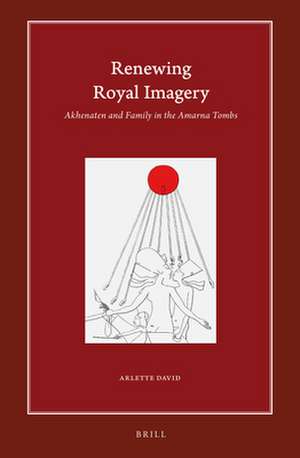
Renewing Royal Imagery: Renewing Royal Imagery, cartea 11
Autor Arlette Daviden Limba Engleză Hardback – oct 2020
Preț: 1523.96 lei
Preț vechi: 1979.17 lei
-23%
Puncte Express: 2286
Carte tipărită la comandă
Livrare economică 26 septembrie-10 octombrie
Livrare prin curier în România Termenul estimat este afișat lângă disponibilitate.
Transport gratuit pentru acest produs Plată online sau ramburs, în funcție de opțiunile comenzii.
Retur gratuit în 14 zile Comandă securizată și suport în română.
Specificații
ISBN-13: 9789004440500
ISBN-10: 900444050X
Pagini: 562
Dimensiuni: 155 x 234 x 32 mm
Greutate: 0.95 kg
Editura: Koninklijke Brill Bv
Colecția Renewing Royal Imagery
Seriile Renewing Royal Imagery, Brill
ISBN-10: 900444050X
Pagini: 562
Dimensiuni: 155 x 234 x 32 mm
Greutate: 0.95 kg
Editura: Koninklijke Brill Bv
Colecția Renewing Royal Imagery
Seriile Renewing Royal Imagery, Brill
Cuprins
Acknowledgements
List of Figures and Tables
Introduction
1Description vs. Interpretation
2What’s Wrong with the ‘Queen of Punt’?
3Royal Scenes in Amarna Elite Tombs
1 Offering King Motif: King as Officiant
1Description
2Iconography
3Interpretation
2 Driving King Motif: King in Apotheosis
1Description
2Iconography
3Interpretation
3 Feasting King Motif: King as Consumer
1Description
2Iconography
3Interpretation
4 Patron King Motif: King as Benefactor
1Description
2Iconography
3Interpretation
5 Mourning King Motif: King Facing Loss
1Description
2Iconography
3Interpretation
Conclusions
Bibliography
General Index
Egyptian Lexemes Index
Egyptian Texts Index
Museum Items Index
List of Figures and Tables
Introduction
1Description vs. Interpretation
2What’s Wrong with the ‘Queen of Punt’?
3Royal Scenes in Amarna Elite Tombs
1 Offering King Motif: King as Officiant
1Description
2Iconography
3Interpretation
2 Driving King Motif: King in Apotheosis
1Description
2Iconography
3Interpretation
3 Feasting King Motif: King as Consumer
1Description
2Iconography
3Interpretation
4 Patron King Motif: King as Benefactor
1Description
2Iconography
3Interpretation
5 Mourning King Motif: King Facing Loss
1Description
2Iconography
3Interpretation
Conclusions
Bibliography
General Index
Egyptian Lexemes Index
Egyptian Texts Index
Museum Items Index
Notă biografică
Arlette David, LL.M. (1987), Université Libre de Bruxelles, Ph.D. in Egyptology (2003), The Hebrew University of Jerusalem, is Professor of Egyptology at that university. She has published monographs and articles on ancient Egyptian legal languages, scriptural categorization, material culture, and iconography.
Recenzii
“(…) cet ouvrage offre un grand intérêt pour les recherches amarniennes et jette une nouvelle lumière sur la manière dont la réforme politico-religieuse entreprise par Akhénaton attacha une immense importance au discours iconographique et aux détails de sa mise en scène, ouvrant ainsi la voie à de nombreuses innovations en matière de royauté et de religion décelables au coeur de l’iconographie, comme, par exemple, le rôle et le statut toujours plus important conféré à l’épouse royale et aux jeunes princesses, dans un esprit de modernité précurseur qui ne pouvait survivre tel quel à la mort du pharaon.”
- Cathie Spieser, Université de Fribourg, in Bibliotheca Orientalis, LXXVIII N° 5-6, oktober-december 2021
- Cathie Spieser, Université de Fribourg, in Bibliotheca Orientalis, LXXVIII N° 5-6, oktober-december 2021