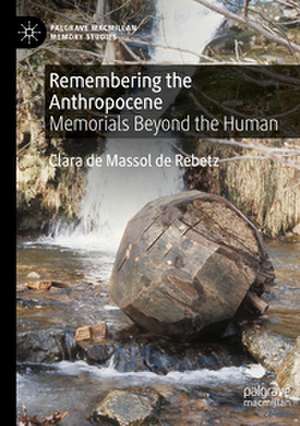
Remembering the Anthropocene: Palgrave Macmillan Memory Studies
Autor Clara de Massol de Rebetzen Limba Engleză Paperback – 15 feb 2025
Din seria Palgrave Macmillan Memory Studies
-
 Preț: 390.53 lei
 - 18%
 Preț: 859.76 lei
 -
 Preț: 366.20 lei
 -
 Preț: 371.77 lei
 - 15%
 Preț: 509.03 lei
 - 18%
 Preț: 729.47 lei
 -
 Preț: 372.55 lei
 -
 Preț: 374.88 lei
 -
 Preț: 374.88 lei
 - 15%
 Preț: 566.41 lei
 -
 Preț: 367.19 lei
 -
 Preț: 367.80 lei
 - 15%
 Preț: 559.71 lei
 -
 Preț: 366.98 lei
 - 15%
 Preț: 564.51 lei
 - 18%
 Preț: 884.03 lei
 -
 Preț: 368.78 lei
 - 18%
 Preț: 750.45 lei
 - 18%
 Preț: 930.01 lei
 - 15%
 Preț: 560.98 lei
 -
 Preț: 372.96 lei
 - 15%
 Preț: 526.46 lei
 - 15%
 Preț: 560.17 lei
 -
 Preț: 371.81 lei
 -
 Preț: 367.80 lei
 -
 Preț: 370.57 lei
 - 18%
 Preț: 829.43 lei
 -
 Preț: 372.96 lei
 -
 Preț: 370.57 lei
 - 18%
 Preț: 777.40 lei
 - 15%
 Preț: 619.82 lei
 -
 Preț: 370.57 lei
 - 15%
 Preț: 704.44 lei
 -
 Preț: 367.85 lei
 -
 Preț: 370.37 lei
 -
 Preț: 368.58 lei
 -
 Preț: 376.11 lei
 - 18%
 Preț: 789.50 lei
 -
 Preț: 368.43 lei
 - 15%
 Preț: 510.42 lei
 - 15%
 Preț: 619.14 lei
 - 15%
 Preț: 670.38 lei
 -
 Preț: 369.16 lei
 - 15%
 Preț: 673.93 lei
 - 15%
 Preț: 620.90 lei
 -
 Preț: 390.30 lei
 - 15%
 Preț: 618.97 lei
Preț: 743.81 lei
Preț vechi: 817.37 lei
-9%
Puncte Express: 1116
Carte tipărită la comandă
Livrare economică 09-14 noiembrie
Livrare prin curier în România Termenul estimat este afișat lângă disponibilitate.
Transport gratuit pentru acest produs Plată online sau ramburs, în funcție de opțiunile comenzii.
Retur gratuit în 14 zile Comandă securizată și suport în română.
Specificații
ISBN-13: 9783031503719
ISBN-10: 3031503716
Pagini: 296
Dimensiuni: 148 x 210 x 17 mm
Greutate: 0.39 kg
Editura: Springer
Colecția Palgrave Macmillan Memory Studies
Seria Palgrave Macmillan Memory Studies
ISBN-10: 3031503716
Pagini: 296
Dimensiuni: 148 x 210 x 17 mm
Greutate: 0.39 kg
Editura: Springer
Colecția Palgrave Macmillan Memory Studies
Seria Palgrave Macmillan Memory Studies
Cuprins
1 Introduction.- 2 Notes on Methodology.- Part I Past: Memorialising Loss.- 3 Climate Chronograph: An Anthropocene Memorial Recording Climate Change on the Banks of the Potomac River in Washington D.C.- 4 Wooden Boulder: An Anthropocene Memorial Ruin Travelling Through Wales.- Part II Present: The Institutionalisation of Change.- 5 The Père Lachaise Cemetery: Redefining Death and Nature in and with the Anthropocene.- 6 ‘A New Museum for the Path Ahead’: Exhibiting Climate Change at the Climate Museum.- Part III Future: Waste and Its Afterlives.- 7 Don’t Follow the Wind and the Spatiotemporal Confines of the Nuclear Anthropocene: Future Memory and Synchronous Temporality.- 8 Forever Now: The Chicken at the End of the Road and the Plastic That Is Everything.- 9 Conclusion.
Textul de pe ultima copertă
This book provides a definition of the developing field of environmental memory studies. It reflects on the possibilities, challenges, prospects and limitations of culturally and collectively remembering (in) the Anthropocene. Located at the intersection of environmental humanities and memory studies, the analysis draws on and surveys a series of Anthropocene-related memorials, from a sculpture lost in Welsh waterways to cat colonies and perennial chickens. This leads to an examination of different memory agents across histories – past, present and future – and an investigation of memorialisation politics under new ecological regimes, within and beyond the human.
Clara de Massol de Rebetz is lecturer and researcher based at King's College London, in the Department of Culture, Media and Creative Industries where she also conducted her PhD. Her research, informed by a background in cultural and literary studies, examines the intersections of memory studies and environmental humanities. Her doctoral research was supported by the London Arts and Humanities Partnership (AHRC), and she was the 2019 recipient of the Memory Studies Association’s Excellent Paper award.
Clara de Massol de Rebetz is lecturer and researcher based at King's College London, in the Department of Culture, Media and Creative Industries where she also conducted her PhD. Her research, informed by a background in cultural and literary studies, examines the intersections of memory studies and environmental humanities. Her doctoral research was supported by the London Arts and Humanities Partnership (AHRC), and she was the 2019 recipient of the Memory Studies Association’s Excellent Paper award.
Caracteristici
Delivers theoretically informed analyses of a series of Anthropocene-related memorials Proposes that memory in and of the Anthropocene, whilst accounting for human agency, can be legible through the nonhuman Surveys the (geo)stories we tell about ourselves, and the ways we remember them under novel Anthropocenic conditions