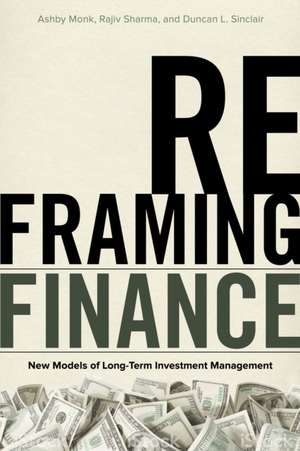
Reframing Finance
Autor Ashby Monk, Rajiv Sharma, Duncan L Sinclairen Limba Engleză Hardback – 8 aug 2017
Preț: 800.10 lei
Preț vechi: 1039.09 lei
-23%
Puncte Express: 1200
Carte tipărită la comandă
Livrare economică 23 noiembrie-07 decembrie
Livrare prin curier în România Termenul estimat este afișat lângă disponibilitate.
Transport gratuit pentru acest produs Plată online sau ramburs, în funcție de opțiunile comenzii.
Retur gratuit în 14 zile Comandă securizată și suport în română.
Specificații
ISBN-13: 9781503601789
ISBN-10: 1503601781
Pagini: 216
Dimensiuni: 154 x 236 x 22 mm
Greutate: 0.45 kg
Editura: Stanford University Press
ISBN-10: 1503601781
Pagini: 216
Dimensiuni: 154 x 236 x 22 mm
Greutate: 0.45 kg
Editura: Stanford University Press
V-ar putea interesa
-
 In the BlackAaron W SmithPreț: 96.64 lei
 -
 -35%Preț: 932.28 lei1424.90 lei
 -
 -18%Preț: 1256.21 lei1531.97 lei
 -
 -18%Preț: 1381.13 lei1684.30 lei
 -
 Sovereign Wealth FundsGordon L. ClarkPreț: 430.35 lei
 -
 -18%Preț: 899.61 lei1097.08 lei
 -
 Emerging Markets: Performance, Analysis and InnovationGreg N. Gregoriou-18%Preț: 1636.36 lei1995.57 lei
 -
 -18%Preț: 945.92 lei1153.56 lei
 -
 Swing Trading as a Part Time JobBrett BrownPreț: 147.14 lei
 -
 McCaulay's Cfa Level I Practice Exams Volume I of V: Her Real Life in PicturesPhilip Martin McCaulayPreț: 174.13 lei
 -
 Hope -The HealerRajiv SharmaPreț: 42.32 lei
 -
 The Banks and the Italian EconomyDamiano Bruno Silipo-18%Preț: 702.09 lei856.20 lei
 -
 Risikopublizität von KreditinstitutenDieter WeberPreț: 525.04 lei
Notă biografică
Ashby Monk is Executive and Research Director of Stanford University's Global Projects Center.Rajiv Sharma is Research Program Manager at Stanford's Global Projects Center and Visiting Research Associate at Oxford University's Smith School of Enterprise and the Environment. Duncan L. Sinclair is Vice Chair at Deloitte.
Descriere
Descriere de la o altă ediție sau format:
Reframing Finance argues that institutional investors (such as pension funds, sovereign wealth funds, endowments, and foundations) should put their money more directly into projects like infrastructure, green energy, and the future of agriculture in order to keep the power of financial service firms in check, while closing significant resource gaps that government cannot.
Reframing Finance argues that institutional investors (such as pension funds, sovereign wealth funds, endowments, and foundations) should put their money more directly into projects like infrastructure, green energy, and the future of agriculture in order to keep the power of financial service firms in check, while closing significant resource gaps that government cannot.