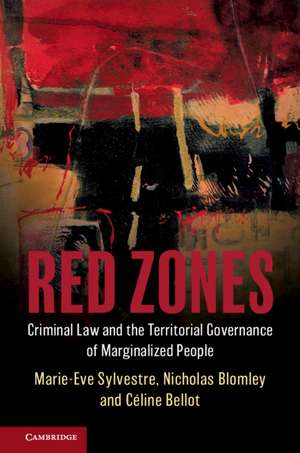
Red Zones
Autor Marie-Eve Sylvestre, Nicholas Blomley, Céline Belloten Limba Engleză Paperback – 2 ian 2020
Aplicabilitatea practică a volumului Red Zones rezidă în analiza sa riguroasă asupra modului în care sistemul de justiție penală utilizează spațiul geografic ca instrument de control și sancționare. Marie-Eve Sylvestre, Nicholas Blomley și Céline Bellot investighează fenomenul restricțiilor teritoriale impuse prin hotărâri judecătorești, demonstrând cum zonele de excludere — așa-numitele „red zones” — devin mecanisme de supraveghere ce afectează direct dreptul la oraș al grupurilor vulnerabile. Remarcăm utilizarea unui aparat bogat de date empirice, incluzând 8 hărți și 28 de tabele, care transformă conceptele teoretice de geografie legală în dovezi concrete ale modului în care spațiul public este reglementat juridic. Lucrarea extinde cadrul teoretic propus de Street-Level Sovereignty de Sarah Marusek prin adăugarea unei dimensiuni istorice și procedurale specifice sistemului de cauțiune și sentințe. În timp ce volumul lui Marusek se concentrează pe interpretarea socială a legii la nivel stradal, Red Zones documentează procesul de „teritorializare juridică” prin care instanțele reconfigurează limitele libertății de mișcare. Notăm cu interes organizarea logică a materialului: de la fundamentele teoretice ale geografiei legale (Partea I), la expansiunea mecanismelor de control (Partea II) și, în final, la consecințele politice și umane ale vieții sub regim de restricție (Partea III). Această progresie permite cititorului să înțeleagă nu doar cum sunt create aceste zone, ci și cum ele inversează așteptările tradiționale de justiție, transformând spațiul public într-un teren al pedepsei preventive.
Preț: 212.17 lei
Carte disponibilă
Livrare economică 18 mai-01 iunie
Specificații
ISBN-10: 1316635414
Pagini: 188
Ilustrații: 14 b/w illus. 8 maps 28 tables
Dimensiuni: 150 x 226 x 13 mm
Greutate: 0.45 kg
Editura: Cambridge University Press
Locul publicării:New York, United States
De ce să citești această carte
Această carte este esențială pentru studenții și practicienii din domeniul dreptului, criminologiei și științelor politice care doresc să înțeleagă noile forme de control social. Cititorul câștigă o perspectivă documentată asupra modului în care reglementările spațiale pot marginaliza involuntar anumite categorii sociale. Este o resursă valoroasă pentru cei care analizează reforma justiției penale și impactul politicilor publice asupra drepturilor omului.
Descriere scurtă
Cuprins
Recenzii
'A huge contribution to criminology and to urban geography, this book shows, with vast amounts of data, that low-level judicial proceedings such as bail act in a dysfunctional manner by imposing unrealistic spatial prohibitions on those who most need to access services and friends in stigmatized downtown areas. The far-ranging empirical research, carried out mainly in Vancouver and Montreal, is of great relevance not only across Canada but throughout North America, since the practice of imposing 'red zones' (spatial prohibitions) through probation, parole and other lower-court and police mechanisms has become ubiquitous.' Mariana Valverde, University of Toronto
'Red Zones is a highly original and ground-breaking book that compellingly reveals how marginalized peoples are increasingly governed through territory and time via criminal law and justice processes. Its rare combination of legal theory and rich empirical data will appeal to legal scholars, criminologists and geographers alike.' Randy K. Lippert, University of Windsor