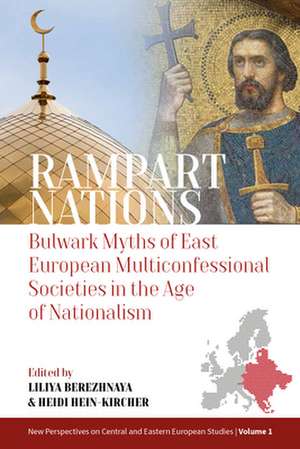
Rampart Nations: New Perspectives on Central and Eastern European Studies, cartea 1
Editat de Liliya Berezhnaya, Heidi Hein-Kircheren Limba Engleză Hardback – mar 2019



Preț: 850.56 lei
Preț vechi: 1104.63 lei
-23%
Puncte Express: 1276
Carte tipărită la comandă
Livrare economică 30 noiembrie-14 decembrie
Livrare prin curier în România Termenul estimat este afișat lângă disponibilitate.
Transport gratuit pentru acest produs Plată online sau ramburs, în funcție de opțiunile comenzii.
Retur gratuit în 14 zile Comandă securizată și suport în română.
Specificații
ISBN-13: 9781789201475
ISBN-10: 1789201470
Pagini: 418
Ilustrații: 14 illustrations
Dimensiuni: 157 x 235 x 27 mm
Greutate: 0.75 kg
Editura: BERGHAHN BOOKS
Colecția New Perspectives on Central and Eastern European Studies
Seria New Perspectives on Central and Eastern European Studies
ISBN-10: 1789201470
Pagini: 418
Ilustrații: 14 illustrations
Dimensiuni: 157 x 235 x 27 mm
Greutate: 0.75 kg
Editura: BERGHAHN BOOKS
Colecția New Perspectives on Central and Eastern European Studies
Seria New Perspectives on Central and Eastern European Studies
Notă biografică
Liliya Berezhnaya is an Assistant Professor at University of Münster's "Religion and Politics" Cluster of Excellence in Germany. Her publications include Iconic Turns: Nation and Religion in Eastern European Cinema since 1989 (2013), co-edited with Christian Schmitt, and The World to Come: Ukrainian Images of the Last Judgment (2015), co-authored with John-Paul Himka.
Cuprins
List of Illustrations
Acknowledgments
A Note on Transliteration and Toponyms
PART I: BACKGROUND
Introduction: Constructing a Rampart Nation: Conceptual Framework
Liliya Berezhnaya and Heidi Hein-Kircher
Chapter 1. The Origins of Antemurale Christianitatis Myths: Remarks on the Promotion of a Political Concept
Kerstin Weiand
PART II: (DE-)SACRALIZING AND NATIONALIZING BORDERLANDS
Chapter 2. Not a Bulwark, But a Part of the Larger Catholic Community: The Romanian Greek Catholic Church in Transylvania (1700-1850)
Ciprian Ghisa
Chapter 3. Securitizing the Polish Bulwark:The Mission of Lviv in Polish Travel Guides During the Late Nineteenth and Early Twentieth Centuries
Heidi Hein-Kircher
Chapter 4. Ghetto as an "Inner Antemurale"? Debates on Exclusion, Integration, and Identity in Galicia in the Nineteenth and Early Twentieth Century
Jürgen Heyde
Chapter 5. Holy Ground and a Bulwark against "the Other": The (Re)Construction of an Orthodox Crimea in the Nineteenth-Century Russian Empire
Kerstin S. Jobst
Chapter 6. Bastions of Faith in the Oceans of Ambiguities: Monasteries in the East European Borderlands (Late Nineteenth- Beginning of the Twentieth Century)
Liliya Berezhnaya
Chapter 7. "The Turkish Wall:" Turkey as an Anti-Communist and Anti-Russian Bulwark in the Twentieth Century
Zaur Gasimov
PART III: PROMOTING ANTEMURALE DISCOURSES
Chapter 8. Why Didn't the Antemurale Historical Mythology Develop in Early Nineteenth-Century Ukraine?
Volodymyr Kravchenko
Chapter 9. Translating the Border(s) in a Multilingual and Multiethnic Society: Antemurale Myths in Polish and Ukrainian Schoolbooks of the Habsburg Monarchy
Philipp Hofeneder
Chapter 10. Mediating the Antemurale Myth in East Central Europe: Religion and Politics in Modern Geographers' Entangled Lives and Maps
Steven Seegel
Chapter 11. Bulwarks of Anti-Bolshevism: Russophobic Polemic of the Christian Right in Poland and Hungary in the Interwar Years and Their Roots in the Nineteenth Century
Paul Srodecki
Chapter 12. Defenders of the Russian Land: Viktor Vasnetsov's Warriors and Russia's Bulwark Myth
Stephen M. Norris
PART IV: REFLECTIONS ON THE BULWARK MYTHS TODAY
Chapter 13. Antemurale Thinking as Historical Myth and Ethnic Boundary Mechanism
Pål Kolstø
Chapter 14. Concluding Thoughts on Central and Eastern European Bulwark Rhetoric in the Twenty-First Century
Paul Srodecki
Index
Acknowledgments
A Note on Transliteration and Toponyms
PART I: BACKGROUND
Introduction: Constructing a Rampart Nation: Conceptual Framework
Liliya Berezhnaya and Heidi Hein-Kircher
Chapter 1. The Origins of Antemurale Christianitatis Myths: Remarks on the Promotion of a Political Concept
Kerstin Weiand
PART II: (DE-)SACRALIZING AND NATIONALIZING BORDERLANDS
Chapter 2. Not a Bulwark, But a Part of the Larger Catholic Community: The Romanian Greek Catholic Church in Transylvania (1700-1850)
Ciprian Ghisa
Chapter 3. Securitizing the Polish Bulwark:The Mission of Lviv in Polish Travel Guides During the Late Nineteenth and Early Twentieth Centuries
Heidi Hein-Kircher
Chapter 4. Ghetto as an "Inner Antemurale"? Debates on Exclusion, Integration, and Identity in Galicia in the Nineteenth and Early Twentieth Century
Jürgen Heyde
Chapter 5. Holy Ground and a Bulwark against "the Other": The (Re)Construction of an Orthodox Crimea in the Nineteenth-Century Russian Empire
Kerstin S. Jobst
Chapter 6. Bastions of Faith in the Oceans of Ambiguities: Monasteries in the East European Borderlands (Late Nineteenth- Beginning of the Twentieth Century)
Liliya Berezhnaya
Chapter 7. "The Turkish Wall:" Turkey as an Anti-Communist and Anti-Russian Bulwark in the Twentieth Century
Zaur Gasimov
PART III: PROMOTING ANTEMURALE DISCOURSES
Chapter 8. Why Didn't the Antemurale Historical Mythology Develop in Early Nineteenth-Century Ukraine?
Volodymyr Kravchenko
Chapter 9. Translating the Border(s) in a Multilingual and Multiethnic Society: Antemurale Myths in Polish and Ukrainian Schoolbooks of the Habsburg Monarchy
Philipp Hofeneder
Chapter 10. Mediating the Antemurale Myth in East Central Europe: Religion and Politics in Modern Geographers' Entangled Lives and Maps
Steven Seegel
Chapter 11. Bulwarks of Anti-Bolshevism: Russophobic Polemic of the Christian Right in Poland and Hungary in the Interwar Years and Their Roots in the Nineteenth Century
Paul Srodecki
Chapter 12. Defenders of the Russian Land: Viktor Vasnetsov's Warriors and Russia's Bulwark Myth
Stephen M. Norris
PART IV: REFLECTIONS ON THE BULWARK MYTHS TODAY
Chapter 13. Antemurale Thinking as Historical Myth and Ethnic Boundary Mechanism
Pål Kolstø
Chapter 14. Concluding Thoughts on Central and Eastern European Bulwark Rhetoric in the Twenty-First Century
Paul Srodecki
Index
Descriere
Descriere de la o altă ediție sau format:
Through perspectives that range from Eastern European art history to theology, with a concentration on the nexus of political, social, and religious history, this volume explores historical narratives that have shaped contemporary Eastern European national identities.
Through perspectives that range from Eastern European art history to theology, with a concentration on the nexus of political, social, and religious history, this volume explores historical narratives that have shaped contemporary Eastern European national identities.