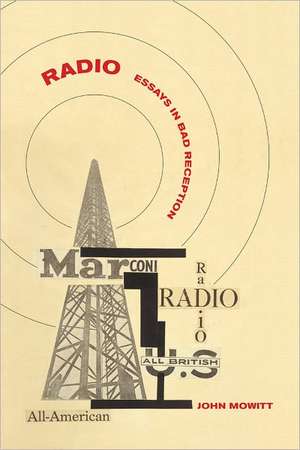
Radio: University of California Press
Autor John Mowitten Limba Engleză Hardback – 7 dec 2011
Din seria University of California Press
- 15%
 Preț: 489.42 lei
 - 16%
 Preț: 603.40 lei
 - 27%
 Preț: 718.91 lei
 -
 Preț: 308.50 lei
 - 23%
 Preț: 559.15 lei
 -
 Preț: 271.45 lei
 -
 Preț: 242.07 lei
 - 23%
 Preț: 523.05 lei
 - 23%
 Preț: 563.01 lei
 -
 Preț: 278.09 lei
 -
 Preț: 344.88 lei
 -
 Preț: 275.79 lei
 - 23%
 Preț: 453.32 lei
 -
 Preț: 314.96 lei
 - 23%
 Preț: 562.36 lei
 - 23%
 Preț: 507.53 lei
 - 23%
 Preț: 564.30 lei
 -
 Preț: 284.85 lei
 -
 Preț: 278.80 lei
 -
 Preț: 325.72 lei
 -
 Preț: 277.62 lei
 - 23%
 Preț: 561.82 lei
 - 23%
 Preț: 560.56 lei
 - 23%
 Preț: 561.87 lei
 - 23%
 Preț: 560.85 lei
 - 23%
 Preț: 566.17 lei
 -
 Preț: 166.31 lei
 -
 Preț: 526.65 lei
 -
 Preț: 277.16 lei
 - 23%
 Preț: 568.62 lei
 -
 Preț: 316.93 lei
 - 23%
 Preț: 563.97 lei
 -
 Preț: 165.19 lei
 -
 Preț: 515.97 lei
 -
 Preț: 196.27 lei
 -
 Preț: 255.56 lei
 - 23%
 Preț: 565.31 lei
 -
 Preț: 254.23 lei
 - 23%
 Preț: 565.58 lei
 -
 Preț: 301.23 lei
 - 23%
 Preț: 565.70 lei
 - 23%
 Preț: 562.07 lei
 -
 Preț: 285.86 lei
 - 23%
 Preț: 564.09 lei
Preț: 447.92 lei
Preț vechi: 581.71 lei
-23%
Puncte Express: 672
Carte tipărită la comandă
Livrare economică 18 noiembrie-02 decembrie
Livrare prin curier în România Termenul estimat este afișat lângă disponibilitate.
Transport gratuit pentru acest produs Plată online sau ramburs, în funcție de opțiunile comenzii.
Retur gratuit în 14 zile Comandă securizată și suport în română.
Specificații
ISBN-13: 9780520270497
ISBN-10: 0520270495
Pagini: 244
Dimensiuni: 152 x 229 x 18 mm
Greutate: 0.5 kg
Ediția:New.
Editura: UCAL POD
Colecția University of California Press
Seria University of California Press
ISBN-10: 0520270495
Pagini: 244
Dimensiuni: 152 x 229 x 18 mm
Greutate: 0.5 kg
Ediția:New.
Editura: UCAL POD
Colecția University of California Press
Seria University of California Press
V-ar putea interesa
-
 Going Ga GaMel GiedroycPreț: 115.22 lei
 -
 The Unbelievable TruthGraeme GardenPreț: 115.81 lei
 -
 Trains and Buttered ToastJohn Betjeman-26%Preț: 68.23 lei92.55 lei
 -
 BEST OF ROUND THE HORNE (VIN DBarry Took-32%Preț: 43.91 lei64.86 lei
 -
 Preț: 75.34 lei
 -
 -22%Preț: 117.98 lei151.40 lei
Notă biografică
John Mowitt is Professor of Cultural Studies and Comparative Literature at the University of Minnesota. His previous books include Re-takes: Postcoloniality and Foreign Film Language and Percussion: Drumming, Beating, and Striking.
Descriere
Examines radio's central place in the history of twentieth-century critical theory. This title considers how the radio came to matter, especially politically, to phenomenology, existentialism, Hegelian Marxism, anticolonialism, psychoanalysis, and cultural studies. It offers a fresh perspective on the role this technology plays today.