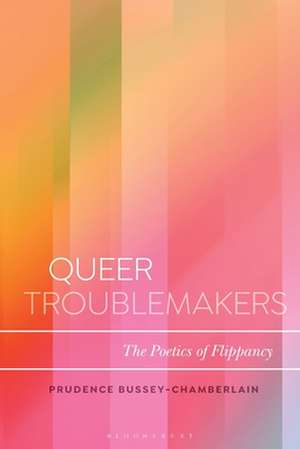
Queer Troublemakers: The Poetics of Flippancy: Bloomsbury Studies in Critical Poetics
Autor Dr Prudence Bussey-Chamberlainen Limba Engleză Paperback – 28 ian 2021



Preț: 237.94 lei
Preț vechi: 326.65 lei
-27%
Puncte Express: 357
Carte tipărită la comandă
Livrare economică 28 noiembrie-12 decembrie
Livrare prin curier în România Termenul estimat este afișat lângă disponibilitate.
Transport gratuit de la 400.00 lei Plată online sau ramburs, în funcție de opțiunile comenzii.
Retur gratuit în 14 zile Comandă securizată și suport în română.
Specificații
ISBN-13: 9781350215429
ISBN-10: 1350215422
Pagini: 208
Ilustrații: 3 bw illus
Dimensiuni: 156 x 234 mm
Greutate: 0.3 kg
Editura: Bloomsbury Publishing
Colecția Bloomsbury Academic
Seria Bloomsbury Studies in Critical Poetics
Locul publicării:London, United Kingdom
ISBN-10: 1350215422
Pagini: 208
Ilustrații: 3 bw illus
Dimensiuni: 156 x 234 mm
Greutate: 0.3 kg
Editura: Bloomsbury Publishing
Colecția Bloomsbury Academic
Seria Bloomsbury Studies in Critical Poetics
Locul publicării:London, United Kingdom
Cuprins
List of Figures
Acknowledgements
Introduction
1 The Poetics of Flippancy
2 He Cannot Understand Women. I Can': Gertrude Stein and the Camp Butch
3 'There's Nothing Metaphysical About It': Frank O'Hara's Flippant Manifesto and the Poetry of Tight Trousers
4 'Who Are These Idiots Writing These Poems?': Eileen Myles' Pornographic Tone and Mutable Categories
5 'Was Harry a Woman? Was I a Straight Lady?': Tensions of Heternormativity, Assimilation and the Second Person
Conclusion
References
Index
Acknowledgements
Introduction
1 The Poetics of Flippancy
2 He Cannot Understand Women. I Can': Gertrude Stein and the Camp Butch
3 'There's Nothing Metaphysical About It': Frank O'Hara's Flippant Manifesto and the Poetry of Tight Trousers
4 'Who Are These Idiots Writing These Poems?': Eileen Myles' Pornographic Tone and Mutable Categories
5 'Was Harry a Woman? Was I a Straight Lady?': Tensions of Heternormativity, Assimilation and the Second Person
Conclusion
References
Index
Recenzii
A valuable and edifying contribution, in particular, to the study of two under-theorized poets - Myles and Nelson - and, indeed, the messy, queer, lateral lines of influence between them.