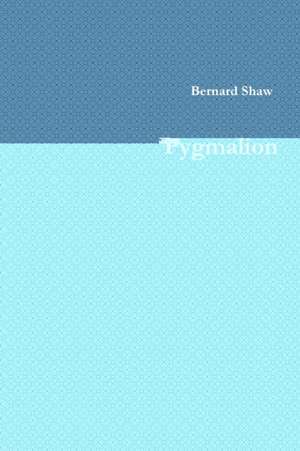
Pygmalion
Autor Bernard Shawen Limba Engleză Paperback – 8 mar 2020
Preț: 115.42 lei
Puncte Express: 173
Carte tipărită la comandă
Livrare economică 30 septembrie-14 octombrie
Livrare prin curier în România Termenul estimat este afișat lângă disponibilitate.
Transport gratuit de la 400.00 lei Plată online sau ramburs, în funcție de opțiunile comenzii.
Retur gratuit în 14 zile Comandă securizată și suport în română.
Specificații
ISBN-13: 9781678003135
ISBN-10: 1678003131
Pagini: 110
Dimensiuni: 152 x 229 x 6 mm
Greutate: 0.17 kg
Editura: Lulu.Com
ISBN-10: 1678003131
Pagini: 110
Dimensiuni: 152 x 229 x 6 mm
Greutate: 0.17 kg
Editura: Lulu.Com
V-ar putea interesa
-
 XPYGMALION_CLASSICS PBGeorge Bernard ShawPreț: 24.60 lei
 -
 My Fair LadyAlan Lerner-33%Preț: 55.49 lei83.34 lei
 -
 Plays UnpleasantGeorge Bernard Shaw-19%Preț: 73.86 lei91.64 lei
 -
 Pygmalion, Heartbreak House, and Saint JoanGeorge Bernard Shaw-17%Preț: 66.18 lei79.74 lei
 -
 Mrs Warren's Profession, Candida, and You Never Can TellGeorge Bernard Shaw-20%Preț: 63.17 lei78.58 lei
 -
 George Bernard Shaw: A Very Short IntroductionChristopher Wixson-21%Preț: 54.86 lei69.87 lei
 -
 The Importance of Being Earnest and Other PlaysOscar WildePreț: 34.13 lei
 -
 Juno and the PaycockSean O'CaseyPreț: 76.28 lei
 -
 Pygmalion. Mit MaterialienJacqueline FisherPreț: 154.03 lei
 -
 Pygmalion: York Notes GCSE - for 2026, 2027 examsDavid LangstonPreț: 45.42 lei
 -
 Level 3: My Fair LadyAlan LernerPreț: 74.51 lei
 -
 Mrs Warren's ProfessionBernard ShawPreț: 65.41 lei
 -
 Fanny's First PlayGeorge Bernard ShawPreț: 40.07 lei
 -
 Pygmalion & Other PlaysGeorge Bernard Shaw-35%Preț: 50.66 lei77.42 lei
 -
 SalomeOscar WildePreț: 43.97 lei
 -
 Shaw, B: PygmalionAlistair McGowan-21%Preț: 74.53 lei93.98 lei
 -
 PygmalionGeorge Bernard ShawPreț: 49.55 lei
 -
 An Unsocial SocialistGeorge Bernard Shaw-27%Preț: 67.14 lei91.91 lei
 -
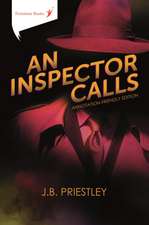 An Inspector Calls: Annotation-Friendly EditionJ. B. PriestleyPreț: 86.14 lei
 -
 The Importance of Being EarnestOscar WildePreț: 33.23 lei
Descriere
Descriere de la o altă ediție sau format:
`Not bloody likely'
Ever since Pygmalion opened in London in April 1914 it has proved a very controversial play, from the (then) shocking language, to arguments about its correct ending. Critical interpretations have been similarly disputatious, encompassing views of the transformation of the impoverished Eliza Doolittle by phonetics expert Henry Higgins as either a story of economic and social liberation, or an example of the perpetuation of male control and self-interest. With subsequent film and musical adaptations and many stage revivals, Pygmalion remains one of Shaw's most engaging, provocative, and accessible plays.
This new edition of Pygmalion includes Shaw's definitive text, with both Preface and Sequel, and provides the most comprehensive scholarly treatment of the play to date, containing:
- a substantial introduction with biographical information on Shaw
- detailed discussion of the genesis and sources of the play
- varying interpretations, and a lengthy international stage history.
- textual notes on each page explaining language, allusions, and staging
- Appendices with Shaw's discarded scenes for the play, the British Censor's 1914 report, and texts of all stage and film endings of Pygmalion.
Recenzii
'Compact but comprehensive...Students and general readers will find it both accessible and enlightening, Shaw scholars will regard it as an excellent resource, and directors of future productions of Pygmalion will wish they could hire Leonard Conolly as their dramaturg.'
'The prosicuity of shaw's drama of the fortunes of the cockney flower girl Eliza Doolittle continues to coruscate.'
'Pygmalion is not just about accents or class. It is about the battle of the sexes, of control.'
'This is Shaw's most serious and politically provocative comedy, an elegant attack on a society at war with itself.'
'It's no great stretch of the imagination to discern that the play's ingenious arguments about poverty, accent, education and identity hold good for multicultural Britain today.'
'The prosicuity of shaw's drama of the fortunes of the cockney flower girl Eliza Doolittle continues to coruscate.'
'Pygmalion is not just about accents or class. It is about the battle of the sexes, of control.'
'This is Shaw's most serious and politically provocative comedy, an elegant attack on a society at war with itself.'
'It's no great stretch of the imagination to discern that the play's ingenious arguments about poverty, accent, education and identity hold good for multicultural Britain today.'