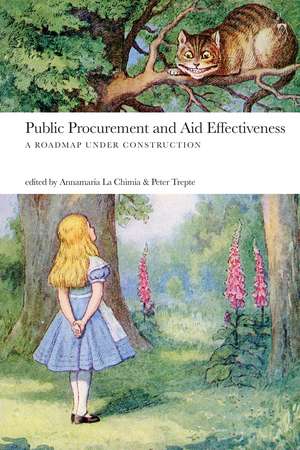
Public Procurement and Aid Effectiveness: A Roadmap under Construction
Editat de Annamaria La Chimia, Dr Peter Trepteen Limba Engleză Paperback – 18 feb 2021
Preț: 342.58 lei
Preț vechi: 429.47 lei
-20%
Puncte Express: 514
Carte tipărită la comandă
Livrare economică 20 noiembrie-04 decembrie
Livrare prin curier în România Termenul estimat este afișat lângă disponibilitate.
Transport gratuit de la 400.00 lei Plată online sau ramburs, în funcție de opțiunile comenzii.
Retur gratuit în 14 zile Comandă securizată și suport în română.
Specificații
ISBN-13: 9781509946303
ISBN-10: 1509946306
Pagini: 416
Dimensiuni: 154 x 232 x 24 mm
Greutate: 0.62 kg
Editura: Bloomsbury Publishing
Colecția Hart Publishing
Locul publicării:London, United Kingdom
ISBN-10: 1509946306
Pagini: 416
Dimensiuni: 154 x 232 x 24 mm
Greutate: 0.62 kg
Editura: Bloomsbury Publishing
Colecția Hart Publishing
Locul publicării:London, United Kingdom
Cuprins
PART I
THE ROADMAP
1. The Political Economy of Aid: Foreign Aid Effectiveness, Theories, Methods and the Challenges that Lie Ahead
Marco Zupi, Bac Ha International University, Vietnam
2. Public Procurement, Investment and Aid Effectiveness
Oliver Morrissey, University of Nottingham, UK
3. Procurement and Aid Effectiveness: The Journey so far
Annamaria La Chimia, University of Nottingham, UK and Peter Trepte, University of Nottingham, UK
PART II
HARMONISATION: THE FIRST PIT STOP
4. A Post-Modern Assessment of Global Harmonisation and Convergence: The Prospects and Challenges Going Forward to Further Global Standardisation of Procurement Regimes
Joshua I Schwartz, George Washington University, USA
5. The Harmonisation Process in Developing Countries
Laurence Folliot-Lalliot, University of Paris Nanterre, France
PART III
MEETING THE CHALLENGES ON THE WAY: UNTYING AID, FIGHTING CORRUPTION AND A NEW ENTRY: SUSTAINABILITY
6. The Echternach Procession of Untying Aid
Annamaria La Chimia, University of Nottingham, UK
7. Corruption and Procurement: Recalibrating the Sights
Peter Trepte, University of Nottingham, UK
8. Sustainability and Public Procurement
Roberto Caranta, University of Turin, Italy and Carol Cravero, University of Turin, Italy
PART IV
STRENGTHENING DEVELOPING COUNTRIES' SYSTEMS: TURNING THE TIDE?
9. The Evolution of the Methodology for Assessing Procurement Systems (MAPS)
Lena Diesing, OECD Directorate for Public Governance and Paulo Magina, OECD Directorate
for Public Governance
10. The Use of Country Systems
Annamaria La Chimia, University of Nottingham, UK and Sope Williams-Elegbe, Stellenbosch University,
South Africa
11. Maturity Model for Institutional Development of Procurement Units in Indonesia
Jeanmarie Meyer, Millennium Challenge Corporation, USA
PART V
THE PATH OF DONORS' REFORMS
12. The World Bank's Procurement Framework: An Assessment of Aid Effectiveness
Christopher R Yukins, George Washington University, USA and Sope Williams-Elegbe, Stellenbosch University, South Africa
13. Harmonisation and Reforms at Other Multilateral Development Banks
Peter Trepte, University of Nottingham, UK
14. Aid Effectiveness and Public Procurement - The USAID Experience
Jun Jin, USAID Office of the General Counsel, USA and Ronald Wietecha, USAID, West Africa Mission in Accra, Ghana
PART VI
THE ROAD AHEAD
15. Development Outcomes and Procurement Reform
Jeffrey Gutman, Brookings Institution, USA
16. Concluding Remarks: 'Are We There Yet'?
Annamaria La Chimia, University of Nottingham, UK and Peter Trepte, University of Nottingham, UK
THE ROADMAP
1. The Political Economy of Aid: Foreign Aid Effectiveness, Theories, Methods and the Challenges that Lie Ahead
Marco Zupi, Bac Ha International University, Vietnam
2. Public Procurement, Investment and Aid Effectiveness
Oliver Morrissey, University of Nottingham, UK
3. Procurement and Aid Effectiveness: The Journey so far
Annamaria La Chimia, University of Nottingham, UK and Peter Trepte, University of Nottingham, UK
PART II
HARMONISATION: THE FIRST PIT STOP
4. A Post-Modern Assessment of Global Harmonisation and Convergence: The Prospects and Challenges Going Forward to Further Global Standardisation of Procurement Regimes
Joshua I Schwartz, George Washington University, USA
5. The Harmonisation Process in Developing Countries
Laurence Folliot-Lalliot, University of Paris Nanterre, France
PART III
MEETING THE CHALLENGES ON THE WAY: UNTYING AID, FIGHTING CORRUPTION AND A NEW ENTRY: SUSTAINABILITY
6. The Echternach Procession of Untying Aid
Annamaria La Chimia, University of Nottingham, UK
7. Corruption and Procurement: Recalibrating the Sights
Peter Trepte, University of Nottingham, UK
8. Sustainability and Public Procurement
Roberto Caranta, University of Turin, Italy and Carol Cravero, University of Turin, Italy
PART IV
STRENGTHENING DEVELOPING COUNTRIES' SYSTEMS: TURNING THE TIDE?
9. The Evolution of the Methodology for Assessing Procurement Systems (MAPS)
Lena Diesing, OECD Directorate for Public Governance and Paulo Magina, OECD Directorate
for Public Governance
10. The Use of Country Systems
Annamaria La Chimia, University of Nottingham, UK and Sope Williams-Elegbe, Stellenbosch University,
South Africa
11. Maturity Model for Institutional Development of Procurement Units in Indonesia
Jeanmarie Meyer, Millennium Challenge Corporation, USA
PART V
THE PATH OF DONORS' REFORMS
12. The World Bank's Procurement Framework: An Assessment of Aid Effectiveness
Christopher R Yukins, George Washington University, USA and Sope Williams-Elegbe, Stellenbosch University, South Africa
13. Harmonisation and Reforms at Other Multilateral Development Banks
Peter Trepte, University of Nottingham, UK
14. Aid Effectiveness and Public Procurement - The USAID Experience
Jun Jin, USAID Office of the General Counsel, USA and Ronald Wietecha, USAID, West Africa Mission in Accra, Ghana
PART VI
THE ROAD AHEAD
15. Development Outcomes and Procurement Reform
Jeffrey Gutman, Brookings Institution, USA
16. Concluding Remarks: 'Are We There Yet'?
Annamaria La Chimia, University of Nottingham, UK and Peter Trepte, University of Nottingham, UK
Recenzii
I have found the book to be truly excellent and very thought-provoking, not least because it covers much more than procurement as a conduit for the economic effectiveness of foreign/development aid. For sure, this core preoccupation of the aid community (and a fringe of procurement community) is addressed centrally, thoroughly and authoritatively in the book, including interdisciplinary perspectives from political scientists, economists, lawyers and leading practitioners at international institutions. The book is thus a very valuable source of information and analysis for anyone researching the field.