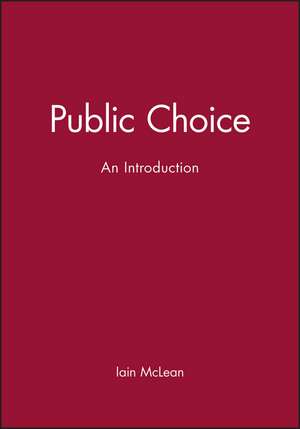
Public Choice
Autor Iain Mcleanen Limba Engleză Paperback – 19 feb 1990
Preț: 420.00 lei
Puncte Express: 630
Carte tipărită la comandă
Livrare economică 28 noiembrie-12 decembrie
Livrare prin curier în România Termenul estimat este afișat lângă disponibilitate.
Transport gratuit pentru acest produs Plată online sau ramburs, în funcție de opțiunile comenzii.
Retur gratuit în 14 zile Comandă securizată și suport în română.
Specificații
ISBN-13: 9780631138396
ISBN-10: 0631138390
Pagini: 232
Dimensiuni: 152 x 229 x 14 mm
Greutate: 0.39 kg
Editura: Wiley
Locul publicării:Chichester, United Kingdom
ISBN-10: 0631138390
Pagini: 232
Dimensiuni: 152 x 229 x 14 mm
Greutate: 0.39 kg
Editura: Wiley
Locul publicării:Chichester, United Kingdom
V-ar putea interesa
-
 Fuel on the FireGreg MuttittPreț: 124.86 lei
 -
 A Quiet WordAndy Rowell-18%Preț: 64.08 lei78.49 lei
 -
 -28%Preț: 411.47 lei575.00 lei
 -
 State of the UnionIain McLean-32%Preț: 986.55 lei1458.45 lei
 -
 The Gun Debate: What Everyone Needs to Know®Philip J. Cook-18%Preț: 65.60 lei79.86 lei
 -
 Negotiating the Siege of Lal MasjidKhuram IqbalPreț: 253.46 lei
 -
 What's Wrong with the British Constitution?Iain McLean-21%Preț: 403.37 lei509.75 lei
 -
 -18%Preț: 1220.88 lei1488.88 lei
 -
 Pressure Groups in British PoliticsW.N. Coxall-15%Preț: 618.85 lei728.05 lei
 -
 Democracy and New TechnologyIain Mclean-15%Preț: 490.21 lei576.72 lei
 -
 Pressure GroupsDuncan WattsPreț: 129.97 lei
 -
 Legally MarriedScot Peterson-17%Preț: 172.12 lei208.37 lei
 -
 Scotland's ChoicesIain Mclean-9%Preț: 119.40 lei130.57 lei
 -
 Preț: 182.02 lei
 -
 The Life and Death of ACT UP/LABenita RothPreț: 213.32 lei
 -
 Strategizing InfluenceS. GordonPreț: 382.69 lei
 -
 Lobbying and PolicymakingErik K. Godwin-8%Preț: 528.66 lei574.64 lei
Notă biografică
IAIN MCLEAN is Professor of Politics at Oxford University and a Fellow of Nuffield College, UK. He has worked on British politics and public policy for over 30 years. He has been a front bench councillor twice.
Cuprins
Part 1: Introduction to Public Choice TheoryChapter 1: What is Public Choice?
The core principles of public choice
Distinguishing public choice from traditional political science
The economic model of political behavior
Chapter 2: Individual Choice and Voting Behavior
Rational choice theory and voter decision-making
The median voter theorem
Voter turnout and rational ignorance
Part 2: Voting Systems and Political Competition
Chapter 3: Voting Mechanisms
Simple majority rule
Plurality voting
Condorcet's paradox and Arrow's Impossibility Theorem
Chapter 4: Political Parties and Spatial Voting
The spatial model of political competition
Party platforms and electoral strategies
The role of ideology in voting behavior
Part 3: Collective Action and Interest Groups
Chapter 5: Collective Action Problems
The free-rider problem
The logic of collective action
Overcoming collective action challenges
Chapter 6: Interest Groups and Lobbying
The role of interest groups in the political process
Lobbying strategies and political influence
Rent-seeking behavior and its economic consequences
Part 4: Government Institutions and Bureaucracy
Chapter 7: Bureaucracy and Principal-Agent Problems
The nature of bureaucracy
Bureaucratic incentives and inefficiency
Regulatory capture and its implications
Chapter 8: Public Spending and Budgetary Processes
The political economy of public spending
Budgetary cycles and pork barrel politics
The role of fiscal institutions
Part 5: Applications and Criticisms of Public Choice
Chapter 9: Public Choice in Practice
Applications to environmental policy
Public choice analysis of healthcare systems
The political economy of trade policy
Chapter 10: Criticisms and Debates in Public Choice
The limitations of the rational choice assumption
The role of altruism and social norms
Public choice and the concept of "the public interest"
The core principles of public choice
Distinguishing public choice from traditional political science
The economic model of political behavior
Chapter 2: Individual Choice and Voting Behavior
Rational choice theory and voter decision-making
The median voter theorem
Voter turnout and rational ignorance
Part 2: Voting Systems and Political Competition
Chapter 3: Voting Mechanisms
Simple majority rule
Plurality voting
Condorcet's paradox and Arrow's Impossibility Theorem
Chapter 4: Political Parties and Spatial Voting
The spatial model of political competition
Party platforms and electoral strategies
The role of ideology in voting behavior
Part 3: Collective Action and Interest Groups
Chapter 5: Collective Action Problems
The free-rider problem
The logic of collective action
Overcoming collective action challenges
Chapter 6: Interest Groups and Lobbying
The role of interest groups in the political process
Lobbying strategies and political influence
Rent-seeking behavior and its economic consequences
Part 4: Government Institutions and Bureaucracy
Chapter 7: Bureaucracy and Principal-Agent Problems
The nature of bureaucracy
Bureaucratic incentives and inefficiency
Regulatory capture and its implications
Chapter 8: Public Spending and Budgetary Processes
The political economy of public spending
Budgetary cycles and pork barrel politics
The role of fiscal institutions
Part 5: Applications and Criticisms of Public Choice
Chapter 9: Public Choice in Practice
Applications to environmental policy
Public choice analysis of healthcare systems
The political economy of trade policy
Chapter 10: Criticisms and Debates in Public Choice
The limitations of the rational choice assumption
The role of altruism and social norms
Public choice and the concept of "the public interest"
Descriere
This work offers students of politics and sociology a non-technical explanation of public choice in theory and practice, examining its intellectual roots in games theory, co-operation and collective choice.