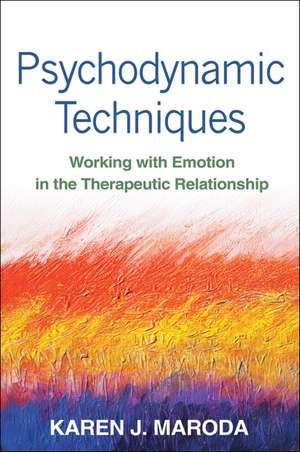
Psychodynamic Techniques, First Edition: Working with Emotion in the Therapeutic Relationship
Autor Karen J. Marodaen Limba Engleză Paperback – 12 dec 2012
Recomandăm Psychodynamic Techniques, First Edition ca pe o resursă fundamentală pentru practicienii care doresc să navigheze prin complexitatea interacțiunilor emoționale din cabinet. Autoarea, Karen J. Maroda, profesor de psihiatrie la Medical College of Wisconsin, aduce o autoritate recunoscută în domeniul psihanalizei contemporane, fundamentându-și abordarea pe o carieră dedicată studiului vulnerabilității și onestității emoționale în relația clinică.
Descoperim aici o perspectivă curajoasă asupra modului în care experiențele emoționale ale terapeutului — nu doar ale clientului — influențează procesul de vindecare. Psychodynamic Techniques, First Edition acoperă o arie similară cu Introduction to Psychodynamic Psychotherapy Technique de Sarah Fels Usher, însă lucrarea de față adoptă o abordare mult mai axată pe interacțiune și pe utilizarea strategică a autodezvăluirii, oferind ghidaj specific pentru situații de conflict și sentimente intense. Această focalizare pe „mutulitate” și influență reciprocă leagă volumul de lucrările anterioare ale autoarei, precum The Analyst’s Vulnerability și Seduction, Surrender, and Transformation, unde Karen J. Maroda argumentează că transformarea terapeutică necesită o implicare afectivă autentică din ambele părți.
Structura cărții este riguros organizată pentru a urmări progresia tratamentului, de la stabilirea colaborării și redefinirea regresiunii, până la evaluarea intervențiilor prin urmărirea răspunsului clientului. Remarcăm secțiunile dedicate provocărilor specifice, precum gestionarea furiei în contratransfer sau abordarea sentimentelor erotice, elemente care fac din acest volum un ghid tehnic indispensabil. Tonul este precis și instructiv, evitând abstracțiile teoretice în favoarea unor exemple de caz vii care ilustrează clar distincția dintre utilizarea terapeutică și cea non-terapeutică a emoției.
Preț: 288.78 lei
Carte disponibilă
Livrare economică 28 octombrie-11 noiembrie
Livrare express 14-20 octombrie pentru 40.09 lei
Specificații
ISBN-10: 1462509592
Pagini: 274
Dimensiuni: 152 x 229 x 18 mm
Greutate: 0.4 kg
Ediția:1
Editura: Guilford Publications
Colecția Guilford Press
V-ar putea interesa
-
 -5%Preț: 313.61 lei330.11 lei
 -
 -18%Preț: 1064.37 lei1298.01 lei
 -
 -5%Preț: 334.67 lei352.28 lei
 -
 Preț: 366.58 lei
 -
 Organization Change w/webW Warner BurkePreț: 470.95 lei
 -
 Preț: 534.66 lei
 -
 Preț: 408.31 lei
 -
 The Analyst’s Vulnerability: Impact on Theory and PracticeKaren J. MarodaPreț: 320.79 lei
 -
 -18%Preț: 1002.46 lei1222.51 lei
 -
 Three CharactersChristopher BollasPreț: 171.68 lei
 -
 Der eigene Körper als Symbol?Mathias HirschPreț: 253.40 lei
 -
 Das weibliche Genie - Melanie KleinJulia KristevaPreț: 327.65 lei
Public țintă
Professional Practice & DevelopmentDe ce să citești această carte
Această carte se adresează terapeuților și studenților care doresc să depășească barierele tehnice rigide în favoarea unei relații clinice autentice. Cititorul câștigă instrumente practice pentru a utiliza propriile reacții emoționale ca busolă în tratament, învățând să gestioneze conflictele și autodezvăluirea fără a compromite cadrul profesional. Este o resursă esențială pentru rafinarea tehnicii în lucrul cu pacienți dificili sau cu patologii de tip borderline.
Despre autor
Karen J. Maroda este o figură proeminentă în psihanaliza relațională contemporană, ocupând funcția de profesor clinic asistent de psihiatrie la Medical College of Wisconsin. De asemenea, este membră a Minnesota Institute for Contemporary Psychoanalytic Studies. Expertiza sa se concentrează pe rolul afectivității în procesul terapeutic, fiind cunoscută pentru promovarea onestității emoționale a clinicianului. Opera sa, care include titluri precum The Power of Countertransference, a influențat semnificativ modul în care terapeuții integrează propriile trăiri subiective în practica clinică, oferind un cadru teoretic solid pentru utilizarea terapeutică a vulnerabilității.
Recenzii
"Maroda brings such a wealth of seasoned clinical experience and wisdom to this book that it inevitably will be an invaluable resource. She offers a treatment-oriented presentation that is sophisticated yet lucid and pragmatic." - Edgar A. Levenson, William Alanson White Institute, New York, New York
"Though intended primarily for inexperienced clinicians, this book has much to offer therapists at every level of practice. It is in equal turns scholarly and eminently practical, and imparts the clinical wisdom of a senior therapist who is willing to discuss the intricacies of clinical process with emotional and professional candor. The multidimensional clinical illustrations are evocative and elegantly crafted. Highly recommended." - Jerrold R. Brandell, Distinguished Professor, Wayne State University School of Social Work, USA; Editor-in-Chief, Psychoanalytic Social Work
"With this engaging, readable book, Maroda answers a longstanding need for a primer on psychodynamic technique. In her characteristic melding of professional and personal experience, theoretical sophistication, research findings, and plain-spoken common sense, Maroda serves up a banquet of good advice that will nourish not only students and beginning therapists, but also experienced practitioners. She keeps the focus on the practical and generously illustrates her points with clinical vignettes that exemplify the emotional honesty she so consistently recommends. I look forward to assigning this welcome text to my graduate students in clinical psychology." - Nancy McWilliams, Graduate School of Applied and Professional Psychology, Rutgers, The State University of New Jersey, USA
"This is an outstanding contribution by a master clinician. Maroda takes the reader on an intimate tour of becoming a good psychotherapist. Her generous use of case examples allows the reader to enter into her consulting room, and illustrates the nuances of various dynamic methods. This book should be mandatory reading for graduate students facing the trepidation and uncertainty of immersing oneself in clinical practice." - Jon Mills, in private practice, Ajax, Ontario, Canada
"Maroda clearly describes how the psychotherapist's emotional responses to the patient's communications are essential to the change processes that lie at the core of the therapeutic relationship. Her clinical model for working more deeply in the affective realm is solidly grounded in interpersonal neurobiology. This extraordinary book is filled with practical information and rich case vignettes. I highly recommend it." - Allan N. Schore, Department of Psychiatry and Biobehavioral Sciences, University of California, Los Angeles, USA
Cuprins
Introduction. Emotional Engagement and Mutual Influence: Basic Issues as Therapy Begins. Mutuality and Collaboration: Influencing Each Other. Redefining Regression: Facilitating Therapeutic Vulnerability. Evaluating Interventions: Tracking the Client’s Response. Self-disclosure and Advice: Understanding How and When the Therapist’s Disclosures are Therapeutic. Managing Emotion: Affective Communication and the Role of Interaction. The Special Problem of Affect Management in Treating Borderline Personality Disorders. Confrontation and Countertransference Anger: Overcoming the Therapist’s Aversion to Conflict. Erotic Feelings: How They Help or Hinder the Therapeutic Process. Empowering the Client: The Road to Independence. Conclusion. Glossary. Annotated Bibliography.
Notă biografică
Karen J. Maroda, PhD, ABPP, in private practice, Wisconsin, USA
Descriere
Helping therapists navigate the complexities of emotional interactions with clients, this book provides practical clinical guidelines. Master clinician Karen J. Maroda adds an important dimension to the psychodynamic literature by exploring the role of both clients’ and therapists’ emotional experiences in the process of therapy. Vivid case examples illustrate specific techniques for becoming more attuned to one’s own experience of a client; offering direct feedback and self-disclosure in the service of treatment goals; and managing intense feelings and conflict in the relationship. Maroda clearly distinguishes between therapeutic and nontherapeutic ways to work with emotion in this candid and instructive guide.