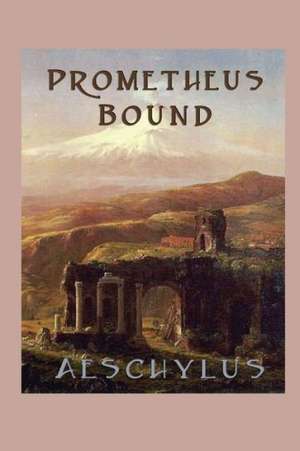
Prometheus Bound
Autor Aeschylusen Limba Engleză Paperback – 16 apr 2013
Preț: 51.71 lei
Carte tipărită la comandă
Livrare economică 27 noiembrie-11 decembrie
Specificații
ISBN-10: 1617208612
Pagini: 54
Dimensiuni: 156 x 234 x 4 mm
Greutate: 0.1 kg
Editura: SMK Books
V-ar putea interesa
-
 On the Front LineMarie ColvinPreț: 144.86 lei
 -
 -20%Preț: 78.38 lei98.00 lei
 -
 -16%Preț: 210.54 lei251.75 lei
 -
 Oedipus The KingSophoclesPreț: 69.23 lei
 -
 -16%Preț: 49.99 lei59.45 lei
 -
 The Rover and Other PlaysAphra Behn-17%Preț: 61.55 lei73.73 lei
 -
 Life of JohnsonJames Boswell-16%Preț: 200.91 lei238.31 lei
 -
 -17%Preț: 67.00 lei80.66 lei
 -
 Preț: 63.30 lei
 -
 OdysseyAndreas LitrasPreț: 104.99 lei
 -
 A Companion to the Punic WarsDexter HoyosPreț: 382.34 lei
 -
 Preț: 246.18 lei
 -
 The Complete Works of TacitusCornelius TacitusPreț: 175.67 lei
 -
 Pride and PrejudiceSimon Reade-26%Preț: 72.58 lei97.70 lei
 -
 Wesker's ComediesArnold Wesker-45%Preț: 89.12 lei160.75 lei
 -
 Wesker's Historical PlaysArnold Wesker-20%Preț: 132.31 lei165.62 lei
 -
 Wesker's Domestic PlaysArnold Wesker-20%Preț: 131.88 lei165.37 lei
 -
 Dracula and Frankenstein: Two Horror PlaysBryony Lavery-15%Preț: 97.46 lei115.31 lei
Descriere
Though it tells the stories of the defeated, Prometheus Bound and Other Plays features four tragedies that depict both unfortunate demises and the essence of the fighting human spirit. The Suppliants, the first play of the collection, follows the daughters of Danaus as they flee from the loveless marriages that had been forced upon them. The Persians, perhaps the oldest surviving play in existence, portrays the defeat of the Persian King Xeroxes. Though written by a Greek man who fought in the Persian war, The Persians displays a surprisingly sympathetic view of the opposing army. Next in the collection is Seven Against Thebes, which follows the battle between two brothers for the throne of Thebes. After the banishment of Oedipus, Eteocles and Adrastus, the two brothers, engaged in an epic war, fulfilling the tragic curse of the Oedipus family. The title tragedy in Prometheus Bound and Other Plays, Prometheus Bound, tells the tale of the downfall of the titian Prometheus. Before Prometheus, mankind had no advantage over the gods that ruled the heavens and Earth. Humans were forced to cower in the cold darkness, plagued by ignorance until Prometheus took pity on them. With heroic intentions, Prometheus stole fire and knowledge from Olympus and gave it to mankind. Though he brought light, warmth, and understanding to Earth, Zeus was outraged, and so began Prometheus' punishment. Featuring the oldest surviving play, legendary myths, epic battles, and humanist perspectives, Prometheus Bound and Other Plays by Aeschylus is a classic tragedy that exemplifies empathy and the human spirit even in its tales of defeat. Written by the father of tragedy, this collection is a privileged possession. This edition of Prometheus Bound and Other Plays by Aeschylus is now easier than ever to enjoy with a modern, readable font and a stunning new cover design. Witness a surprising triumph of spirit even in the face of failure with Prometheus Bound and Other Plays.