
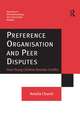
Preference Organisation and Peer Disputes: How Young Children Resolve Conflict: Directions in Ethnomethodology and Conversation Analysis
Autor Amelia Churchen Limba Engleză Hardback – 24 mar 2009
Din seria Directions in Ethnomethodology and Conversation Analysis
-
 Preț: 384.44 lei
 -
 Preț: 395.74 lei
 - 15%
 Preț: 433.41 lei
 - 15%
 Preț: 437.38 lei
 - 18%
 Preț: 1003.26 lei
 - 15%
 Preț: 457.86 lei
 -
 Preț: 443.46 lei
 - 18%
 Preț: 1301.00 lei
 -
 Preț: 456.79 lei
 -
 Preț: 421.26 lei
 -
 Preț: 476.37 lei
 -
 Preț: 437.55 lei
 - 15%
 Preț: 469.69 lei
 -
 Preț: 335.86 lei
 -
 Preț: 366.52 lei
 - 18%
 Preț: 1112.03 lei
 - 18%
 Preț: 1355.00 lei
 -
 Preț: 426.32 lei
 -
 Preț: 422.07 lei
 -
 Preț: 426.74 lei
 - 18%
 Preț: 1112.48 lei
 -
 Preț: 423.33 lei
 - 15%
 Preț: 472.17 lei
 - 18%
 Preț: 1151.48 lei
 - 18%
 Preț: 825.41 lei
 - 15%
 Preț: 448.88 lei
 - 21%
 Preț: 365.00 lei
 - 21%
 Preț: 393.83 lei
 - 21%
 Preț: 399.00 lei
 - 21%
 Preț: 368.23 lei
Preț: 1256.91 lei
Preț vechi: 1532.82 lei
-18%
Puncte Express: 1885
Carte tipărită la comandă
Livrare economică 05-19 decembrie
Livrare prin curier în România Termenul estimat este afișat lângă disponibilitate.
Transport gratuit pentru acest produs Plată online sau ramburs, în funcție de opțiunile comenzii.
Retur gratuit în 14 zile Comandă securizată și suport în română.
Specificații
ISBN-13: 9780754674412
ISBN-10: 075467441X
Pagini: 292
Dimensiuni: 156 x 234 x 18 mm
Greutate: 0.68 kg
Ediția:1
Editura: Taylor & Francis
Colecția Routledge
Seria Directions in Ethnomethodology and Conversation Analysis
Locul publicării:Oxford, United Kingdom
ISBN-10: 075467441X
Pagini: 292
Dimensiuni: 156 x 234 x 18 mm
Greutate: 0.68 kg
Ediția:1
Editura: Taylor & Francis
Colecția Routledge
Seria Directions in Ethnomethodology and Conversation Analysis
Locul publicării:Oxford, United Kingdom
V-ar putea interesa
-
 Preț: 172.85 lei
 -
 Psychology of HabitsRobin Mazzariello-27%Preț: 612.52 lei835.54 lei
 -
 -27%Preț: 1635.92 lei2229.04 lei
 -
 China and the New MaoistsProfessor Kerry Brown-22%Preț: 115.15 lei146.98 lei
Notă biografică
Dr Amelia Church is Lecturer in Education at the University of Melbourne, Australia. She was previously Lecturer in Childhood Studies at the University of Wales, Swansea. She has worked as Research Fellow at the Education Foundation and the Schools Innovation Commission in Victoria, Australia, and is a conbritutor to the Longitudinal Study of Australian Children, an ongoing project at the Australian Institute of Family Studies.
Recenzii
'A major advance in our emerging understanding of children's adversative discourse. This scholarly and engaging book highlights key findings on the nature of children's arguments, threats, and responses to potential conflict in detail. We see how children learn the skills necessary for overcoming emotionally charged conflict, gradually employing those conversational resources central to "face management" in talk-in-interaction. In doing so, Amelia Church makes a major contribution to the study of children's conversational skills.' Mike Forrester, University of Kent, UK 'This engaging and thought provoking study of preference organisation in young children’s peer disputes offers fresh insights into how children engage in adversative talk and interaction in the preschool classroom. The study challenges traditional adult-held views about how children should act and shows how even very young children pursue their own political agendas. The book makes a substantial contribution to studies of child-child communication, childhood and institutional talk.' Susan Danby, Queensland University of Technology, Australia
Cuprins
Chapter 1 Introduction; Chapter 2 Defining Child Conflict; Chapter 3 Conversation Analysis; Chapter 4 Peer Disputes; Chapter 5 Dispute Outcomes; Chapter 6 Preference and Dispute Outcomes; Chapter 7 How to Resolve Disputes;
Descriere
What is the most effective way of pursuing one's own goals in the pre-school playroom? This fascinating book offers a conversation analysis of children's arguments, revealing disputing as a highly ordered, rule-governed activity, even amongst very young children. The author provides a rich theoretical discussion of the work in speech acts and conversational analysis, whilst offering a sophisticated review in relation to children's culture