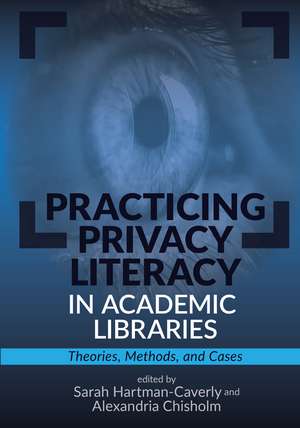
Practicing Privacy Literacy in Academic Libraries:: Theories, Methods, and Cases
Editat de Sarah Hartman-Caverly, Alexandria Chisholmen Limba Engleză Paperback – 12 oct 2023 – vârsta ani
Nivelul de studiu vizat este cel de masterat, doctorat și referință profesională pentru bibliotecari universitari și specialiști în știința informației. Găsim în această carte, editată de Sarah Hartman-Caverly și Alexandria Chisholm, un răspuns riguros la dilemele etice generate de era capitalismului de supraveghere. Lucrarea transcende teoria pură, propunând cadre concrete pentru implementarea alfabetizării privind confidențialitatea (privacy literacy) în mediul academic.
Notăm cu interes structura cvadripartită care ghidează cititorul de la fundamentele conceptuale — precum modelul „celui incomputabil” — la aspecte pragmatice de protecție a datelor și pedagogie. Capitolul dedicat integrării revizuirii confidențialității în fluxurile de lucru ale bibliotecilor digitale oferă soluții aplicate pentru o problemă adesea ignorată în procesele de digitizare. Volumul completează perspectiva oferită de The Privacy Literacy Field Guide, adăugând o dimensiune academică mai profundă și studii de caz specifice privind parteneriatele co-curriculare și dezvoltarea facultăților. De asemenea, în raport cu Protecting Patron Privacy, această lucrare pune un accent sporit pe alfabetizarea utilizatorului final, nu doar pe securizarea infrastructurii.
Abordarea este una critică și interdisciplinară, legând drepturile legale ale utilizatorilor de bunăstarea digitală și cetățenia digitală pozitivă. Prin includerea unor teme precum discriminarea prin preț și laboratoarele de cercetare a confidențialității, editorii transformă biblioteca dintr-un simplu depozitar de date într-un spațiu activ de rezistență etică și educație civică.
Preț: 511.80 lei
Preț vechi: 664.67 lei
-23%
Carte disponibilă
Livrare economică 16-30 noiembrie
Specificații
ISBN-10: 0838939899
Pagini: 390
Dimensiuni: 178 x 254 x 28 mm
Greutate: 0.68 kg
Editura: American Library Association
Colecția Assoc of College & Research Libraries
De ce să citești această carte
Recomandăm această resursă profesioniștilor din bibliotecile universitare care doresc să implementeze cursuri de alfabetizare informațională adaptate secolului XXI. Cititorul câștigă instrumente practice pentru a educa studenții despre valoarea datelor personale și pentru a audita etic propriile sisteme de bibliotecă. Este o lectură esențială pentru a transforma confidențialitatea dintr-o obligație legală într-o valoare pedagogică centrală.
Despre autor
Sarah Hartman-Caverly și Alexandria Chisholm sunt bibliotecare universitare cu o expertiză recunoscută în domeniul confidențialității digitale și al eticii informației. Alexandria Chisholm, prin lucrările sale anterioare precum The Privacy Literacy Field Guide, s-a impus ca o voce autoritară în dezvoltarea programelor de instruire pentru utilizatori. Ambii editori sunt afiliați unor instituții academice de prestigiu, unde dezvoltă cadre de referință utilizate la nivel internațional pentru integrarea conceptelor de 'privacy' în curriculum-ul universitar, colaborând strâns cu American Library Association pentru stabilirea standardelor profesionale.
Descriere scurtă
Practicing Privacy Literacy in Academic Libraries: Theories, Methods, and Cases can help you teach privacy literacy, evolve the privacy practices at your institution, and re-center the individuals behind the data and the ethics behind library work. Divided into four sections:
- What is Privacy Literacy?
- Protecting Privacy
- Educating about Privacy
- Advocating for Privacy
Notă biografică
Alexandria Chisholm is an associate librarian at Penn State University Libraries and liaison to the Berks campus’ first-year experience program and science division. She has over ten years of reference and instruction experience at both private and public baccalaureate- and doctoral-degree granting institutions. Chisholm’s research focuses on privacy literacy, with special attention on digital wellness and algorithmic transparency as well as information literacy and student engagement. Together, Alex and Sarah Hartman-Caverly created the Penn State Berks Privacy Workshop Series, collaborate on privacy literacy research and professional development, and maintain the Digital Shred Privacy Literacy Toolkit.
Cuprins
Preface
Alexandria Chisholm
Acknowledgments
Introduction
Alexandria Chisholm
Part I. What Is Privacy Literacy?
Chapter 1. Privacy as Respect for Persons: Reimagining Privacy Literacy with the Six Private I’s Privacy Conceptual Framework
Sarah Hartman-Caverly and Alexandria Chisholm
Chapter 2. Data Is Not a Mirror: A Privacy-Digital Wellness Model as Preservation of the Incomputable Self
Alexandria Chisholm
Chapter 3. Developing a Privacy Research Lab: Activities and Impact of Prilab
Mary Francis and Dustin Steinhagen
Part II. Protecting Privacy
Chapter 4. Protecting Patron Privacy in Access Services: Looking at the Laws
Jamie Marie Aschenbach
Chapter 5. Putting Privacy into Practice: Embedding a Privacy Review into Digital Library Workflows
Virginia Dressler
Chapter 6. Libraries, Privacy, and Surveillance Capitalism: The Looming Trouble with Academia and Invasive Information Technologies
Andrew Weiss
Part III. Educating About Privacy
Chapter 7. The Promise of Theory-Informed Pedagogy: Building a Privacy Literacy Program
Alexandria Chisholm and Sarah Hartman-Caverly
Chapter 8. Preparing the Next Generation of Privacy Leaders?: The Intersection of Business Ethics and Privacy Education
Emily Mross
Chapter 9. Our Students Are Online Consumers: Using Privacy Literacy to Challenge Price Discrimination
Joshua Becker
Chapter 10. Privacy Literacy and Engineering
Paul McMonigle and Lori Lysiak
Chapter 11. Teaching Privacy Using Learner-Centered Practices in a Credit-Bearing Context
Scott W. H. Young and Sara Mannheimer
Chapter 12. Amplifying Student Voices: Developing a Privacy Literacy Conversation
Melissa N. Mallon and Andrew Wesolek
Part IV. Advocating for Privacy
Chapter 13. Understanding Student Perspectives on Learning Analytics to Enable Privacy Advocacy and Policy Design
Michael R. Perry, Andrew D. Asher, Kristin A. Briney, Mariana Regalado, Abigail Goben, Maura A. Smale, Dorothea Salo, and Kyle M. L. Jones
Chapter 14. Building a Culture of Privacy through Collaborative Policy Development
Margaret Heller
Chapter 15. Privacy Pedagogy: Aligning Privacy Advocacy with Course Design Standards
Lindsey Wharton, Liz Dunne, and Adam Beauchamp
Chapter 16. What Successful Students Know: Promoting Privacy Literacy and Positive Digital Citizenship through Credit-Bearing Courses and Co-Curricular Partnerships
Theresa McDevitt, Crystal Machado, Melissa Calderon, Jaqueline McGinty, Jennifer McCroskey, and Ann Sesti
Chapter 17. Lateral Privacy Literacy: Peer-led Professional Privacy Literacy Learning Experiences
Sarah Hartman-Caverly
Conclusion. Privacy Work is Library Work
Sarah Hartman-Caverly
About the Authors