
Practical Building Conservation: Stone: Practical Building Conservation
Autor Historic Englanden Limba Engleză Hardback – 28 mar 2012
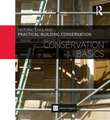
Preț: 1357.07 lei
Preț vechi: 1491.30 lei
-9%
Puncte Express: 2036
Carte disponibilă
Livrare economică 06-20 noiembrie
Livrare express 22-28 octombrie pentru 55.45 lei
Livrare prin curier în România Termenul estimat este afișat lângă disponibilitate.
Transport gratuit pentru acest produs Plată online sau ramburs, în funcție de opțiunile comenzii.
Retur gratuit în 14 zile Comandă securizată și suport în română.
Specificații
ISBN-13: 9780754645528
ISBN-10: 0754645525
Pagini: 348
Ilustrații: Includes 337 colour and 22 b&w illustrations
Dimensiuni: 220 x 240 x 25 mm
Greutate: 1.02 kg
Ediția:New ed
Editura: Taylor & Francis
Colecția Routledge
Seria Practical Building Conservation
Locul publicării:Oxford, United Kingdom
ISBN-10: 0754645525
Pagini: 348
Ilustrații: Includes 337 colour and 22 b&w illustrations
Dimensiuni: 220 x 240 x 25 mm
Greutate: 1.02 kg
Ediția:New ed
Editura: Taylor & Francis
Colecția Routledge
Seria Practical Building Conservation
Locul publicării:Oxford, United Kingdom
V-ar putea interesa
-
 Understanding Housing DefectsDuncan Marshall-8%Preț: 634.49 lei689.67 lei
 -
 Preț: 364.22 lei
 -
 Elements of Archaeological ConservationJ.M. CronynPreț: 420.29 lei
 -
 Historic Building FaçadesNew York Landmarks Conservancy-19%Preț: 460.84 lei568.94 lei
 -
 Old House HandbookMarianne Suhr-17%Preț: 235.99 lei284.60 lei
 -
 Structural Aspects of Building ConservationPoul Beckmann-11%Preț: 560.02 lei629.24 lei
 -
 Design-Tech: Building Science for ArchitectsJason Alread-8%Preț: 496.29 lei539.45 leiRecomandat
 -
 Practising Wood in Architecture: Connecting Design, Construction and SustainabilityJames Benedict BrownPreț: 346.04 leiRecomandat
 -
 Embodied Carbon for Sustainable Building ConservationOriel PrizemanPreț: 355.87 lei
 -
 Building PathologyDavid S. Watt-19%Preț: 451.34 lei557.21 lei
 -
 Preț: 88.93 lei
 -
 -34%Preț: 190.31 lei287.05 lei
 -
 The Ontario CottageLynne D DiStefanoPreț: 171.53 lei
 -
 Maintaining and Repairing Old HousesBevis ClaxtonPreț: 133.78 lei
 -
 Stone Restoration HandbookChris DanielsPreț: 248.30 lei
 -
 Lime and Lime MortarsA. CowperPreț: 329.12 lei
 -
 Preț: 333.31 lei
Public țintă
Professional Practice & DevelopmentCuprins
About This Book Using These Books Part 1: Materials and History of Use: Stone Building in England Working and Finishing Stone Architectural Stone Conservation in England Formation and Properties of Stone Part 2: Deterioration and Damage: Causes of Deterioration Inherent Problems Structural Problems Environmental Problems Other Causes of Deterioration Part 3: Assessment: Understanding Buildings and Their Condition Assessing Conditions and Causes of Decay Diagnosis: Determining Conservation Needs Part 4: Treatment and Repair: Project Planning and Development Structural Repair Non-structural Repair Cleaning Desalination Consolidation Repair of Stone Elements Protective Coatings Part 5: Care and Maintenance: Care and maintenance Special Topic: Conservation of Ruins Appendix Glossary Index
Notă biografică
The contents reflect the work of the Building Conservation and Research Team, their colleagues at Historic England, and their consultants and researchers, who together have many decades of accumulated experience in dealing with deteriorating building materials and systems of all types. This multi-disciplinary team of architects, surveyors, conservators and scientists are responsible for standard setting and research across a wide range of Historic England activities. The team specialises in dealing with the practical, technical and scientific aspects of building materials decay and their treatment. The aim has been to provide practical advice by advocating a common approach of firstly understanding the material or building element and why it is deteriorating, and then dealing with the causes. The books concentrate on those aspects which are significant in conservation terms, and reflect the requests for information received by Historic England.
Recenzii
[The Practical Building Conservation volumes] offer considerable information and advice on many aspects of conservation. Great emphasis is placed in all the volumes on making the reader familiar with the material in question, giving them as much information and direction as possible to allow them to understand what they are dealing with. Gives a comprehensive - hands on - approach; solutions are found, methods described and practical tips freely given... should be kept on the bookshelf within reach of most practising professionals in the field. - Jane Jones-Warner RIBA SCA AABC IHBC, Member RIBA Conservation Group
'This book belongs in the tool-kit of every specialist and general building contractor, of every trainer and educator and certainly of architects and surveyors. Amply populated by purposeful photographs and with illustrated diagnostic tables for easy reference, this book represents a coherent and eminently useable summary declaration not only of current thinking, but of longer-term intent.' Cornerstone
'My overriding impression of this series is that it is comprehensive, well set out and easy to follow, and it should be of interest both to all involved in the repair and maintenance of historic buildings, and to the casual reader. Each volume stands alone or as part of a set. This represents a substantial body of work in the field of building conservation that is unlikely to be repeated in the near future. The tables and technical drawings are clear, and some of the photographs included are remarkable. The amount of information within each volume is staggering and must represent the nearest thing to a one-stop-shop for historic building practitioners.' Context
'This work sits well on the shoulders of its predecessor, and like the first edition, should become an essential part of the conservation professional's toolkit and a natural starting point for any research into stone and its conservation.' Architectural Technology Magazine (AT)
'The primary editors for each volume acknowledge the contributions of numerous authors and the series' strength is in the breadth of the conservation community engaged in the project - a twenty-first-century galaxy of highly regarded practitioners and conservators brought together in a single technical series, the books are accessibly organized and elegantly designed. It is easy to navigate around them and, importantly, between them. Links to other volumes in the series are colour-coded in the text so that cross-referral to Stone, for example, from Mortars, which is frequently relevant, provides helpful signposting to the relevant detailed guidance in the companion handbook. The illustrations are enormously valuable and the Timber volume, in particular, includes axonometric drawings of timber structures that beautifully display complex construction. These volumes are in all ways an essential, one-stop resource for conservation practitioners: well-organized, expertly informed, compellingly illustrated, signposting other key resources and (let us not take this for granted) written in lucid English.' The Historic Environment
'It has been researched and compiled with great care and thought for ease of use. I like this book and the quality of the photographs is magnificent. There are many highlights, but one particular section is a masterstroke: Assessing Condition & Causes of Decay consists of 10 glorious pages of photographs and tabular information presenting with deft clarity how to recognise and describe every imaginable type of stone weathering and decay.' Journal of Architectural Conservation
'This book belongs in the tool-kit of every specialist and general building contractor, of every trainer and educator and certainly of architects and surveyors. Amply populated by purposeful photographs and with illustrated diagnostic tables for easy reference, this book represents a coherent and eminently useable summary declaration not only of current thinking, but of longer-term intent.' Cornerstone
'My overriding impression of this series is that it is comprehensive, well set out and easy to follow, and it should be of interest both to all involved in the repair and maintenance of historic buildings, and to the casual reader. Each volume stands alone or as part of a set. This represents a substantial body of work in the field of building conservation that is unlikely to be repeated in the near future. The tables and technical drawings are clear, and some of the photographs included are remarkable. The amount of information within each volume is staggering and must represent the nearest thing to a one-stop-shop for historic building practitioners.' Context
'This work sits well on the shoulders of its predecessor, and like the first edition, should become an essential part of the conservation professional's toolkit and a natural starting point for any research into stone and its conservation.' Architectural Technology Magazine (AT)
'The primary editors for each volume acknowledge the contributions of numerous authors and the series' strength is in the breadth of the conservation community engaged in the project - a twenty-first-century galaxy of highly regarded practitioners and conservators brought together in a single technical series, the books are accessibly organized and elegantly designed. It is easy to navigate around them and, importantly, between them. Links to other volumes in the series are colour-coded in the text so that cross-referral to Stone, for example, from Mortars, which is frequently relevant, provides helpful signposting to the relevant detailed guidance in the companion handbook. The illustrations are enormously valuable and the Timber volume, in particular, includes axonometric drawings of timber structures that beautifully display complex construction. These volumes are in all ways an essential, one-stop resource for conservation practitioners: well-organized, expertly informed, compellingly illustrated, signposting other key resources and (let us not take this for granted) written in lucid English.' The Historic Environment
'It has been researched and compiled with great care and thought for ease of use. I like this book and the quality of the photographs is magnificent. There are many highlights, but one particular section is a masterstroke: Assessing Condition & Causes of Decay consists of 10 glorious pages of photographs and tabular information presenting with deft clarity how to recognise and describe every imaginable type of stone weathering and decay.' Journal of Architectural Conservation
Descriere
Stone considers the wide variety of historical uses, from simple masonry walling through to elaborate carving and decoration.