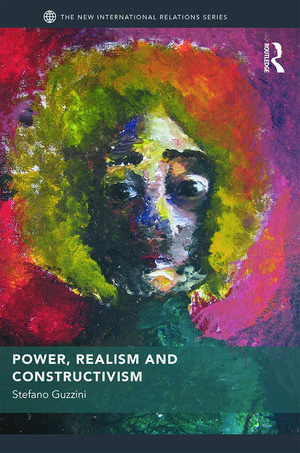
Power, Realism and Constructivism: New International Relations
Autor Stefano Guzzinien Limba Engleză Hardback – 21 mar 2013
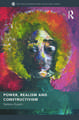
A novel analysis of power and the potential limits of realism and constructivism in International Relations, Power, Realism and Constructivism will be of interest to students and scholars of international relations, international political economy, social and political theory, and the study of power.
Din seria New International Relations
-
 Preț: 442.04 lei
 - 15%
 Preț: 472.67 lei
 - 18%
 Preț: 1250.97 lei
 -
 Preț: 307.15 lei
 -
 Preț: 477.04 lei
 - 18%
 Preț: 1065.09 lei
 - 18%
 Preț: 1292.55 lei
 - 15%
 Preț: 420.47 lei
 - 18%
 Preț: 1294.99 lei
 -
 Preț: 472.78 lei
 - 15%
 Preț: 462.45 lei
 - 15%
 Preț: 527.13 lei
 - 18%
 Preț: 1253.07 lei
 - 15%
 Preț: 447.37 lei
 - 15%
 Preț: 459.26 lei
 -
 Preț: 482.08 lei
 - 18%
 Preț: 1253.07 lei
 -
 Preț: 460.56 lei
 - 18%
 Preț: 1250.55 lei
 -
 Preț: 334.37 lei
 -
 Preț: 443.74 lei
 - 18%
 Preț: 1297.06 lei
 - 18%
 Preț: 1455.01 lei
 - 18%
 Preț: 1254.12 lei
 -
 Preț: 427.89 lei
 - 15%
 Preț: 481.25 lei
 - 15%
 Preț: 421.66 lei
 - 18%
 Preț: 1297.01 lei
 -
 Preț: 460.39 lei
 - 18%
 Preț: 1254.81 lei
 - 15%
 Preț: 441.38 lei
 - 15%
 Preț: 436.80 lei
 - 18%
 Preț: 1307.68 lei
 - 18%
 Preț: 1258.30 lei
 - 15%
 Preț: 460.93 lei
 - 18%
 Preț: 1289.25 lei
 - 15%
 Preț: 420.47 lei
 - 18%
 Preț: 1256.21 lei
Preț: 1305.30 lei
Preț vechi: 1591.84 lei
-18%
Puncte Express: 1958
Carte tipărită la comandă
Livrare economică 05-19 decembrie
Livrare prin curier în România Termenul estimat este afișat lângă disponibilitate.
Transport gratuit pentru acest produs Plată online sau ramburs, în funcție de opțiunile comenzii.
Retur gratuit în 14 zile Comandă securizată și suport în română.
Specificații
ISBN-13: 9780415640466
ISBN-10: 0415640466
Pagini: 376
Ilustrații: 6 black & white illustrations, 2 black & white tables, 6 black & white line drawings
Dimensiuni: 156 x 234 x 24 mm
Greutate: 0.83 kg
Ediția:New.
Editura: Taylor & Francis
Colecția Routledge
Seria New International Relations
Locul publicării:Oxford, United Kingdom
ISBN-10: 0415640466
Pagini: 376
Ilustrații: 6 black & white illustrations, 2 black & white tables, 6 black & white line drawings
Dimensiuni: 156 x 234 x 24 mm
Greutate: 0.83 kg
Ediția:New.
Editura: Taylor & Francis
Colecția Routledge
Seria New International Relations
Locul publicării:Oxford, United Kingdom
V-ar putea interesa
-
 Cameron at 10Anthony SeldonPreț: 123.59 lei
 -
 -27%Preț: 67.47 lei92.20 lei
 -
 On the PoliticalChantal MouffePreț: 227.46 lei
 -
 Analysing Political Discourse: Theory and PracticePaul Chilton-15%Preț: 426.64 lei501.93 lei
 -
 Preț: 403.20 lei
 -
 -15%Preț: 604.73 lei711.44 lei
 -
 Policy Change & Discourse in EuropeClaudio M. Radaelli-18%Preț: 1113.27 lei1357.65 lei
 -
 Preț: 482.08 lei
 -
 The Sayyid Qutb Reader: Selected Writings on Politics, Religion, and SocietyAlbert J. Bergesen-8%Preț: 426.93 lei464.06 lei
 -
 International Relations Theory TodayKen BoothPreț: 372.33 lei
 -
 -25%Preț: 116.19 lei155.58 lei
 -
 CapitalismArundhati RoyPreț: 87.93 lei
Public țintă
Postgraduate and UndergraduateCuprins
Introduction Part I: Power 1. Structural Power: The Limits of Neorealist Power Analysis 2. The use and misuse of power analysis in international theory 3. From (alleged) unipolarity to the decline of multilateralism? A power-theoretical critique 4. Constructivism and International Relations: an analysis of Niklas Luhmann’s conceptualisation of power 5. Power analysis in Bourdieu Part II: Realism 6. The enduring dilemmas of realism in International Relations 7. The Different Worlds of Realism in International Relations 8. Foreign Policy without diplomacy: the Bush administration at a crossroads 9. Robert Gilpin: A Realist Quest for the Dynamics of Power 10. Strange’s oscillating realism: opposing the ideal - and the apparent Part III: Constructivism 11. A reconstruction of constructivism in International Relations 12. The concept of power: a constructivist analysis 13. 'The Cold War is what we make of it’: when peace research meets constructivism in International Relations 14. Wendt’s constructivism: a relentless quest for synthesis’ with Anna Leander 15. Imposing coherence: the central role of practice in Friedrich Kratochwil’s theorising of politics, international relations and science Epilogue: The significance and roles of teaching theory in International Relations
Notă biografică
Stefano Guzzini is Senior Researcher at the Danish Institute for International Studies, Denmark, and Professor of Government at Uppsala University, Sweden.
Recenzii
"Stefano Guzzini's range, cogency and sympathetic relation to his interlocutors are in full display in this collection of his best work. Best is best. For my money, Guzzini is the best straight-on IR theorist of his generation." - Nicholas Onuf, Professor Emeritus of Florida International University in Miami, USA.
'The volume is a great overview of [Guzzini's] thinking, and necessary reading for anyone interested in any of the three themes, let alone their intersection.' - Samual Barkins, University of Massachusetts, USA
'The volume is a great overview of [Guzzini's] thinking, and necessary reading for anyone interested in any of the three themes, let alone their intersection.' - Samual Barkins, University of Massachusetts, USA
Descriere
This book brings together Stefano Guzzini’s research on power, realism and constructivism, framed by a new and substantial introductory chapter. It explores the diversity of different schools and their intrinsic tensions and fallacies by analysing both theories and their assumptions, and theorists following their intellectual paths.