
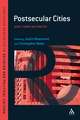
Postsecular Cities: Space, Theory and Practice: Continuum Resources in Religion and Political Culture
Editat de Justin Beaumont, Dr Christopher Bakeren Limba Engleză Hardback – 16 iun 2011
În analiza volumului Postsecular Cities, remarcăm o schimbare de paradigmă în înțelegerea spațiului urban, pornind de la un vocabular tematic ce include concepte precum „postcolonialism religios”, „teologie de piață”, „guvernanță postseculară” și „sociabilitate urbană”. Autorii explorează modul în care orașul contemporan devine un laborator pentru noi alianțe între sectoarele seculare și tradițiile spirituale, depășind vechea viziune a secolului XX care anticipa dispariția religiei sub presiunea progresului tehnologic.
Descoperim aici o structură riguroasă, organizată în trei părți esențiale. Prima parte cartografiază terenul filosofic al criticii radicale, în timp ce a doua secțiune oferă experiențe contrastante, de la reprezentările vizuale ale dreptului la oraș în Ierusalim, până la critici feministe privind genul și divinitatea în context urban. Ultima parte se concentrează pe politici și praxis, analizând tranziția de la multiculturalismul bazat pe rasă la cel bazat pe religie. Această abordare interdisciplinară continuă preocupările editorului Justin Beaumont din lucrări anterioare precum Faith-Based Organisations and Exclusion in European Cities, unde analiza rolul organizațiilor religioase în combaterea excluziunii sociale.
Subliniem faptul că profesorii și cercetătorii care utilizează Exploring the Postsecular vor aprecia în acest volum trecerea de la speculația teoretică pură la o analiză aplicată a mediului construit. Spre deosebire de Religious Pluralism and the City, care se concentrează pe tipologii religioase, lucrarea de față pune accent pe dialogul dintre geografie și teologie pentru a explica modul în care valorile spirituale reconfigurează identitatea socială și politicile publice în metropolele diversificate de astăzi.
Preț: 962.56 lei
Preț vechi: 1274.66 lei
-24%
Carte tipărită la comandă
Livrare economică 17 noiembrie-01 decembrie
Specificații
ISBN-10: 1441129634
Pagini: 296
Dimensiuni: 156 x 234 x 23 mm
Greutate: 0.54 kg
Editura: Bloomsbury Publishing
Colecția Continuum
Seria Continuum Resources in Religion and Political Culture
Locul publicării:London, United Kingdom
V-ar putea interesa
-
 Humanism: A Very Short IntroductionStephen Law-20%Preț: 55.78 lei70.14 lei
 -
 Violence and New Religious MovementsJames R. Lewis-28%Preț: 489.60 lei680.54 lei
 -
 Gods of the CityRobert A. OrsiPreț: 229.36 lei
 -
 The Book of Atheist SpiritualityAndre Comte-SponvillePreț: 112.69 lei
 -
 Gunning for GodJohn LennoxPreț: 99.17 lei
 -
 The New AtheismMichael PoolePreț: 35.13 lei
 -
 Cunningham, G: Religion and MagicGraham Cunningham-19%Preț: 167.64 lei206.82 lei
 -
 -23%Preț: 258.72 lei336.23 lei
 -
 The Secular OutlookPaul CliteurPreț: 221.26 lei
 -
 Christianity Is Not GreatJohn W. LoftusPreț: 179.43 lei
 -
 Everybody Is Wrong about GodJames A. LindsayPreț: 107.29 lei
 -
 The Twilight Of AtheismAlister McgrathPreț: 114.25 lei
 -
 A Short History of AtheismDr Gavin Hyman-17%Preț: 185.15 lei222.29 lei
De ce să citești această carte
Recomandăm această carte specialiștilor în urbanism, sociologie și teologie care doresc să înțeleagă cum spațiul public încetează să mai fie strict secular. Cititorul câștigă o perspectivă interdisciplinară asupra modului în care credința influențează astăzi guvernarea și planificarea urbană, oferind instrumente critice pentru a naviga complexitatea orașelor postseculare.
Descriere
Cuprins
Recenzii
The book reflects on the status of the religious in contemporary societies in light of the new forms that it takes in large metropolises.
Reviewed in Archives de Sciences Sociales des Religions.