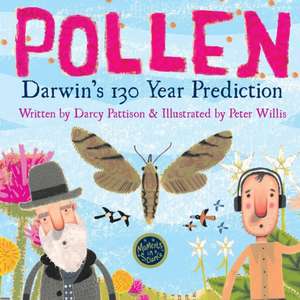
Pollen: Moments in Science
Autor Darcy Pattisonen Limba Engleză Paperback – 7 mai 2019
Preț: 61.59 lei
Puncte Express: 92
Carte tipărită la comandă
Livrare economică 21 noiembrie-05 decembrie
Livrare prin curier în România Termenul estimat este afișat lângă disponibilitate.
Transport gratuit de la 400.00 lei Plată online sau ramburs, în funcție de opțiunile comenzii.
Retur gratuit în 14 zile Comandă securizată și suport în română.
Specificații
ISBN-13: 9781629441207
ISBN-10: 1629441201
Pagini: 34
Dimensiuni: 216 x 216 x 3 mm
Greutate: 0.1 kg
Editura: Mims House
Colecția Moments in Science
Seria Moments in Science
ISBN-10: 1629441201
Pagini: 34
Dimensiuni: 216 x 216 x 3 mm
Greutate: 0.1 kg
Editura: Mims House
Colecția Moments in Science
Seria Moments in Science
Notă biografică
Award-winning children's author and indie publisher DARCY PATTISON is known for one thing across every genre she writes: reviewers consistently call her work clear, accessible, and emotionally honest, whether she's explaining real science and history or building an imagined world. Her 75+ books range from the nonfiction Children's Animal Book Series and Moments in Science series to the fiction Blue Planets World trilogy and Heartland fantasy world titles, The Wayfinder and The Falconer. Kirkus has called her nonfiction "well-crafted" and her fiction "striking," while Publishers Weekly praised her ability to write "crisply and evocatively." Booklist said of her debut novel, The Wayfinder, "adventures will keep readers turning the pages" - the same page-turning clarity reviewers still cite for her twentieth novel.Across both genres, reviewers point to the same signatures: richly researched, well-organized detail; relatable, emotionally believable characters; playful language; and recurring human-animal bonds, from Diego the Galápagos tortoise to the telepathic hound Lady Kala in The Wayfinder. Her books have earned five starred PW, Kirkus, and BCCB reviews; six NSTA Outstanding Science Trade Book honors; three NSSTA Outstanding Social Studies Book, and translations into eleven languages. She is the 2007 recipient of the Arkansas Governor's Arts Award for Individual Artist. She lives in Arkansas with her family.