
Plato's Republic: A Reader's Guide: Reader's Guides
Autor Dr. Luke Purshouseen Limba Engleză Paperback – 10 oct 2006
In Plato's 'Republic': A Reader's Guide, Luke Purshouse offers a clear and thorough account of this key philosophical work. The book sets Plato's work in context, introduces the major themes and provides a detailed discussion of the key sections and passages of the text. Purshouse goes on explore some of the areas of thought that the Republic has impacted upon and provides useful information on further reading. This is the ideal companion to study of this most influential and challenging of texts.
Din seria Reader's Guides
- 21%
 Preț: 146.32 lei
 - 7%
 Preț: 163.68 lei
 - 26%
 Preț: 164.20 lei
 - 25%
 Preț: 641.98 lei
 - 17%
 Preț: 155.60 lei
 - 15%
 Preț: 163.34 lei
 - 15%
 Preț: 155.42 lei
 - 18%
 Preț: 161.24 lei
 - 24%
 Preț: 232.53 lei
 - 17%
 Preț: 190.22 lei
 - 18%
 Preț: 155.20 lei
 - 17%
 Preț: 164.01 lei
 - 12%
 Preț: 162.87 lei
 - 17%
 Preț: 155.70 lei
 - 27%
 Preț: 371.59 lei
 - 17%
 Preț: 180.94 lei
 - 23%
 Preț: 661.73 lei
 - 21%
 Preț: 155.20 lei
 - 17%
 Preț: 155.42 lei
 - 14%
 Preț: 235.59 lei
 - 25%
 Preț: 831.89 lei
 - 25%
 Preț: 610.40 lei
 -
 Preț: 155.60 lei
 - 17%
 Preț: 170.72 lei
 - 26%
 Preț: 189.53 lei
 - 17%
 Preț: 154.93 lei
 - 25%
 Preț: 643.56 lei
 - 21%
 Preț: 154.93 lei
 - 25%
 Preț: 768.53 lei
 - 17%
 Preț: 155.32 lei
 - 17%
 Preț: 190.79 lei
 - 23%
 Preț: 190.49 lei
Preț: 163.25 lei
Preț vechi: 196.33 lei
-17%
Puncte Express: 245
Carte tipărită la comandă
Livrare economică 28 noiembrie-12 decembrie
Livrare prin curier în România Termenul estimat este afișat lângă disponibilitate.
Transport gratuit de la 400.00 lei Plată online sau ramburs, în funcție de opțiunile comenzii.
Retur gratuit în 14 zile Comandă securizată și suport în română.
Specificații
ISBN-13: 9780826474674
ISBN-10: 0826474675
Pagini: 168
Dimensiuni: 136 x 214 x 12 mm
Greutate: 0.24 kg
Ediția:annotated ed.
Editura: Bloomsbury Publishing
Colecția Continuum
Seria Reader's Guides
Locul publicării:London, United Kingdom
ISBN-10: 0826474675
Pagini: 168
Dimensiuni: 136 x 214 x 12 mm
Greutate: 0.24 kg
Ediția:annotated ed.
Editura: Bloomsbury Publishing
Colecția Continuum
Seria Reader's Guides
Locul publicării:London, United Kingdom
V-ar putea interesa
-
 -13%Preț: 269.99 lei309.51 lei
 -
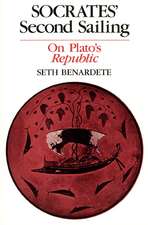 Socrates' Second Sailing: On Plato's RepublicSeth BenardetePreț: 304.18 lei
 -
 Preț: 117.80 lei
 -
 Plotinus or the Simplicity of VisionPierre HadotPreț: 222.31 lei
 -
 The Basic Works of AristotleAristotle-18%Preț: 137.06 lei166.47 lei
 -
 Animal Minds and Human Morals: The Origins of the Western DebateSir Richard Sorabji-27%Preț: 236.74 lei322.95 lei
 -
 Plato's Philosophy of ScienceAndrew Gregory-28%Preț: 1028.18 lei1433.99 lei
 -
 The Philosophers of the Ancient World: An A-Z GuideTrevor Curnow-25%Preț: 210.13 lei280.43 lei
 -
 The Emperor's HandbookMarcus AureliusPreț: 135.40 lei
 -
 Avicenna`s Metaphysics in ContextRobert Wisnovsky-23%Preț: 649.07 lei842.96 lei
 -
 -17%Preț: 127.28 lei153.82 lei
 -
 Preț: 280.45 lei
 -
 -25%Preț: 274.89 lei367.85 lei
 -
 Themistius: On Aristotle Metaphysics 12Dr Yoav Meyrav-32%Preț: 628.20 lei926.49 lei
 -
 -33%Preț: 624.35 lei925.83 lei
 -
 Understanding Plato's RepublicGerasimos SantasPreț: 297.09 lei
 -
 Arguing with Socrates: An Introduction to Plato's Shorter DialoguesChristopher Warne-25%Preț: 188.61 lei251.73 lei
 -
 Alcibiades and the Socratic Lover-EducatorHarold TarrantPreț: 278.45 lei
 -
 -16%Preț: 274.70 lei327.77 lei
 -
 Phaedon: or, The Death of SocratesMoses Mendelssohn-39%Preț: 1007.98 lei1652.89 lei
 -
 In the Dark Places of WisdomPeter KingsleyPreț: 93.00 lei
 -
 The Heart of PlotinusAldis UzdavinysPreț: 153.89 lei
Cuprins
1. Context
2. Overview of themes
3. Reading the text
4. Reception and Influence
5. Notes for Further Reading
Appendix: Glossary of Greek Terms
Notes
Index
2. Overview of themes
3. Reading the text
4. Reception and Influence
5. Notes for Further Reading
Appendix: Glossary of Greek Terms
Notes
Index
Recenzii
'admirably clear and concise, and extremely well written and well organised ... an excellent introduction to the Republic, especially for those new to Plato.' Giles Pearson, Fellow and Director of Studies in Philosophy, Christ's College, University of Cambridge
'Luke Purshouse provides a compelling introduction to the central concerns of Plato's Republic ...Readers will no doubt appreciate this exemplary book - an indispensable guide for students of Plato.' Alexandra Kolb, University of Otago, New Zealand
'Luke Purshouse provides a compelling introduction to the central concerns of Plato's Republic ...Readers will no doubt appreciate this exemplary book - an indispensable guide for students of Plato.' Alexandra Kolb, University of Otago, New Zealand