
Plant Science for Gardeners
Autor Robert Pavlisen Limba Engleză Paperback – 7 iun 2022
Apreciem în mod deosebit modul în care Plant Science for Gardeners transformă teoria botanică în instrumente de lucru imediate, începând cu exerciții de evaluare a problemelor de sănătate ale plantelor și studii de caz care demontează mituri adânc înrădăcinate. În loc să ofere o listă de reguli rigide, Robert Pavlis propune o înțelegere a mecanismelor biologice care guvernează rădăcinile, tulpinile și procesul de fotosinteză, oferind cititorului independență în luarea deciziilor în grădină. Structura volumului este riguros organizată, ghidând cititorul de la nivel celular și transportul prin xilem și floem, până la complexitatea rizosferei și a geneticii vegetale. Fiecare capitol include casete speciale care „explodează” mituri urbane, cum ar fi utilitatea îngrășămintelor de transplant sau ideea că rădăcinile cresc activ spre sursele de apă. Această abordare critică este o constantă în opera autorului; dacă în Soil Science for Gardeners accentul cădea pe chimia și structura solului, aici Robert Pavlis mută reflectorul pe organismul vegetal ca întreg, completând perfect ecosistemul de cunoștințe explorat și în Microbe Science for Gardeners. Cititorii familiarizați cu Practical Botany for Gardeners de Geoff Hodge vor aprecia în acest volum o abordare mult mai pragmatică și mai puțin axată pe estetică, punând preț pe funcționalitate și productivitate. Deși limbajul rămâne accesibil, rigoarea științifică este comparabilă cu cea din Science and the Garden, însă cu un avantaj clar pentru practicieni: transformarea botanicii într-o metodă de diagnostic. Este o resursă esențială pentru cei care doresc să treacă de la simpla memorare a calendarului de plantare la înțelegerea proceselor vitale care fac o grădină să prospere.
Preț: 128.34 lei
Carte disponibilă
Livrare economică 29 octombrie-12 noiembrie
Specificații
ISBN-10: 086571973X
Pagini: 224
Dimensiuni: 151 x 224 x 14 mm
Greutate: 0.34 kg
Editura: New Society Publishers
V-ar putea interesa
-
 Preț: 174.98 lei
 -
 -12%Preț: 217.17 lei247.63 lei
 -
 The Science of Gardening: Discover How Your Garden Really GrowsDr. Stuart FarrimondPreț: 149.53 lei
 -
 -20%Preț: 161.38 lei201.91 lei
 -
 What's Inside a Garden?: Science and Nature Coloring BookRachel IgnotofskyPreț: 91.32 lei
 -
 Kew Answers for Everyday GardenersPolly Stevens-17%Preț: 95.65 lei115.62 lei
 -
 Revered RootsLoriann Bird-15%Preț: 120.19 lei142.06 lei
 -
 Soil Science for GardenersRobert PavlisPreț: 128.48 lei
 -
 Understanding RootsRobert Kourik-28%Preț: 121.57 lei168.55 lei
 -
 How the Rose Got Its Thorns: And Other Botanical StoriesDr Andrew Ormerod-25%Preț: 118.99 lei158.51 lei
 -
 -30%Preț: 135.73 lei192.62 lei
 -
 How Plants Work: The Science Behind the Amazing Things Plants DoLinda Chalker-Scott-25%Preț: 91.97 lei122.58 lei
 -
 Gardening Under Lights: The Complete Guide for Indoor GrowersLeslie F. Halleck-28%Preț: 140.57 lei195.69 lei
 -
 -24%Preț: 110.36 lei145.34 lei
 -
 Gardeners' World: The Flower BookGardeners' World MagazinePreț: 158.70 lei
 -
 RHS Botany for Gardeners: The Art and Science of Gardening Explained & ExploredRoyal Horticultural Society-24%Preț: 110.28 lei145.89 lei
 -
 The Genius of TreesHarriet RixPreț: 124.13 lei
 -
 What a Plant KnowsDaniel Chamovitz-6%Preț: 87.39 lei92.78 lei
 -
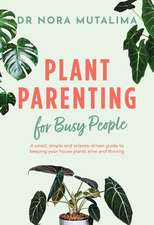 Plant Parenting for Busy PeopleNora MutalimaPreț: 105.83 leiRecomandat
 -
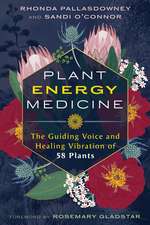 Plant Energy Medicine: The Guiding Voice and Healing Vibration of 58 PlantsRhonda Pallasdowney-23%Preț: 118.87 lei154.87 leiRecomandat
De ce să citești această carte
Această carte se adresează grădinarilor care s-au săturat de rețete universale și doresc să înțeleagă „de ce-ul” din spatele creșterii plantelor. Cititorul câștigă capacitatea de a diagnostica singur problemele din grădină, economisind resurse prin eliminarea practicilor inutile bazate pe mituri. Este un manual de botanică aplicată care transformă orice pasionat într-un cultivator informat și autonom.
Cuprins
Introduction to Plant Science
Organization of the Book
Terms Used in This Book
1. Plant Basics
Cells
Xylem and Phloem
Photosynthesis
Plant Myth: Plants Raise the Oxygen Level in Homes
ATP and the Energy Cycle
Respiration
Meristematic Cells
Classification of Plants
2. Roots
Root Basics
Types of Roots
Plant Myth: Feeder Roots Are Located Under the Dripline
Effect of Gravity
Cut Roots and Side Roots
Plant Myth: Circulating Roots Continue to Circulate
Conditions That Affect Root Growth
Plant Myth: Transplant Solutions Grow Better Roots
Root Growth in Winter
Absorption of Water and Nutrients
Plant Myth: Is Soil pH Important?
Roots and Microbes
Plant Myth: Purchased Mycorrhizal Fungi Are Good for Plants
Plant Myth: Roots Grow Towards Water
The Rhizosphere
3. Stems
The Outer Structure of Stems
Internal Structure of Stems
Trichomes
Buds
How Stems Grow
The Importance of Photosynthesis
Underground Stems
Plant Myth: Plant Bulbs after the Ground Is Frozen
Plant Myth: Bearded Iris Should Be Planted with Rhizome Showing
4. Leaves
Leaf Structure
How Sun Affects Leaves
Why Are Some Leaves Red?
Plant Myth: Evergreen Needles and Oak Leaves Are Acidic
Functionality of Damaged Leaves
Natural Pesticides
Signaling Between Plants
Pest-Proof Leaves
Water Stress and Wilting Leaves
Leaf Abscission
Variegated Leaves
5. Flowers
Parts of a Flower
Pollination
What Causes Flowering?
Why Do Plants Not Flower?
Plant Myth: High Phosphate Grows More Blooms
Tough Love for Plants
Attracting Pollinators
Enjoy the Bracts
Dioecious and Monoecious Plants
6. Fruits and Seeds
What Is a Fruit?
The Importance of Fruit
Different Types of Fruits
Fruit Development
Seed Development
Suckering Tomato Plants
Seeds from Non-Flowering Plants
Soil Seed Bank
7. The Whole Plant
Life Cycle of Plants
Plant Dormancy
Movement of Water
Movement of Nutrients
Plant Myth: Leaves Can Be Used to ID Nutrient Deficiencies
Movement of Sugars
Seasonal Sharing of Resources
Overcoming Physical Damage
How Do Plants Get Taller?
Following the Sun
How Light Affects Plant Growth
Gravity
8. Woody Plants
What Are Woody Plants?
Structure of Woody Stems
Where Does Wood Come From?
Plant Myth: Newly Planted Trees Need to Be Staked
Storage of Sugars
Taproots vs. Fibrous Roots
Composition of Wood
Apical Dominance
Healing Damage
Plant Myth: Damage on Trees Should Be Painted
Conifers
9. Environmental Factors
Garden Hardiness Zones
Dealing with Cold
Protecting Plants from Cold
Dealing with Heat
Dealing with Water Extremes
Adaptability of Plants
How Climate Change Affects Gardens
10. Growing from Seeds
When Is Seed Mature?
The Seed Germination Process
The Mysterious Cotyledons
Why Do Seeds Stay Dormant?
Breaking Dormancy
Plant Myth: Seeds Can Have Double Dormancy
Seed Storage
Best Method for Starting Seeds Indoors
11. Selecting Seeds
Basic Genetics
Hybrids vs. Heirlooms
GMO Seeds
Days to Maturity
Buying Unusual Seeds
12. Vegetative Reproduction
Natural Vegetative Reproduction
Rooted Stems and Leaves
Artificial Vegetative Reproduction
Plant Myth: Homemade Rooting Hormones Work Well
Grafting
13. Plant Names
Why Use Botanical Names?
Naming Conventions
The Proper Way to Name Your Plants
Index
About the Author
Connect with Robert Pavlis
About New Society Publishers
Descriere scurtă
Pavlis' latest is a sure - and enjoyable -way to learn that science.
- JEFF LOWENFELS, author, DIY Autoflowering Cannabis and Teaming with Microbes
Read it and your garden will blossom, literally and figuratively.
- LEE REICH, PhD, author, Growing Figs in Cold Climates and The Ever Curious Gardener
MOST GARDENERS learn by accumulating rules - water once a week, never dry out snowdrop bulbs, prune lilacs after flowering, plant garlic in October - the list is endless. These rules can take years to learn and yet leave you floun- dering when the unexpected strikes and plants look unhealthy, produce poorly, or die. Plant Science for Gardeners offers a better way.
By understanding the basic biology of how plants grow, you can become a thinking gardener with the confidence to problem solve for optimized plant health and productivity. Learn the science and ditch the rules! Coverage includes:
- The biology of roots, stems, leaves, and flowers
- Understanding how plants function as whole organisms
- The role of nutrients and inputs
- Vegetables, flowers, grasses, and trees and shrubs
- Propagation and genetics
- Sidebars that explode common gardening myths
- Tips for evaluating plant problems and finding solutions.
Another detailed, yet accessible, addition to gardeners' home libraries.
- REBECCA MARTIN, technical editor, Mother Earth News magazine
You will never take horticultural lore at face value again.
- JAMES ARMITAGE, editor, The Plant Review, magazine of the Royal Horticultural Society
ROBERT PAVLIS is the owner and developer of Aspen Grove Gardens, a 6-acre botanical garden featuring 3000 varieties of plants. Specializing in soil science, Robert is a Master Gardener, speaker, instructor, and blogger, and author of Soil Science for Gardeners and Building Natural Ponds. He resides in Guelph, Canada.
To help bring you the very best inspiration and information about greener, more sustainable lifestyles, Mother Earth News is recommending select New Society Publishers books to its readers. This book is one of them.
Notă biografică
Robert Pavlis has been an avid gardener for over four decades. He is the owner and developer of Aspen Grove Gardens, a 6-acre botanical garden that features over 3,000 varieties of plants. Specializing in soil science, he has been an instructor for Landscape Ontario and is a garden blogger, writer, and chemist. The author of Building Natural Ponds and Soil Science for Gardeners, Pavlis is a well-known speaker whose audiences include Master Gardener groups, horticultural societies, orchid societies, and garden shows such as Canada Blooms and the FarmSmart conference. He teaches gardening fundamentals at the University of Guelph and garden design for the City of Guelph, Canada, where he currently resides.