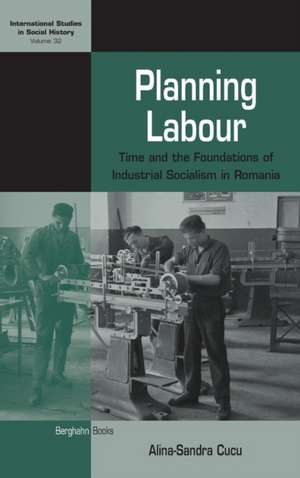
Planning Labour
Autor Alina-Sandra Cucuen Limba Engleză Hardback – apr 2019
Impoverished, indebted, and underdeveloped at the close of World War II, Romania underwent dramatic changes as part of its transition to a centrally planned economy. As with the Soviet experience, it pursued a policy of "primitive socialist accumulation" whereby the state appropriated agricultural surplus and restricted workers' consumption in support of industrial growth. Focusing on the daily operations of planning in the ethnically mixed city of Cluj from 1945 to 1955, this book argues that socialist accumulation was deeply contradictory: it not only inherited some of the classical tensions of capital accumulation, but also generated its own, which derived from the multivocal nature of the state socialist worker as a creator of value, as living labour, and as a subject of emancipatory politics.
Preț: 721.12 lei
Preț vechi: 936.53 lei
-23%
Carte tipărită la comandă
Livrare economică 07-21 noiembrie
Specificații
ISBN-10: 1789201853
Pagini: 262
Dimensiuni: 157 x 235 x 19 mm
Greutate: 0.54 kg
Editura: BERGHAHN BOOKS
Descriere
Impoverished, indebted, and underdeveloped at the close of World War II, Romania underwent dramatic changes as part of its transition to a centrally planned economy. As with the Soviet experience, it pursued a policy of "primitive socialist accumulation" whereby the state appropriated agricultural surplus and restricted workers' consumption in support of industrial growth. Focusing on the daily operations of planning in the ethnically mixed city of Cluj from 1945 to 1955, this book argues that socialist accumulation was deeply contradictory: it not only inherited some of the classical tensions of capital accumulation, but also generated its own, which derived from the multivocal nature of the state socialist worker as a creator of value, as living labour, and as a subject of emancipatory politics.