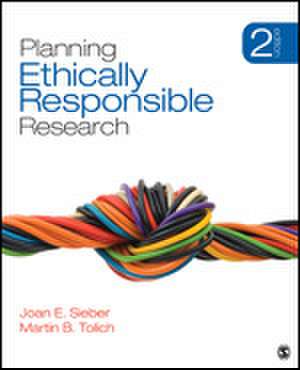
Planning Ethically Responsible Research: Applied Social Research Methods, cartea 31
Autor Joan E. Sieber, Martin Tolichen Limba Engleză Electronic book text – 20 iun 2013
Din seria Applied Social Research Methods
-
 Preț: 375.07 lei
 -
 Preț: 323.68 lei
 - 18%
 Preț: 712.65 lei
 -
 Preț: 382.20 lei
 - nou
 Preț: 382.20 lei
 - nou
 Preț: 382.20 lei
 -
 Preț: 382.20 lei
 -
 Preț: 269.02 lei
 - nou
 Preț: 382.20 lei
 -
 Preț: 382.20 lei
 -
 Preț: 269.02 lei
 - nou
 Preț: 284.91 lei
 -
 Preț: 269.02 lei
 - nou
 Preț: 276.97 lei
 - nou
 Preț: 357.58 lei
 -
 Preț: 382.20 lei
 -
 Preț: 382.20 lei
Preț: 382.20 lei
Puncte Express: 573
Indisponibil temporar
Doresc să fiu notificat când acest titlu va fi disponibil:
Se trimite...
Specificații
ISBN-13: 9781483341828
ISBN-10: 1483341828
Pagini: 264
Dimensiuni: 187 x 232 mm
Ediția:Second Edition
Editura: SAGE Publications
Colecția Sage Publications, Inc
Seria Applied Social Research Methods
Locul publicării:Thousand Oaks, United States
ISBN-10: 1483341828
Pagini: 264
Dimensiuni: 187 x 232 mm
Ediția:Second Edition
Editura: SAGE Publications
Colecția Sage Publications, Inc
Seria Applied Social Research Methods
Locul publicării:Thousand Oaks, United States
Recenzii
"Two
important
aspects
covered
in
this
text
are
the
ethical
considerations
in
qualitative
research
methodologies,
and
the
attention
that
is
needed
in
University
Research
Ethics
Committees
to
understanding
and
addressing
these
methodologies."
“I particularly enjoyed the energetic and experienced tone of these writers and their willingness to take a stance...The chapters in the second half of the book on consent, confidentiality and autoethnography have thoughtful coverage of qualitative research issues. Equally welcome is their attempt to come up with constructive solutions rather than to simply criticize...The authors have established record in developing an evidence base on human research ethics and I shall be bringing their final chapter, with its ‘Ten Simple Solutions for Making Ethics Review a Learning Institution’, to my own ethics committee.”
“I particularly enjoyed the energetic and experienced tone of these writers and their willingness to take a stance...The chapters in the second half of the book on consent, confidentiality and autoethnography have thoughtful coverage of qualitative research issues. Equally welcome is their attempt to come up with constructive solutions rather than to simply criticize...The authors have established record in developing an evidence base on human research ethics and I shall be bringing their final chapter, with its ‘Ten Simple Solutions for Making Ethics Review a Learning Institution’, to my own ethics committee.”
Cuprins
Chapter
1.
Introduction:
Research
Governance
and
Research
Ethics
Chapter 2. Why We Need Ethics: Assessing Vulnerability, Risk and Benefit
Chapter 3. The Relevance of Ethical Theory to IRB
Chapter 4. A Retrospective IRB Review: Rehabilitating Milgram, Zimbardo and Humphreys
Chapter 5. Journalist Ethics Does Not Equal Social Scientists Ethics
Chapter 6. Community-Engaged Research and Ethnography: Extreme Misfits with the Medical Model
Chapter 7. Communicating Informed Consent and Process Consent
Chapter 8. Degrees of non-Disclosure
Chapter 9. Strategies for Assuring Confidentiality
Chapter 10. The Ethics for the Invisible, Powerless and Vulnerable Research Assistant
Chapter 11. Why IRBs Have an Important Place: The Autoethnographic Experiment
Chapter 12. Evidence-Based Ethical Problem Solving: A Research Agenda
Chapter 13. Making Ethics Review a Learning Institution: Ten Simple Suggestions
Chapter 2. Why We Need Ethics: Assessing Vulnerability, Risk and Benefit
Chapter 3. The Relevance of Ethical Theory to IRB
Chapter 4. A Retrospective IRB Review: Rehabilitating Milgram, Zimbardo and Humphreys
Chapter 5. Journalist Ethics Does Not Equal Social Scientists Ethics
Chapter 6. Community-Engaged Research and Ethnography: Extreme Misfits with the Medical Model
Chapter 7. Communicating Informed Consent and Process Consent
Chapter 8. Degrees of non-Disclosure
Chapter 9. Strategies for Assuring Confidentiality
Chapter 10. The Ethics for the Invisible, Powerless and Vulnerable Research Assistant
Chapter 11. Why IRBs Have an Important Place: The Autoethnographic Experiment
Chapter 12. Evidence-Based Ethical Problem Solving: A Research Agenda
Chapter 13. Making Ethics Review a Learning Institution: Ten Simple Suggestions
Descriere
This
book
is
an
invaluable
guide
to
help
researchers
and
graduate
students
understand
ethical
concerns
within
real-life
research
situations.