
Physiology for Engineers: Biosystems & Biorobotics, cartea 33
Autor Michael Chappell, Stephen Payneen Limba Engleză Hardback – 13 iun 2025
Ne-a atras atenția în mod deosebit modul în care Physiology for Engineers utilizează exemplele de calcul avansate și modelarea matematică pentru a transforma fenomenele biologice abstracte în probleme concrete de inginerie. Această a treia ediție, publicată în 2025 de Springer, rafinează componenta practică prin introducerea unor studii de caz actualizate despre metabolism și ciclul Krebs, oferind instrumente analitice pentru procese care, în manualele clasice de medicină, sunt tratate preponderent calitativ. Suntem de părere că progresia logică a volumului facilitează o înțelegere profundă a sistemelor umane. Structura începe de la fundamentele celulare (homeostazie, potențial de membrană și transport) și avansează către aplicații complexe precum farmacocinetica și mecanica țesuturilor, culminând cu analiza sistemelor cardiovascular, respirator și nervos. Cititorii familiarizați cu Quantitative Human Physiology de Joseph J Feher vor aprecia în Physiology for Engineers concentrarea mai specifică pe interfața dintre modelarea matematică și tehnologiile de imagistică. În timp ce volumul lui Feher oferă o perspectivă vastă, lucrarea de față este mai compactă și axată pe aplicabilitatea directă a teoriei controlului și a dinamicii fluidelor în fiziopatologie. Această lucrare se integrează coerent în opera autorilor Michael Chappell și Stephen Payne. Dacă în Introduction to Neuroimaging Analysis accentul cădea pe procesarea datelor de rezonanță magnetică, aici autorii extind contextul, oferind cadrul fiziologic necesar pentru a înțelege de ce și cum apar semnalele pe care inginerii le analizează ulterior. Este o resursă care elimină barierele terminologice dintre biologi și fizicieni, utilizând un limbaj riguros, dar accesibil celor cu o pregătire tehnică solidă.
Din seria Biosystems & Biorobotics
- 24%
 Preț: 1876.28 lei
 - 15%
 Preț: 671.15 lei
 - 15%
 Preț: 682.12 lei
 - 15%
 Preț: 662.36 lei
 - 15%
 Preț: 664.57 lei
 - 24%
 Preț: 3327.60 lei
 - 18%
 Preț: 989.66 lei
 - 5%
 Preț: 1534.58 lei
 - 18%
 Preț: 751.95 lei
 - 18%
 Preț: 1167.63 lei
 - 15%
 Preț: 659.06 lei
 -
 Preț: 120.35 lei
 - 18%
 Preț: 1276.13 lei
 - 20%
 Preț: 676.02 lei
 - 18%
 Preț: 1165.66 lei
 - 15%
 Preț: 612.38 lei
 - 18%
 Preț: 1740.05 lei
 - 18%
 Preț: 2459.35 lei
 - 18%
 Preț: 947.14 lei
 - 15%
 Preț: 661.90 lei
 - 18%
 Preț: 1220.17 lei
 - 24%
 Preț: 1416.56 lei
 - 18%
 Preț: 1431.63 lei
 - 24%
 Preț: 998.09 lei
 - 15%
 Preț: 672.92 lei
Preț: 607.39 lei
Preț vechi: 714.58 lei
-15%
Carte disponibilă
Livrare economică 09-23 noiembrie
Specificații
ISBN-10: 3031776380
Pagini: 204
Dimensiuni: 160 x 241 x 16 mm
Greutate: 0.46 kg
Ediția:Third Edition 2025
Editura: Springer
Colecția Biosystems & Biorobotics
Seria Biosystems & Biorobotics
V-ar putea interesa
-
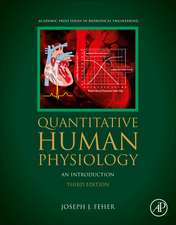 Quantitative Human Physiology: An IntroductionJoseph J Feher-9%Preț: 812.66 lei893.04 lei
 -
 Human PhysiologyGillian Pocock-14%Preț: 632.30 lei737.32 lei
 -
 Physiology Coloring Book, TheWynn KapitPreț: 304.96 lei
 -
 Cellular Physiology and Neurophysiology: Mosby Physiology SeriesMordecai P. Blaustein-30%Preț: 237.72 lei338.45 lei
 -
 Integrated Physiology and PathophysiologyJulian L Seifter-30%Preț: 409.18 lei583.69 lei
 -
 Boron & Boulpaep Concise Medical PhysiologyWalter F. Boron-28%Preț: 523.42 lei725.39 lei
 -
 Berne & Levy PhysiologyBruce M. Koeppen-27%Preț: 627.95 lei864.58 lei
 -
 -5%Preț: 613.74 lei646.04 lei
 -
 Snapshots of HemodynamicsNico Westerhof-5%Preț: 1125.32 lei1184.55 lei
 -
 Guyton and Hall Textbook of Medical PhysiologyJohn E. Hall-27%Preț: 724.83 lei997.48 leiRecomandat
 -
 Guyton & Hall Physiology ReviewJohn E. Hall-28%Preț: 249.39 lei347.81 lei
 -
 Netter's Physiology Flash CardsSusan Mulroney-5%Preț: 248.08 lei261.14 lei
 -
 -41%Preț: 601.71 lei1017.61 lei
 -
 Human PhysiologyDee Silverthorn-5%Preț: 592.75 lei623.95 lei
 -
 -29%Preț: 672.48 lei945.49 lei
 -
 -5%Preț: 206.66 lei217.54 lei
 -
 Lippincott® Illustrated Reviews: PhysiologyRobin R. Preston PhD-18%Preț: 337.32 lei410.92 lei
De ce să citești această carte
Această carte este esențială pentru inginerii care doresc să aplice principii de electronică sau mecanică în medicină. Cititorul câștigă o metodologie clară de formulare matematică a funcțiilor vitale, beneficiind de exemple rezolvate ce includ cele mai noi date despre metabolism și fiziopatologie. Este puntea ideală între ecuațiile fizicii și realitatea biologică a sistemului cardiovascular și nervos.
Despre autor
Michael Chappell și Stephen Payne sunt cercetători și cadre didactice de renume, cu o expertiză vastă în intersecția dintre inginerie și medicină. Michael Chappell este recunoscut pentru contribuțiile sale în analiza neuroimagisticii și cuantificarea perfuziei cerebrale prin tehnici neinvazive (Arterial Spin Labelling). Stephen Payne are o experiență consolidată în modelarea sistemelor fiziologice, publicând lucrări de referință despre principiile imagisticii medicale pentru ingineri. Colaborarea lor în cadrul seriei Biosystems & Biorobotics reflectă o abordare riguroasă, bazată pe decenii de cercetare la nivel înalt în domeniul bioingineriei.
Cuprins
Notă biografică
Stephen Payne is an Professor of Engineering Science at the Institute of Biomedical Engineering (IBME), Department of Engineering Science, University of Oxford. Stephen heads the Cerebral Haemodynamics Group, focusing on modelling blood flow and metabolism in the brain, which is particularly important in the context of diseases such as stroke and dementia. Another of the group’s key areas is cerebral autoregulation – the mechanism that maintains blood flow almost constantly in response to changes in blood pressure. Stephen has worked in physiological modelling for over 15 years.Having entered the field of biomedical engineering before it was available even as an undergraduate option course, he has seen first-hand how difficult it can be to learn about physiology in a way that makes it amenable to mathematical treatment, such as mathematical modelling, without good introductory guides. Stephen is also the author of two related books on cerebral autoregulation and cerebral blood flow and metabolism.
Textul de pe ultima copertă
This book describes the basic structure and models of cellular systems, the structure and function of the cardiovascular system, and the electrical and mechanical activity of the heart, and provides an overview of the structure and function of the respiratory and nervous systems. It also includes an introduction to the basic concepts and applications of reaction kinetics, pharmacokinetic modelling and tracer kinetics. It appeals to final year biomedical engineering undergraduates and graduates alike, as well as to practising engineers new to the fields of bioengineering or medical physics.