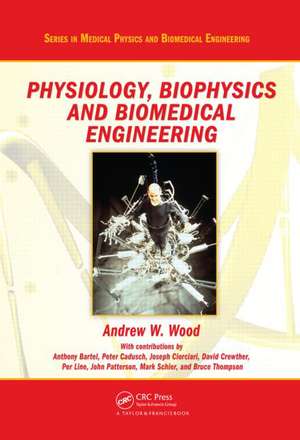
Physiology, Biophysics, and Biomedical Engineering: Series in Medical Physics and Biomedical Engineering
Editat de Andrew Wooden Limba Engleză Hardback – 14 feb 2012
Adresat studenților de la nivel licență și master, precum și cercetătorilor la început de drum, Physiology, Biophysics, and Biomedical Engineering reprezintă o resursă tehnică riguroasă pentru înțelegerea intersecției dintre biologie și inginerie. Remarcăm modul în care Andrew Wood și colaboratorii săi reușesc să traducă fenomenele biologice în limbaj de inginerie, tratând cu precizie concepte precum impedanța electrozilor, reologia sângelui și procesarea semnalelor fiziologice.
Dacă Physiology for Engineers de Michael Chappell v-a oferit cadrul teoretic și modelele de bază ale sistemelor celulare, această lucrare oferă instrumentele practice și detaliile de instrumentație necesare pentru monitorizarea acestor fenomene. Notăm cu interes progresia logică a conținutului: volumul debutează cu bazele circuitelor electrice pentru biomedicină, trece prin biofizica sistemelor de organe (inimă, plămâni, rinichi) și culminează cu secțiuni dedicate procesării de semnal și imagisticii medicale. Spre deosebire de alte lucrări ale lui Andrew Wood, cum este Diffractive Lens Design, care se concentrează strict pe optică, acest volum din Series in Medical Physics and Biomedical Engineering adoptă o perspectivă multidisciplinară extinsă.
Fiecare capitol integrează principiile fizice cu metodele de monitorizare, explicând nu doar cum funcționează un sistem biologic, ci și cum putem măsura performanța acestuia prin senzori și actuatori. Cele 470 de ilustrații sunt esențiale pentru vizualizarea modelelor de flux sanguin sau a mecanismelor de transport molecular, transformând o materie densă într-o experiență de învățare aplicată și accesibilă.
Din seria Series in Medical Physics and Biomedical Engineering
-
 Preț: 183.69 lei
 - 9%
 Preț: 2712.21 lei
 - 5%
 Preț: 870.60 lei
 - 5%
 Preț: 1722.64 lei
 -
 Preț: 477.77 lei
 - 15%
 Preț: 422.92 lei
 - 5%
 Preț: 1958.61 lei
 - 18%
 Preț: 1260.80 lei
 - 18%
 Preț: 1304.23 lei
 - 18%
 Preț: 1255.80 lei
 - 18%
 Preț: 1724.45 lei
 - 18%
 Preț: 1021.66 lei
 -
 Preț: 477.59 lei
 -
 Preț: 477.59 lei
 - 8%
 Preț: 436.37 lei
 - 5%
 Preț: 453.71 lei
 - 18%
 Preț: 1008.18 lei
 - 5%
 Preț: 668.80 lei
 - 5%
 Preț: 457.00 lei
 - 15%
 Preț: 437.68 lei
 - 15%
 Preț: 513.59 lei
 -
 Preț: 477.59 lei
 - 18%
 Preț: 2074.42 lei
 -
 Preț: 477.59 lei
 - 18%
 Preț: 747.04 lei
 -
 Preț: 477.04 lei
 - 18%
 Preț: 1489.58 lei
 -
 Preț: 486.40 lei
 -
 Preț: 471.81 lei
 - 9%
 Preț: 1347.84 lei
 -
 Preț: 477.59 lei
 -
 Preț: 392.60 lei
 - 18%
 Preț: 928.29 lei
 -
 Preț: 477.59 lei
 - 15%
 Preț: 455.50 lei
 - 15%
 Preț: 529.28 lei
 -
 Preț: 477.59 lei
 - 5%
 Preț: 592.88 lei
 - 18%
 Preț: 812.13 lei
 - 18%
 Preț: 1495.23 lei
 - 5%
 Preț: 450.97 lei
 - 5%
 Preț: 586.93 lei
Preț: 752.12 lei
Preț vechi: 917.23 lei
-18%
Carte tipărită la comandă
Livrare economică 08-22 decembrie
Specificații
ISBN-10: 1420065130
Pagini: 782
Ilustrații: 470 black & white illustrations, 21 black & white tables
Dimensiuni: 178 x 254 x 41 mm
Greutate: 1.47 kg
Ediția:New.
Editura: CRC Press
Colecția CRC Press
Seria Series in Medical Physics and Biomedical Engineering
V-ar putea interesa
-
 Quantitative Human Physiology: An IntroductionJoseph J Feher-9%Preț: 812.66 lei893.04 lei
 -
 Human PhysiologyGillian Pocock-13%Preț: 643.74 lei738.42 lei
 -
 Human Physiology: A Very Short IntroductionJamie A. Davies-19%Preț: 57.32 lei70.88 lei
 -
 Physiology Coloring Book, TheWynn KapitPreț: 304.96 lei
 -
 Boron & Boulpaep Concise Medical PhysiologyWalter F. Boron-27%Preț: 526.66 lei725.39 lei
 -
 Berne & Levy PhysiologyBruce M. Koeppen-27%Preț: 627.95 lei864.58 lei
 -
 -5%Preț: 613.74 lei646.04 lei
 -
 BiomechanicsY. C. Fung-5%Preț: 1106.47 lei1164.70 lei
 -
 Guyton and Hall Textbook of Medical PhysiologyJohn E. Hall-27%Preț: 732.34 lei997.63 leiRecomandat
 -
 -40%Preț: 622.54 lei1035.66 lei
 -
 Physics in Biology and MedicinePaul Davidovits-32%Preț: 508.24 lei747.60 lei
 -
 Physical Biology of the CellRob Phillips-9%Preț: 847.96 lei931.82 lei
 -
 Human PhysiologyDee Silverthorn-5%Preț: 593.62 lei624.86 lei
 -
 -28%Preț: 679.58 lei945.49 lei
 -
 Levick's Introduction to Cardiovascular PhysiologyNeil Herring-5%Preț: 401.43 lei422.55 lei
 -
 Physiology of the HeartArnold M. Katz MD-27%Preț: 682.19 lei938.67 lei
 -
 Physiology for EngineersMichael Chappell-15%Preț: 607.39 lei714.58 lei
 -
 Physics of the Human BodyIrving P. Herman-19%Preț: 685.81 lei846.69 lei
Public țintă
Postgraduate and UndergraduateDe ce să citești această carte
Această carte este esențială pentru viitorii ingineri biomedicali care doresc să facă trecerea de la teorie la proiectarea de instrumentație medicală. Cititorul câștigă o înțelegere profundă a modului în care legile fizicii guvernează funcțiile vitale, beneficiind de un suport vizual bogat și de o abordare matematică prietenoasă. Este un manual de referință care face legătura între fiziologia umană și tehnologia senzorilor moderni.
Despre autor
Andrew Wood este un specialist recunoscut în domeniul biofizicii, contribuind editorial la volume academice de prestigiu sub egida CRC Press. Deși paleta sa de interese este vastă, incluzând designul de lentile difractive și chiar literatură de ficțiune, activitatea sa principală în mediul universitar se concentrează pe dezvoltarea curriculumului pentru ingineria biomedicală. Expertiza sa în vizualizare și structurarea informației tehnice este evidentă în modul în care coordonează acest tratat, asigurând un echilibru între rigoarea științifică și claritatea didactică necesară studenților.
Descriere scurtă
The first section of the book presents a general introduction to physiological systems and describes specialized methods used to record electrical events from biological tissue. The next part examines molecules involved in cell transport and signaling as well as the proteins relevant in cells’ ability to contract and generate tension. The text goes on to cover the properties of the heart, blood, and circulation and the monitoring of cardiac and circulatory function. It then discusses the importance of the interrelationship of pressures and flows in organ systems, such as the lungs and kidneys, and details the organization and function of the nervous system. After focusing on the systems used to monitor signals, the book explores modeling, biomechanics, and emerging technologies, including the progressive miniaturization of sensors and actuators in biomedical engineering.
Developed from the authors’ courses in medical biophysics and biomedical instrumentation, this book shows how biophysics and biomedical engineering have advanced modern medicine. It brings together the physical principles underlying human physiological processes and the physical methods used to monitor these processes. Requiring only basic mathematical knowledge, the text supplements mathematical formulae with qualitative explanations and illustrations to encourage an intuitive grasp on the processes discussed.
Cuprins
Notă biografică
Recenzii
—Jayanta K. Ghosh, International Statistical Review (2013), 81
"The inclusion of sample problems with solutions and well balanced illustrations when appropriate make this book one of the most highly recommended for those interested in understanding the underlying physical phenomena of biomedical research. …a valuable resource for medical professionals and students involved in physical medicine practice, medical device development, diagnostic design, and medical physics, particularly those interested in applied physics and engineering to medicine."
—Paul Gueye, PhD, Hampton University, Virginia, USA