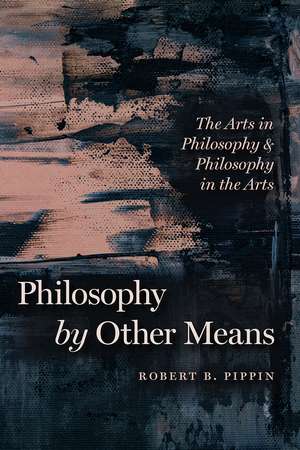
Philosophy by Other Means: The Arts in Philosophy and Philosophy in the Arts
Autor Robert B. Pippinen Limba Engleză Paperback – 26 mai 2021
Adresat studenților la filozofie, cercetătorilor în estetică și criticilor literari, volumul Philosophy by Other Means propune o reconsiderare a modului în care arta și filozofia se întrepătrund. Putem afirma că miza principală a lui Robert B. Pippin este demonstrarea faptului că anumite obiecte estetice nu pot fi pe deplin înțelese fără a reflecta asupra preocupărilor filozofice care le definesc semnificația. Cartea este organizată riguros în două secțiuni: prima parte analizează modul în care gânditori precum Kant, Hegel și Adorno au conceptualizat relația dintre artă și filozofie, în timp ce a doua parte explorează lucrările de artă ca forme de reflecție filozofică de sine stătătoare.
Subliniem că acest volum completează perspectiva oferită de Philosophers on Art from Kant to the Postmodernists – A Critical Reader, adăugând o dimensiune de analiză aplicată pe textul literar și vizual care lipsește adesea din antologiile pur teoretice. În timp ce alte lucrări se concentrează pe o panoramă a istoriei esteticii, Pippin intră în profunzimea unor studii de caz, precum rolul geloziei la Proust sau paradoxurile puterii în romanele lui J. M. Coetzee. Reținem continuitatea acestei lucrări cu titlurile anterioare ale autorului, precum Hegel's Idealism sau The Culmination. Dacă în lucrările precedente Pippin s-a concentrat pe interpretarea riguroasă a idealismului german, aici el extinde acea expertiză spre „filozofia prin alte mijloace”, validând critica de artă ca exercițiu filozofic esențial. Stilul este precis, academic, dar marcat de o atenție deosebită pentru textul literar, oferind o progresie logică de la teoria estetică pură spre hermeneutica aplicată.
Preț: 224.92 lei
Carte disponibilă
Livrare economică 23 mai-06 iunie
Livrare express 09-15 mai pentru 26.61 lei
Specificații
ISBN-10: 022677080X
Pagini: 304
Ilustrații: 7 halftones
Dimensiuni: 152 x 229 x 18 mm
Greutate: 0.4 kg
Ediția:First Edition
Editura: University of Chicago Press
Colecția University of Chicago Press
De ce să citești această carte
Cititorul câștigă o metodă riguroasă de interpretare a artei dincolo de simpla apreciere estetică. Este o recomandare ideală pentru cei care doresc să înțeleagă cum literatura lui Proust sau James poate „face” filozofie acolo unde limbajul analitic tradițional își atinge limitele. Cartea oferă instrumente critice esențiale pentru a naviga între conceptele hegeliene și realismul literar modern.
Despre autor
Robert B. Pippin este unul dintre cei mai respectați filozofi americani contemporani, ocupând poziția de Evelyn Stefansson Nef Distinguished Service Professor la University of Chicago Press, în cadrul Comitetului de Gândire Socială și al Departamentului de Filozofie. Recunoscut la nivel internațional pentru interpretările sale inovatoare asupra idealismului german, în special asupra lui Hegel și Kant, Pippin și-a extins cercetarea în ultimele decenii către estetică, film și literatură. Opera sa explorează constant tensiunea dintre modernitate, libertate și auto-conștiință, integrând analiza filozofică riguroasă cu o sensibilitate deosebită pentru formele artistice de expresie.
Descriere scurtă
The arts hold a range of values and ambitions, offering beauty, playfulness, and craftsmanship while deepening our mythologies and enriching the human experience. Some works take on philosophical ambitions, contributing to philosophy in ways that transcend the discipline’s traditional analytic and discursive forms. Pippin’s claim is twofold: criticism properly understood often requires a form of philosophical reflection, and philosophy is impoverished if it is not informed by critical attention to aesthetic objects. In the first part of the book, he examines how philosophers like Kant, Hegel, and Adorno have considered the relationship between art and philosophy. The second part of the book offers an exploration of how individual artworks might be considered forms of philosophical reflection. Pippin demonstrates the importance of practicing philosophical criticism and shows how the arts can provide key insights that are out of reach for philosophy, at least as traditionally understood.
Notă biografică
Cuprins
1. Philosophical Criticism
2. Kant and the Problem of Tragedy
3. The Status of Literature in Hegel’s Phenomenology of Spirit: On the Lives of Concepts
4. The Absence of Aesthetics in Hegel’s Aesthetics
5. Hegel on Painting
6. Authenticity in Painting: Remarks on Michael Fried’s Art History
7. Photography as Art: Fried and Intention
8. Adorno, Aesthetic Negativity, and the Problem of Idealism
Part Two: Philosophy in the Arts
9. On Maisie’s Knowing Her Own Mind
10. Subjectivity: A Proustian Problem
11. The Shadow of Love: The Role of Jealousy in Proust’s À la recherche du temps perdu
12. The Paradoxes of Power in the Early Novels of J. M. Coetzee
13. Philosophical Fiction? On J. M. Coetzee’s Elizabeth Costello
Acknowledgments
Works Cited
Index