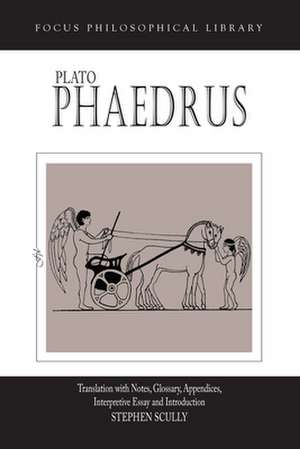
Phaedrus
Autor Plato Editat de Steven Scullyen Limba Engleză Paperback – mai 2003
Preț: 87.15 lei
Preț vechi: 105.67 lei
-18%
Carte disponibilă
Livrare economică 06-20 noiembrie
Livrare express 22-28 octombrie pentru 38.58 lei
Specificații
ISBN-10: 0941051544
Pagini: 158
Dimensiuni: 152 x 229 x 10 mm
Greutate: 0.22 kg
Ediția:First Edition
Editura: Hackett Publishing Company,Inc
Colecția Focus
Locul publicării:United States
V-ar putea interesa
-
 RepublicPlatoPreț: 30.76 lei
 -
 SymposiumPlatoPreț: 27.61 lei
 -
 -25%Preț: 215.40 lei289.00 lei
 -
 -25%Preț: 218.86 lei290.91 lei
 -
 -20%Preț: 383.68 lei477.09 lei
 -
 The First Philosophers: The Presocratics and SophistsRobin Waterfield-18%Preț: 65.53 lei79.80 lei
 -
 -20%Preț: 51.39 lei63.99 lei
 -
 -19%Preț: 52.70 lei64.76 lei
 -
 -18%Preț: 65.53 lei79.80 lei
 -
 TheaetetusPlato-20%Preț: 73.93 lei92.24 lei
 -
 Preț: 84.27 lei
 -
 Great Dialogues of PlatoPlatoPreț: 54.11 lei
 -
 Six Great DialoguesPlatoPreț: 50.88 lei
 -
 Preț: 229.26 lei
 -
 -14%Preț: 515.26 lei599.14 lei
 -
 -18%Preț: 141.30 lei171.41 lei
 -
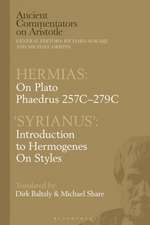 -33%Preț: 550.36 lei818.90 lei
 -
 The Pocket Book of PlatoMichael MoorePreț: 72.54 lei
 -
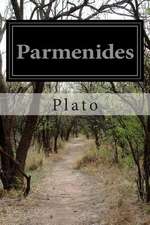 ParmenidesPlatoPreț: 43.40 lei
 -
 SophistPlatoPreț: 41.26 lei
 -
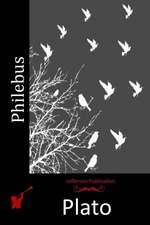 PhilebusPlatoPreț: 45.99 lei
 -
 PhaedoPlatoPreț: 43.59 lei
 -
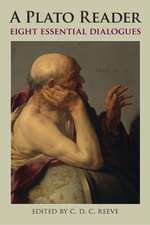 -21%Preț: 205.76 lei259.14 lei
 -
 Preț: 58.13 lei
Descriere
This is an English translation of one of Plato's least political dialogues of Socrates and Phaedrus discussing many themes: the art and practice of rhetoric, love, reincarnation, and the soul. It includes an introduction, notes, glossary, appendices, and an interpretive essay and introduction. Also included are rarely seen illustrations, stone carvings, and vase paintings.
Focus Philosophical Library translations are close to and are non-interpretative of the original text, with the notes and a glossary intending to provide the reader with some sense of the terms and the concepts as they were understood by Plato’s immediate audience.