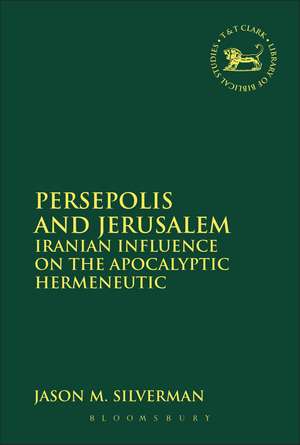
Persepolis and Jerusalem: Iranian Influence on the Apocalyptic Hermeneutic: The Library of Hebrew Bible/Old Testament Studies
Autor Dr. Jason M. Silvermanen Limba Engleză Paperback – 2 ian 2014
With this background, pericopes from Ezekiel, Daniel, and 1 Enoch are analyzed for Iranian influence. The study then brings together the contexts and analyses to argue for an 'Apocalyptic Hermeneutic' which relates the phenomena of apocalypticism, apocalypse, and millenarianism-seeing the hermeneutic as a dialectical thread holding them all together as well as apart- and posits this as the best place to understand Iranian influences.
Din seria The Library of Hebrew Bible/Old Testament Studies
- nou
 Preț: 550.36 lei
 - 34%
 Preț: 524.05 lei
 - 28%
 Preț: 523.27 lei
 - nou
 Preț: 581.93 lei
 - 33%
 Preț: 582.53 lei
 - 32%
 Preț: 558.62 lei
 - nou
 Preț: 581.93 lei
 - 35%
 Preț: 717.27 lei
 - 36%
 Preț: 584.76 lei
 - 24%
 Preț: 1221.79 lei
 - 25%
 Preț: 1219.49 lei
 - 25%
 Preț: 1150.86 lei
 - 26%
 Preț: 1097.15 lei
 - 25%
 Preț: 1086.21 lei
 - 26%
 Preț: 851.19 lei
 - 33%
 Preț: 771.63 lei
 - 36%
 Preț: 775.17 lei
 - 25%
 Preț: 1024.39 lei
 - 25%
 Preț: 1087.98 lei
 - 33%
 Preț: 1152.79 lei
 - 25%
 Preț: 1085.22 lei
 - 24%
 Preț: 1222.30 lei
 - 26%
 Preț: 1160.43 lei
 - 22%
 Preț: 532.76 lei
 - 25%
 Preț: 1150.94 lei
 - 24%
 Preț: 1219.04 lei
 - 29%
 Preț: 1215.32 lei
 - 25%
 Preț: 1215.95 lei
 - 25%
 Preț: 1212.74 lei
 - 25%
 Preț: 1215.51 lei
 - 25%
 Preț: 1211.71 lei
 - 25%
 Preț: 1213.13 lei
 - 25%
 Preț: 830.62 lei
 - 25%
 Preț: 1216.13 lei
 - 25%
 Preț: 961.42 lei
 - 20%
 Preț: 414.96 lei
 - 24%
 Preț: 964.78 lei
 - 26%
 Preț: 369.50 lei
 - 25%
 Preț: 1088.14 lei
 - 34%
 Preț: 914.32 lei
 - 24%
 Preț: 838.13 lei
 - 33%
 Preț: 1215.43 lei
 - 25%
 Preț: 255.74 lei
 - 24%
 Preț: 706.80 lei
 - 33%
 Preț: 1154.57 lei
 - 21%
 Preț: 505.33 lei
 - 24%
 Preț: 772.59 lei
 - 25%
 Preț: 1215.87 lei
 - 33%
 Preț: 1024.39 lei
 - 25%
 Preț: 1153.87 lei
Preț: 280.05 lei
Puncte Express: 420
Carte tipărită la comandă
Livrare economică 13-27 noiembrie
Livrare prin curier în România Termenul estimat este afișat lângă disponibilitate.
Transport gratuit de la 400.00 lei Plată online sau ramburs, în funcție de opțiunile comenzii.
Retur gratuit în 14 zile Comandă securizată și suport în română.
Specificații
ISBN-13: 9780567173836
ISBN-10: 0567173836
Pagini: 320
Ilustrații: 16 illus
Dimensiuni: 156 x 234 x 17 mm
Greutate: 0.45 kg
Editura: Bloomsbury Publishing
Colecția T&T Clark
Seria The Library of Hebrew Bible/Old Testament Studies
Locul publicării:New York, United States
ISBN-10: 0567173836
Pagini: 320
Ilustrații: 16 illus
Dimensiuni: 156 x 234 x 17 mm
Greutate: 0.45 kg
Editura: Bloomsbury Publishing
Colecția T&T Clark
Seria The Library of Hebrew Bible/Old Testament Studies
Locul publicării:New York, United States
V-ar putea interesa
-
 A Dictionary of the BibleW. R. F. Browning-20%Preț: 96.29 lei119.80 lei
 -
 Preț: 116.91 lei
 -
 Lies, Sex and PoliticiansJohn HoldsworthPreț: 142.20 lei
 -
 Jesus in the Jewish WorldGeza VermesPreț: 200.40 lei
 -
 Discerning the SpiritsAndre MunzingerPreț: 298.05 lei
 -
 Legal Revision and Religious Renewal in Ancient IsraelBernard M. LevinsonPreț: 346.06 lei
 -
 Life AttitudesRobert WarrenPreț: 81.02 lei
 -
 Christ and Culture RevisitedD A CarsonPreț: 125.80 lei
 -
 Preț: 139.38 lei
 -
 The Girl's Still Got ItLiz Curtis HiggsPreț: 108.97 lei
 -
 Live a Praying Life: Open Your Life to God's Power and ProvisionJennifer Kennedy DeanPreț: 124.97 lei
Cuprins
Table of Figures and Illustrations
Preface
Acknowledgements
List of Abbreviations
Prolegomena: Iran, the Apocalypses, and Influence
- Introit
- History of Iranian Influence
- Apocalyptic Studies
- Types of Influence and Transmission
I: The Iranian Sources: Religion and Royal Ideology
- Introduction
- Evidence from Classical Authors
- Religious Situation in Iran
- Persian Archaeology and Royal Ideology
- Summary
II: The Achaemenid Context
- Babylonia
- Media and Iranian Lands
- Egypt
- Palestine
- Royal Road and Royal Mail Summary
- Excursus: Elam and Eastern Iran in Ansan
- Several Theological and Sociological Affinities
III: The Media of Influence: Orality, Literacy, and Interaction
- Importance of Orality and its Role in Influence
-Importance of Interiorization for Apocalyptic
-Implications for Investigation of Influence
IVa: Textual Analyses, Biblical Literature
- Ezekiel 37:1-14
- Ezekiel 38-39
- Daniel 2
- Excursus: On the Watchers
IVb: Textual Analyses, Enochic Literature
- Book of Watchers (1-36)
- Book of Parables/Similitudes (37-71)
- Birth of Noah Fragment (106-107)
- Conclusion
V: An Apocalyptic Hermeneutic
- Introit: The Proposal
- Hermeneutics: Re-Interpretation and Application of Traditions
- The Apocalyptic Hermeneutic's Blueprint
- Reconstructing the Apocalyptic Hermeneutic (with an Eye towards Iran)
- Conclusions
Metalegomena
Appendix I: Primary Sources
Appendix II: Glossary of Iranian Terms
Appendix III: Annotated Definitions
Bibliography
Preface
Acknowledgements
List of Abbreviations
Prolegomena: Iran, the Apocalypses, and Influence
- Introit
- History of Iranian Influence
- Apocalyptic Studies
- Types of Influence and Transmission
I: The Iranian Sources: Religion and Royal Ideology
- Introduction
- Evidence from Classical Authors
- Religious Situation in Iran
- Persian Archaeology and Royal Ideology
- Summary
II: The Achaemenid Context
- Babylonia
- Media and Iranian Lands
- Egypt
- Palestine
- Royal Road and Royal Mail Summary
- Excursus: Elam and Eastern Iran in Ansan
- Several Theological and Sociological Affinities
III: The Media of Influence: Orality, Literacy, and Interaction
- Importance of Orality and its Role in Influence
-Importance of Interiorization for Apocalyptic
-Implications for Investigation of Influence
IVa: Textual Analyses, Biblical Literature
- Ezekiel 37:1-14
- Ezekiel 38-39
- Daniel 2
- Excursus: On the Watchers
IVb: Textual Analyses, Enochic Literature
- Book of Watchers (1-36)
- Book of Parables/Similitudes (37-71)
- Birth of Noah Fragment (106-107)
- Conclusion
V: An Apocalyptic Hermeneutic
- Introit: The Proposal
- Hermeneutics: Re-Interpretation and Application of Traditions
- The Apocalyptic Hermeneutic's Blueprint
- Reconstructing the Apocalyptic Hermeneutic (with an Eye towards Iran)
- Conclusions
Metalegomena
Appendix I: Primary Sources
Appendix II: Glossary of Iranian Terms
Appendix III: Annotated Definitions
Bibliography
Recenzii
Summarized.
This study proves useful to any scholar working in the field of Second Temple Judaism, and particularly in early Jewish apocalyptic. Silverman's conclusion that the Iranian tradition had a great impact on the development of the Jewish Apocalyptic Hermeneutic is reasonable and well researched. This work represents a great step toward a better understanding of the origins of Jewish apocalypticism and its subsequent development.
This study proves useful to any scholar working in the field of Second Temple Judaism, and particularly in early Jewish apocalyptic. Silverman's conclusion that the Iranian tradition had a great impact on the development of the Jewish Apocalyptic Hermeneutic is reasonable and well researched. This work represents a great step toward a better understanding of the origins of Jewish apocalypticism and its subsequent development.