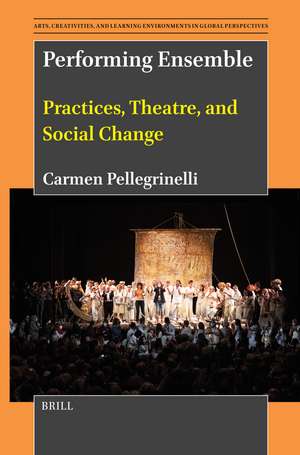
Performing Ensemble: Practices, Theatre, and Social Change: Arts, Creativities, and Learning Environments in Global Perspectives, cartea 15
Autor Carmen Pellegrinellien Limba Engleză Paperback – 9 ian 2025




Preț: 319.76 lei
Puncte Express: 480
Carte disponibilă
Livrare economică 13-24 noiembrie
Livrare prin curier în România Termenul estimat este afișat lângă disponibilitate.
Transport gratuit de la 400.00 lei Plată online sau ramburs, în funcție de opțiunile comenzii.
Retur gratuit în 14 zile Comandă securizată și suport în română.
Specificații
ISBN-13: 9789004720541
ISBN-10: 9004720545
Pagini: 140
Dimensiuni: 155 x 235 x 8 mm
Greutate: 0.25 kg
Editura: Brill
Colecția Brill
Seria Arts, Creativities, and Learning Environments in Global Perspectives
ISBN-10: 9004720545
Pagini: 140
Dimensiuni: 155 x 235 x 8 mm
Greutate: 0.25 kg
Editura: Brill
Colecția Brill
Seria Arts, Creativities, and Learning Environments in Global Perspectives
Notă biografică
Carmen Pellegrinelli is a post-doc at the University of Trieste (Italy) and a playwright and theatre director. She holds Master’s degrees in Theatre and Clinical Psychology from the universities of Bologna and Bergamo and a PhD (2023) from the University of Lapland, Faculty of Social Science. In addition to being an award-winning playwright and theatre director, she has published several articles and chapters on creative practices, social activism, and post-qualitative research methods. She is currently engaged in research concerning the intersection between arts, aesthetics of care, and posthumanist theory.
Cuprins
List of Figures
Acknowledgement
Introduction: The Ensemble
1 Performing the Ensemble
2 Background and Proposal: Ensemble-Making as a Practice
3 Case: ATIR Theatre Company
4 Theoretical Framework: The Posthumanist Practice Theory
5 Methodology: Gathering Traces
6 The Book’s Organization
1 The School: The Community of Practice in the Theatre Environment
1 The Emerging Assemblage
2 The Characteristics of the “Bottega”
3 Acquiring the Performative Practices of Making Theatre
3.1 Undressing Personal Attitudes and Playing
3.2 Making Choir
3.3 Being Real on Stage
3.4 Searching for Intensity
4 Becoming a Group
4.1 Romeo and Juliet
4.2 The Creation of ATIR
2 The Rehearsals Room: The Performative and Creative Practices
1 Assemblage in the Making
2 Performative Practices
2.1 The Choir: Ensemble-Making in the Performance
2.2 The Scenography: Ensemble-Making with Vibrant Matter
2.3 The Plays: Ensemble-Making with Stories and Texts
2.3.1 The First Dramaturgical Stream: The Classics
2.3.2 The Second Dramaturgical Stream: Social Activism Plays
2.3.3 The Third Dramaturgical Stream: Contemporary Dramaturgy
3 Collective Creative Practices
3 The Theatre: Socio-Educational and Organizational Practices
1 Assemblage Becoming Territory
2 Educational and Community-Building Practices
2.1 Gli Spazi del Teatro. Ensemble-Making with Non-Conforming Subjectivities
2.2 Theatre Workshops: Ensemble-Making for Communities
2.3 Theatre Education, Ensemble-Making in Educational Theatre
2.4 The Piana: Ensemble-Making Larger than Life
3 Collective Organisational Practices
4 The Community: Resistance Practices
1 Assemblage as Resistance
2 Community-Oriented Practices towards the City: Ensemble-Making Being Nomadic
2.1 Odissea – Storia di un ritorno
2.2 El Nost Milan
3 Resistance Practices: Ensemble-Making in the ATIR’s Way
5 Conclusion
1 Ensemble Multiplicity
2 ATIR’s Performing Ensemble
3 About the Posthumanist Ensemble
References
Index
Acknowledgement
Introduction: The Ensemble
1 Performing the Ensemble
2 Background and Proposal: Ensemble-Making as a Practice
3 Case: ATIR Theatre Company
4 Theoretical Framework: The Posthumanist Practice Theory
5 Methodology: Gathering Traces
6 The Book’s Organization
1 The School: The Community of Practice in the Theatre Environment
1 The Emerging Assemblage
2 The Characteristics of the “Bottega”
3 Acquiring the Performative Practices of Making Theatre
3.1 Undressing Personal Attitudes and Playing
3.2 Making Choir
3.3 Being Real on Stage
3.4 Searching for Intensity
4 Becoming a Group
4.1 Romeo and Juliet
4.2 The Creation of ATIR
2 The Rehearsals Room: The Performative and Creative Practices
1 Assemblage in the Making
2 Performative Practices
2.1 The Choir: Ensemble-Making in the Performance
2.2 The Scenography: Ensemble-Making with Vibrant Matter
2.3 The Plays: Ensemble-Making with Stories and Texts
2.3.1 The First Dramaturgical Stream: The Classics
2.3.2 The Second Dramaturgical Stream: Social Activism Plays
2.3.3 The Third Dramaturgical Stream: Contemporary Dramaturgy
3 Collective Creative Practices
3 The Theatre: Socio-Educational and Organizational Practices
1 Assemblage Becoming Territory
2 Educational and Community-Building Practices
2.1 Gli Spazi del Teatro. Ensemble-Making with Non-Conforming Subjectivities
2.2 Theatre Workshops: Ensemble-Making for Communities
2.3 Theatre Education, Ensemble-Making in Educational Theatre
2.4 The Piana: Ensemble-Making Larger than Life
3 Collective Organisational Practices
4 The Community: Resistance Practices
1 Assemblage as Resistance
2 Community-Oriented Practices towards the City: Ensemble-Making Being Nomadic
2.1 Odissea – Storia di un ritorno
2.2 El Nost Milan
3 Resistance Practices: Ensemble-Making in the ATIR’s Way
5 Conclusion
1 Ensemble Multiplicity
2 ATIR’s Performing Ensemble
3 About the Posthumanist Ensemble
References
Index