
Pedro Almodovar: World Directors
Autor Ernesto R. Acevedo-Munozen Limba Engleză Hardback – 24 feb 2004



Preț: 585.92 lei
Preț vechi: 681.31 lei
-14%
Puncte Express: 879
Carte disponibilă
Livrare economică 02-16 noiembrie
Livrare prin curier în România Termenul estimat este afișat lângă disponibilitate.
Transport gratuit pentru acest produs Plată online sau ramburs, în funcție de opțiunile comenzii.
Retur gratuit în 14 zile Comandă securizată și suport în română.
Specificații
ISBN-13: 9781844571499
ISBN-10: 1844571491
Pagini: 322
Dimensiuni: 135 x 190 x 28 mm
Greutate: 0.55 kg
Ediția:2004
Editura: British Film Institute
Colecția British Film Institute
Seria World Directors
Locul publicării:London, United Kingdom
ISBN-10: 1844571491
Pagini: 322
Dimensiuni: 135 x 190 x 28 mm
Greutate: 0.55 kg
Ediția:2004
Editura: British Film Institute
Colecția British Film Institute
Seria World Directors
Locul publicării:London, United Kingdom
V-ar putea interesa
-
 A Last Supper of Queer ApostlesPedro Lemebel-5%Preț: 94.31 lei99.27 lei
 -
 My Last SighLuis BunuelPreț: 93.88 lei
 -
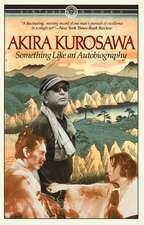 Something Like an AutobiographyAkira KurosawaPreț: 86.14 lei
 -
 The Dehumanization of Art and Other Essays on Art, Culture, and LiteratureJosé Ortega Y. GassetPreț: 90.47 lei
 -
 The Food of SpainClaudia Roden-16%Preț: 240.67 lei287.83 lei
 -
 Leading Women in Spanish Cinema and Television in the Long 1970sProfessor Sally Faulkner-32%Preț: 583.32 lei864.07 lei
 -
 -25%Preț: 170.68 lei229.10 lei
 -
 Sofia Coppola: The Complete Unofficial GuideChristina Newland-25%Preț: 82.85 lei110.02 lei
 -
 The Last DreamPedro AlmodóvarPreț: 71.60 lei
 -
 -8%Preț: 475.17 lei516.48 lei
 -
 Scene: A MemoirAbel Ferrara-19%Preț: 116.33 lei143.50 leiRecomandat
 -
 SpainDavid CohnPreț: 252.95 lei
 -
 Icons of Cinema: Baz LuhrmannEmily MaskellPreț: 100.14 lei
 -
 Women on the Verge of a Nervous BreakdownPeter William Evans-42%Preț: 64.87 lei111.77 lei
 -
 Memories of Underdevelopment: Memorias del SubdesarrolloDarlene J. Sadlier-42%Preț: 64.46 lei112.09 lei
 -
 When a Woman Ascends the Stairs (Onna ga kaidan o agaru toki)Professor Catherine Russell-33%Preț: 65.09 lei97.45 lei
 -
 Pan's LabyrinthMar Diestro-Dópido-33%Preț: 65.48 lei97.51 lei
 -
 Contemporary Directors’ CinemaJacob Leigh-26%Preț: 210.86 lei283.05 lei
 -
 Spanish Punk: Screaming for Democracy in a Postdictatorial StateDavid Vila Dieguez-21%Preț: 132.31 lei166.79 lei
Cuprins
Introduction:
Almodovar's
cinema
in
context.-
Chapter
one:
The
aesthetics
of
bad
taste.-
Chapter
two:
Memory,
identity,
and
style.-
Chapter
three:
Figures
of
desire:
the
melodrama
of
longing.-
Chapter
four:
The
body
and
the
nation.-
Conclusion:
Bad
bodies,
good
hearts.
Notă biografică
Ernesto
R.
Acevedo-Munoz
is
Associate
Professor
of
Film
Studies,
Comparative
Literature
&
Humanities,
University
of
Colorado,
Boulder.
Descriere
Descriere de la o altă ediție sau format:
The book provides a detailed introduction to the essential themes, style, and aesthetics of Pedro Almodovar's films, put in the context of Spain's profound cultural transitions since 1980. With precise and close analysis, the book covers the major concerns of the most successful of all Spanish film directors and makes direct, clear connections to the logic of Almodovar's aesthetic and stylistic choices. By spanning the entirety of Pedro Almodovar's feature making career, the book emphasizes the director's sensibility to make the outrageous believable and to always give a unique spin to the issues Spanish history, culture and identity. A detailed and comprehensive approach to all of Pedro Almodovar's feature films from the outrageous 1980 'Pepi, Luci, Bom and Other Girls on the Heap' to the sophisticated 2004 'Bad Education', this book provides more than an introduction an intimate look at the topics, style, aesthetics and cultural sensibilities of Spain's most distinguished and celebrated film director since Luis Bunuel. By focusing on a film-by-film, and often scene-by-scene analysis, this book offers a meticulous interpretation of characters, situations, allusions and cultural intersections, as well as emphasizing the meaning and weight of cultural, historical and social contexts. The book traces the evolution of Almodovar's career, from the perspective of aesthetic, narrative and stylistic concerns and places those changes in the logical context of Spain's historical trajectory from the end of Franco's dictatorship to the transition to democracy, exploring Almodovar's interest on issues of identity, sexuality, and nationalism.
The book provides a detailed introduction to the essential themes, style, and aesthetics of Pedro Almodovar's films, put in the context of Spain's profound cultural transitions since 1980. With precise and close analysis, the book covers the major concerns of the most successful of all Spanish film directors and makes direct, clear connections to the logic of Almodovar's aesthetic and stylistic choices. By spanning the entirety of Pedro Almodovar's feature making career, the book emphasizes the director's sensibility to make the outrageous believable and to always give a unique spin to the issues Spanish history, culture and identity. A detailed and comprehensive approach to all of Pedro Almodovar's feature films from the outrageous 1980 'Pepi, Luci, Bom and Other Girls on the Heap' to the sophisticated 2004 'Bad Education', this book provides more than an introduction an intimate look at the topics, style, aesthetics and cultural sensibilities of Spain's most distinguished and celebrated film director since Luis Bunuel. By focusing on a film-by-film, and often scene-by-scene analysis, this book offers a meticulous interpretation of characters, situations, allusions and cultural intersections, as well as emphasizing the meaning and weight of cultural, historical and social contexts. The book traces the evolution of Almodovar's career, from the perspective of aesthetic, narrative and stylistic concerns and places those changes in the logical context of Spain's historical trajectory from the end of Franco's dictatorship to the transition to democracy, exploring Almodovar's interest on issues of identity, sexuality, and nationalism.