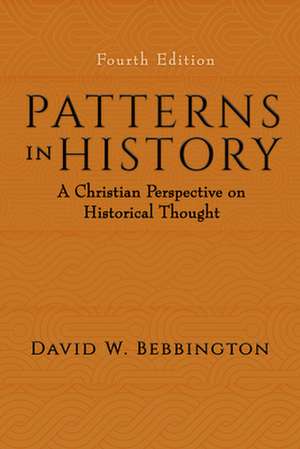
PATTERNS IN HIST 4/E
en Hardback – 31 oct 2018
Bebbington begins by asking "what is history?" He organizes his answer, and the book, around the interplay between history as the historical process (how it has been understood and interpreted in the past) and historiography (the account of the past written by historians). In six chapters Bebbington describes and evaluates each of what he identifies as the main schools of thought about the nature and meaning of the historical process: cyclical history, Christian history, the idea of progress, historicism, Marxist history, and postmodern history. Bebbington analyzes theories of historiography before returning to the question of meaning in history. He argues that Christianity offers scholarly, as well as religious, answers to questions and contradictions that abound in both areas.
By assessing how the Christian philosophy of history parallels, informs, and corrects secular theories, Bebbington suggests a chastened way forward for Christian historians. Even as they must acknowledge and wrestle with the complexities of the human story, Christian historians come to the task with an understanding of history as the realm of providence and purpose. Whether that conviction is implicit or explicit in the historian's writing, it is the distinctive element of faithful historical analysis.
Preț: 417.04 lei
Carte tipărită la comandă
Livrare economică 25 noiembrie-09 decembrie
Specificații
ISBN-10: 148130951X
Pagini: 245
Dimensiuni: 157 x 235 x 19 mm
Greutate: 0.53 kg
Ediția:00004
Editura: BAYLOR UNIV PR
V-ar putea interesa
-
 Baptists through the CenturiesDavid W. Bebbington-23%Preț: 455.80 lei591.95 lei
 -
 Preț: 439.83 lei
 -
 Preț: 366.42 lei
 -
 -23%Preț: 790.18 lei1026.20 lei
 -
 -6%Preț: 65.61 lei70.09 lei
Descriere
In this concise volume, historian David Bebbington offers a summary of various theories of history from ancient times down to the present. Patterns in History provides Christian students of history with a trusted guide in what Mark Noll has described as the best evangelical introduction to the history of history writing. The updated and expanded fourth edition contains a new chapter on postmodern history, making an already important book even more essential.
Bebbington begins by asking what is history? He organizes his answer, and the book, around the interplay between history as the historical process (how it has been understood and interpreted in the past) and historiography (the account of the past written by historians). In six chapters Bebbington describes and evaluates each of what he identifies as the main schools of thought about the nature and meaning of the historical process: cyclical history, Christian history, the idea of progress, historicism, Marxist history, and postmodern history. Bebbington analyzes theories of historiography before returning to the question of meaning in history. He argues that Christianity offers scholarly, as well as religious, answers to questions and contradictions that abound in both areas.
By assessing how the Christian philosophy of history parallels, informs, and corrects secular theories, Bebbington suggests a chastened way forward for Christian historians. Even as they must acknowledge and wrestle with the complexities of the human story, Christian historians come to the task with an understanding of history as the realm of providence and purpose. Whether that conviction is implicit or explicit in the historian's writing, it is the distinctive element of faithful historical analysis.