
Partition’s First Generation: Space, Place, and Identity in Muslim South Asia: Library of Islamic South Asia
Autor Amber H. Abbasen Limba Engleză Hardback – 26 noi 2020
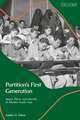
This new archive of oral history narratives from seventy former AMU students reveals histories of partition as yet unheard. In contrast to existing studies, these stories lead across the boundaries of India, Pakistan and Bangladesh. Partition in AMU is not defined by international borders and migrations but by alienation from the safety of familiar places. The book reframes Partition to draw attention to the ways individuals experienced ongoing changes associated with "partitioning"-the process through which familiar spaces and places became strange and sometimes threatening-and they highlight specific, never-before-studied sites of disturbance distant from the borders.



Preț: 657.08 lei
Preț vechi: 974.32 lei
-33%
Puncte Express: 986
Carte tipărită la comandă
Livrare economică 02-16 decembrie
Livrare prin curier în România Termenul estimat este afișat lângă disponibilitate.
Transport gratuit pentru acest produs Plată online sau ramburs, în funcție de opțiunile comenzii.
Retur gratuit în 14 zile Comandă securizată și suport în română.
Specificații
ISBN-13: 9781350142664
ISBN-10: 1350142662
Pagini: 256
Ilustrații: 4 bw illus
Dimensiuni: 156 x 234 x 23 mm
Greutate: 0.53 kg
Editura: Bloomsbury Publishing
Colecția I.B.Tauris
Seria Library of Islamic South Asia
Locul publicării:London, United Kingdom
ISBN-10: 1350142662
Pagini: 256
Ilustrații: 4 bw illus
Dimensiuni: 156 x 234 x 23 mm
Greutate: 0.53 kg
Editura: Bloomsbury Publishing
Colecția I.B.Tauris
Seria Library of Islamic South Asia
Locul publicării:London, United Kingdom
Cuprins
Introduction
Chapter 1. Defining the Aligarh Muslim University
Chapter 2. Self-Realization and the Nation: Aligarh Student Activism
Chapter 3. Pushing the Boundaries: Partition in Aligarh
Chapter 4. The Pakistan Question After Partition: Pakistan and India
Chapter 5. The Pakistan Question After Partition: Pakistan and Bangladesh
Conclusion
Chapter 1. Defining the Aligarh Muslim University
Chapter 2. Self-Realization and the Nation: Aligarh Student Activism
Chapter 3. Pushing the Boundaries: Partition in Aligarh
Chapter 4. The Pakistan Question After Partition: Pakistan and India
Chapter 5. The Pakistan Question After Partition: Pakistan and Bangladesh
Conclusion
Recenzii
Amber Abbas's book fulfills Sir Syed mission of connecting individuals and communities. The ethnography of the university is rich in details and captures the emotions of the people who have studied and lived there. A story of the lived history of AMU is a very significant contribution. Her book is a bridge for the alum of AMU to find their friends and colleagues in the divided nations of Pakistan, India, and Bangladesh and feel a sense of wholeness. Abbas's book shines a humanistic light, which deserves attention for national and human wellbeing.
By setting the 'partitioning' of India as a process over time and space, this perceptive and sensitive study allows us to break away from standard narratives and see history from multiple perspectives. Amber H. Abbas tracks a cohort of students rooted in the ethos of Aligarh Muslim University from the end of British rule to its subsequent place in independent India -- those who stayed and those who moved across new national borders, the role Aligarh played in their lives, and the revisions of experience and memory within the ongoing histories of India, Pakistan and Bangladesh.
By setting the 'partitioning' of India as a process over time and space, this perceptive and sensitive study allows us to break away from standard narratives and see history from multiple perspectives. Amber H. Abbas tracks a cohort of students rooted in the ethos of Aligarh Muslim University from the end of British rule to its subsequent place in independent India -- those who stayed and those who moved across new national borders, the role Aligarh played in their lives, and the revisions of experience and memory within the ongoing histories of India, Pakistan and Bangladesh.