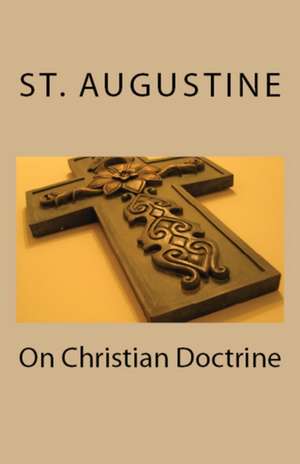
On Christian Doctrine
Autor St Augustineen Limba Engleză Paperback – 4 aug 2018
Ceea ce diferențiază On Christian Doctrine de alte tratate teologice ale perioadei patristice este caracterul său de manual metodologic aplicat. Considerăm că forța acestui volum rezidă în abordarea sistematică a procesului de învățare: nu este doar o expunere de dogme, ci un ghid de tehnici exegetice menit să disciplineze mintea cititorului în raport cu textul sacru. Subliniem faptul că St Augustine nu se limitează la teologie pură, ci împrumută instrumente din educația clasică, transformând retorica și semiotica în servitori ai credinței.
Structura lucrării urmează o progresie logică riguroasă. Primele trei cărți se concentrează pe faza de receptare, oferind „ajutoare pentru interpretare”. Aici, autorul analizează minuțios distincția dintre lucruri și semne, oferind soluții practice pentru decriptarea limbajului figurat și a ambiguităților lingvistice. Cartea a patra marchează trecerea spre comunicare, oferind direcții clare despre cum trebuie transmise adevărurile descoperite. Profesorii care folosesc Teaching Christianity vor aprecia în această ediție de la Lighthouse Publishing rigoarea cu care sunt păstrate nuanțele originale ale teoriei semnelor, oferind un context mai amplu decât versiunile simplificate. De asemenea, spre deosebire de abordarea din Signs and Meanings, care analizează conceptele din exterior, textul lui Augustin oferă o experiență de imersiune directă în metodologia de lucru a unuia dintre cei mai influenți gânditori ai creștinismului.
Notăm cu interes modul în care Augustin își revizuiește propriile erori în introducere, un exercițiu de onestitate intelectuală care conferă textului o notă de actualitate. Stilul este unul didactic, dar dens, solicitând o atenție sporită asupra definițiilor și distincțiilor logice, fiind o lectură esențială pentru înțelegerea bazelor hermeneuticii occidentale.
Preț: 80.72 lei
Carte disponibilă
Livrare economică 02-16 noiembrie
Specificații
ISBN-10: 1643730517
Pagini: 230
Dimensiuni: 140 x 216 x 13 mm
Greutate: 0.3 kg
Editura: Lighthouse Publishing
V-ar putea interesa
-
 Karl Rahner and Ignatian SpiritualityPhilip Endean SJ-29%Preț: 490.69 lei686.61 lei
 -
 Someday HeavenLarry LibbyPreț: 108.82 lei
 -
 Human BeingWalter WinkPreț: 274.91 lei
 -
 Cross in Our Context: Critical Readings from Contemporary WomenDouglas Hall HallPreț: 203.88 lei
 -
 Is Jesus the Only Savior?James R. EdwardsPreț: 148.30 lei
 -
 He Shines in All That's FairRichard J. MouwPreț: 93.55 lei
 -
 Familiar StrangerMichael J. McclymondPreț: 135.92 lei
 -
 Saving PowerPeter M. SchmiechenPreț: 246.12 lei
 -
 Theology in a Global ContextHans SchwarzPreț: 291.13 lei
 -
 The Faith of the Christian ChurchTyron InbodyPreț: 230.71 lei
 -
 From Irenaeus to GrotiusOliver O'Donovan-8%Preț: 413.16 lei449.09 lei
 -
 The Child in Christian ThoughtMarcia J. BungePreț: 290.28 lei
 -
 Practicing TheologyMiroslav VolfPreț: 202.33 lei
 -
 Preț: 357.06 lei
 -
 Holy SaturdayPhyllis ZaganoPreț: 161.57 lei
De ce să citești această carte
Recomandăm acest volum studenților la teologie și cercetătorilor care doresc să înțeleagă rădăcinile hermeneuticii biblice. Cititorul câștigă o metodologie clară de abordare a textelor dificile, învățând să facă distincția între interpretarea literală și cea spirituală. Este un instrument indispensabil pentru oricine dorește să comunice concepte complexe cu claritate și autoritate, beneficiind de rigoarea logică a lui Augustin.
Despre autor
St Augustine (354-430 d.Hr.), Episcop de Hippo, este una dintre figurile monumentale ale teologiei creștine și ale filozofiei occidentale. Autor al celebrelor „Confesiuni” și „Cetatea lui Dumnezeu”, el a modelat gândirea medievală și modernă prin sinteza dintre tradiția biblică și filozofia platonică. În On Christian Doctrine, Augustin își demonstrează geniul pedagogic, stabilind standardele pentru educația creștină și interpretarea Scripturilor pentru secolele ce au urmat, integrând cultura clasică în serviciul noii credințe.
Descriere
Cuprins
Preface, showing the utility of the treatise on Christian doctrine Book I. Containing a general view of the subjects treated in Holy Scripture Book II. Having completed his exposition of things, the author now proceeds to discuss the subject of signs. Book III. The author, having discussed in the preceding book the method of dealing with unknown signs, goes on in this third book to treat of ambiguous signs. Book IV. Passing to the second part of his work, that which treats of expression, the author premises that it is no part of his intention to write a treatise on the laws of rhetoric.
Notă biografică
St. Augustine is among the most important theologians in Christendom. His concept of the church as a spiritual world, distinct from the material world, exercised a profound influence on medieval philosophy, and his Confessions are among the world's most widely read autobiographies.