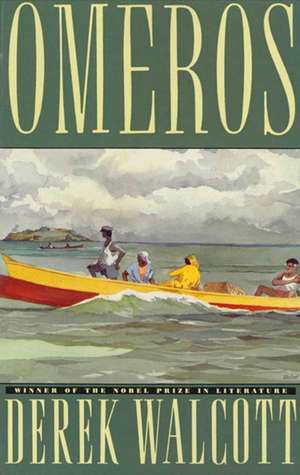
Omeros
Autor Derek Walcotten Limba Engleză Paperback – iun 1992
Remarcăm, în primele capitole din Omeros, modul în care Derek Walcott propune o serie de exerciții de recontextualizare a mitului: pescari din Sfânta Lucia devin figuri cvasi-homerice, iar trauma istorică este filtrată prin experiențe individuale de exil și suferință. Găsim în acest volum o structură narativă circulară complexă, unde epopeea nu se mai măsoară în victorii militare, ci în reziliența interioară în fața sclaviei și a dezrădăcinării. Autorul reușește să suprapună harta simbolică a Antichității peste geografia Caraibelor, creând un dialog între istoria oficială și cea nescrisă a spiritului. În contextul operei sale, Omeros reprezintă punctul culminant al explorărilor începute în Selected Poems of Derek Walcott, unde poetul își șlefuia limbajul pentru a descrie identitatea postcolonială. Față de abordarea elegiacă din The Bounty, dedicată memoriei mamei sale, acest poem epic extinde cadrul analizei către o întreagă civilizație. Notăm că lucrarea este comparabilă cu The Odyssey (versiunea sa dramatică) în rigurozitate, dar actualizată pentru a reflecta tensiunile unei lumi fragmentate în micro-state, unde căutarea „acasă” nu mai este o întoarcere la o Ithacă stabilă, ci o reconciliere cu un trecut fracturat. Față de studiile critice precum Derek Walcott's Encounter with Homer, care analizează tehnicile de adaptare, textul sursă de față oferă experiența directă a unei limbi engleze care încorporează ritmuri și peisaje noi.
Preț: 115.61 lei
Carte disponibilă
Livrare economică 20 octombrie-03 noiembrie
Specificații
ISBN-10: 0374523509
Pagini: 336
Dimensiuni: 142 x 216 x 27 mm
Greutate: 0.44 kg
Ediția:Pbk.
Editura: Farrar, Straus and Giroux
V-ar putea interesa
-
 The Consolations of PhilosophyAlain de Botton-20%Preț: 73.89 lei92.00 lei
 -
 Homer Vol. II. Iliad (Books XIII-XXIV)D. B. Monro-26%Preț: 157.66 lei213.29 lei
 -
 Homer Vol. III. Odyssey (Books I-XII)D. B. Monro-26%Preț: 165.20 lei221.80 lei
 -
 Homer Vol. IV. Odyssey (Books XIII-XXIV)D. B. Monro-25%Preț: 165.03 lei221.51 lei
 -
 The Epic: A Very Short IntroductionAnthony Welch-20%Preț: 55.96 lei70.24 lei
 -
 You Must Be LaylaYassmin Abdel-Magied-27%Preț: 46.89 lei64.29 lei
 -
 Soul of the DeepNatasha Bowen-26%Preț: 52.18 lei70.88 lei
 -
 A History of England in 25 PoemsCatherine ClarkePreț: 190.32 lei
 -
 Is Shame Necessary?Jennifer JacquetPreț: 90.76 lei
 -
 White EgretsDerek WalcottPreț: 77.41 lei
 -
 Talking to My Daughter about the EconomyYanis VaroufakisPreț: 81.67 lei
 -
 MemorialAlice OswaldPreț: 80.31 lei
 -
 The Poetry of Derek Walcott 1948-2013Derek WalcottPreț: 146.52 lei
 -
 Preț: 231.05 lei
 -
 Preț: 231.44 lei
 -
 How to DieSenecaPreț: 108.74 lei
 -
 -26%Preț: 93.33 lei125.85 lei
 -
 HomegrownOmar El-KhairyPreț: 90.90 lei
 -
 The Bonfire PartySean O'BrienPreț: 90.49 lei
 -
 a grammar of the worldJeanne Benameur-22%Preț: 70.41 lei90.29 lei
 -
 The Epic of Cader IdrisSamatar Elmi-28%Preț: 50.15 lei69.92 lei
 -
 -25%Preț: 80.33 lei107.76 lei
 -
 AmnionStephanie Sy-QuiaPreț: 77.21 lei
 -
 The Empire of ForgettingJohn BurnsidePreț: 89.84 lei
 -
 Refusal of the ShadowKrzysztof FijalkowskiPreț: 147.72 lei
De ce să citești această carte
O lectură esențială pentru cei care doresc să înțeleagă cum marea poezie poate recupera istoriile pierdute ale popoarelor asuprite. Cititorul câștigă o perspectivă profundă asupra modului în care identitatea se construiește la intersecția dintre tradiția clasică europeană și experiența colonială. Este un poem monumental care transformă suferința exilului într-o formă de demnitate universală, fiind considerat de critici cea mai importantă realizare a lui Derek Walcott.
Despre autor
Sir Derek Walcott (1930–2017) a fost un poet și dramaturg din Sfânta Lucia, distins cu Premiul Nobel pentru Literatură în 1992. Recunoscut ca o voce centrală a literaturii caraibiene, Walcott a predat la universități prestigioase precum Alberta și Essex. Cariera sa de peste șase decenii a fost marcată de premii sonore, inclusiv un Obie Award pentru Dream on Monkey Mountain și Premiul T.S. Eliot pentru White Egrets. Opera sa se distinge prin sinteza dintre moștenirea culturală europeană și realitățile postcoloniale ale Indiilor de Vest.
Descriere scurtă
With circular narrative design, titled with the Greek name for Homer, Omeros simultaneously charts two currents of history: the visible history charted in events--the tribal losses of the American Indian, the tragedy of African enslavement--and the interior, unwritten epic fashioned from the suffering of the individual in exile.
"One of the great poems of our time." -John Lucas, New Statesman
Notă biografică
Descriere
Features a poem in five books, of circular narrative design, titled with the Greek name for Homer, this book charts two currents of history: the visible history charted in events - the tribal losses of the American Indian, the tragedy of African enslavement - and unwritten epic fashioned from the suffering of the individual in exile.