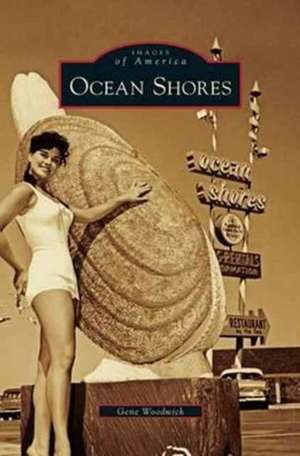
Ocean Shores
Autor Gene Woodwicken Limba Engleză Hardback
Preț: 174.74 lei
Puncte Express: 262
Carte tipărită la comandă
Livrare economică 20 noiembrie-04 decembrie
Livrare prin curier în România Termenul estimat este afișat lângă disponibilitate.
Transport gratuit de la 400.00 lei Plată online sau ramburs, în funcție de opțiunile comenzii.
Retur gratuit în 14 zile Comandă securizată și suport în română.
Specificații
ISBN-13: 9781531653231
ISBN-10: 1531653235
Pagini: 130
Dimensiuni: 170 x 244 x 10 mm
Greutate: 0.41 kg
ISBN-10: 1531653235
Pagini: 130
Dimensiuni: 170 x 244 x 10 mm
Greutate: 0.41 kg
Notă biografică
Gene Woodwick has collected the history of Ocean Shores for 50 years as a local journalist and a longtime property owner. A former board member for the Washington Museum Association, Polson Museum, and Aberdeen Museum of History, she is currently on the b
Descriere
Descriere de la o altă ediție sau format:
Ocean Shores was the newest city in Washington for nearly 40 years, but for centuries before it had been a place of permanent occupation and food gathering for Native American tribes and a place for sea otter hunters, pioneers, and settlers to reach the interior of the Olympic Peninsula. Before Ocean Shores, there was the dream of a town called Cedarville followed by the reality of Lone Tree with its post office and 200 residents. Point Brown Peninsula was a village of survival for Polynesian Kanakas, Finns living on the edge of society, migrant workers called Bluebills, and a Hooverville for depression-era families. After World War II, when developers first conceived of creating a "Venice of the West," many said their dream would never last. However, in 1970, Ocean Shores became a city and today has entered its 50th year of development.
Ocean Shores was the newest city in Washington for nearly 40 years, but for centuries before it had been a place of permanent occupation and food gathering for Native American tribes and a place for sea otter hunters, pioneers, and settlers to reach the interior of the Olympic Peninsula. Before Ocean Shores, there was the dream of a town called Cedarville followed by the reality of Lone Tree with its post office and 200 residents. Point Brown Peninsula was a village of survival for Polynesian Kanakas, Finns living on the edge of society, migrant workers called Bluebills, and a Hooverville for depression-era families. After World War II, when developers first conceived of creating a "Venice of the West," many said their dream would never last. However, in 1970, Ocean Shores became a city and today has entered its 50th year of development.