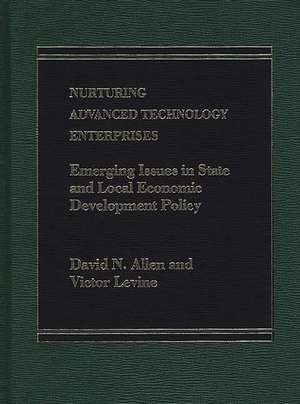
Nurturing Advanced Technology Enterprises
Autor David Allen, Victor Levineen Limba Engleză Hardback – 16 iul 1986
Preț: 490.79 lei
Preț vechi: 701.50 lei
-30%
Puncte Express: 736
Carte tipărită la comandă
Livrare economică 21 decembrie 26 - 04 ianuarie 27
Livrare prin curier în România Termenul estimat este afișat lângă disponibilitate.
Transport gratuit pentru acest produs Plată online sau ramburs, în funcție de opțiunile comenzii.
Retur gratuit în 14 zile Comandă securizată și suport în română.
Specificații
ISBN-13: 9780275921361
ISBN-10: 0275921360
Pagini: 286
Dimensiuni: 161 x 240 x 20 mm
Greutate: 0.55 kg
Editura: Praeger
ISBN-10: 0275921360
Pagini: 286
Dimensiuni: 161 x 240 x 20 mm
Greutate: 0.55 kg
Editura: Praeger
V-ar putea interesa
-
 -22%Preț: 301.00 lei388.11 lei
-
 Sustainable Global OutsourcingRon BabinPreț: 404.85 lei
-
 -15%Preț: 672.01 lei790.60 lei
-
 How to Start Your Own Business for EntrepreneursRobert AshtonPreț: 123.39 lei
-
 -20%Preț: 119.09 lei149.39 lei
-
 How to Be HappyLiggy WebbPreț: 161.07 lei
-
 Get Productive!Magdalena Bak-MaierPreț: 122.60 lei
-
 Advanced Outsourcing PracticeLeslie P Willcocks-15%Preț: 674.60 lei793.65 lei
-
 Managing Change in IT OutsourcingAlbert Plugge-15%Preț: 667.72 lei785.55 lei
-
 New Perspectives on Industrial OrganizationVictor J. Tremblay-15%Preț: 699.43 lei822.87 lei
-
 The Big Enough CompanyAdelaide LancasterPreț: 120.77 lei
-
 -23%Preț: 83.57 lei108.88 lei
-
 -26%Preț: 501.11 lei675.22 lei
Descriere
With the rise of advanced technology firms, government's role in nurturing business may be changing. Based on a survey of 450 managers of advanced technology firms in Pennsylvania, this book describes how the private and public sectors can work together to improve the economic climate of a region. Nurturing Advanced Technology Enterprises is the only book to offer in-depth and comprehensive analysis of all aspects of advanced technology development. It encompasses job creation and training, location decisions, industry-university interactions, and more. In addition, the book draws from the public policy and economics literature to provide a theoretical perspective on this new planning issue. Finally, it offers two case studies that illustrate how the partnership can work.