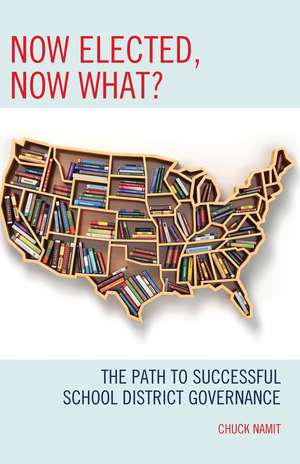
Now Elected, Now What?: The Path to Successful School District Governance
Autor Chuck Namiten Limba Engleză Hardback – 8 noi 2017
Preț: 420.86 lei
Preț vechi: 457.45 lei
-8%
Puncte Express: 631
Carte tipărită la comandă
Livrare economică 08-22 decembrie
Livrare prin curier în România Termenul estimat este afișat lângă disponibilitate.
Transport gratuit pentru acest produs Plată online sau ramburs, în funcție de opțiunile comenzii.
Retur gratuit în 14 zile Comandă securizată și suport în română.
Specificații
ISBN-13: 9781475838879
ISBN-10: 1475838875
Pagini: 228
Dimensiuni: 159 x 237 x 21 mm
Greutate: 0.52 kg
Editura: Bloomsbury Publishing
Colecția Rowman & Littlefield
Locul publicării:New York, United States
ISBN-10: 1475838875
Pagini: 228
Dimensiuni: 159 x 237 x 21 mm
Greutate: 0.52 kg
Editura: Bloomsbury Publishing
Colecția Rowman & Littlefield
Locul publicării:New York, United States
Cuprins
Foreword
Preface
Acknowledgments
Introduction
Part 1: Survival Manual for a Board Member
Chapter 1: Traditional Governance System: Current Governance Method
Chapter 2: Alternative Governance Systems: Some New Methods in Governance Chapter 3: Turning to a New Governance Model: Values Governance® System
Chapter 4: Establishing Principles for Your Governance
Chapter 5: Mountain Peaks of Governance: Developing the Sky Bridge of Monitoring
Chapter 6: Board and CEO Leadership: Board Self-Assessment and Superintendent Evaluation
Chapter 7: Four Phases of School-Community Engagement Stages
Chapter 8: School Governance and District Leadership to Increase Student Achievement
Chapter 9: Establishing a Communication Style and Policy Control Status for Your Governance
Chapter 10: Energizing Community Engagement in Two-Way Governance
Chapter 11: The New Look of the Values Governance® System in an Organization
Part 2: Getting the Most Out of Your Board Service: A Field Manual for Board Members
Chapter 12: Traditional Governance System: Planning and Implementation Timelines
(Application-Opportunity A)
Chapter 13: Alternative Governance Systems: New Methods in Governance
(Application-Opportunity B)
Chapter 14: Moving to a New Governance Model: Universal Principles of Governance
(Chapter Application-Opportunity)
Step 1: Values Governance® System
Chapter 15: Case Study: Monitoring Process to Resolve Issues
(Application-Opportunity C)
Step 2: Values Governance® System
Chapter 16: Applications of Board Self-Assessment and Superintendent Evaluation
(Application-Opportunity D)
Step 3: Values Governance® System
Chapter 17: Checking and Charting Your School and Community Stages
(Application-Opportunity E)
Step 4: Values Governance® System
Chapter 18: Case Study: Leadership Implementing a Research-based Curriculum
(Application-Opportunity F)
Step 5: Values Governance® System
Chapter 19: Board Member Communication: Four Communication Styles
(Application-Opportunity G)
Step 6A: Values Governance® System
Chapter 20: Knowing Your Governance Style: Implications for Better School Governance
(Application-Opportunity H)
Step 6B: Values Governance® System
Chapter 21: High Performing Community Engagement Techniques
(Application-Opportunity I)
Step 7: Values Governance® System
Chapter 22: Turning to the Values Governance® System
(Application-Opportunity J)
Step 8: Values Governance® System
Conclusion
Endnotes
Glossary
About the Author: Chuck Namit
Index
Preface
Acknowledgments
Introduction
Part 1: Survival Manual for a Board Member
Chapter 1: Traditional Governance System: Current Governance Method
Chapter 2: Alternative Governance Systems: Some New Methods in Governance Chapter 3: Turning to a New Governance Model: Values Governance® System
Chapter 4: Establishing Principles for Your Governance
Chapter 5: Mountain Peaks of Governance: Developing the Sky Bridge of Monitoring
Chapter 6: Board and CEO Leadership: Board Self-Assessment and Superintendent Evaluation
Chapter 7: Four Phases of School-Community Engagement Stages
Chapter 8: School Governance and District Leadership to Increase Student Achievement
Chapter 9: Establishing a Communication Style and Policy Control Status for Your Governance
Chapter 10: Energizing Community Engagement in Two-Way Governance
Chapter 11: The New Look of the Values Governance® System in an Organization
Part 2: Getting the Most Out of Your Board Service: A Field Manual for Board Members
Chapter 12: Traditional Governance System: Planning and Implementation Timelines
(Application-Opportunity A)
Chapter 13: Alternative Governance Systems: New Methods in Governance
(Application-Opportunity B)
Chapter 14: Moving to a New Governance Model: Universal Principles of Governance
(Chapter Application-Opportunity)
Step 1: Values Governance® System
Chapter 15: Case Study: Monitoring Process to Resolve Issues
(Application-Opportunity C)
Step 2: Values Governance® System
Chapter 16: Applications of Board Self-Assessment and Superintendent Evaluation
(Application-Opportunity D)
Step 3: Values Governance® System
Chapter 17: Checking and Charting Your School and Community Stages
(Application-Opportunity E)
Step 4: Values Governance® System
Chapter 18: Case Study: Leadership Implementing a Research-based Curriculum
(Application-Opportunity F)
Step 5: Values Governance® System
Chapter 19: Board Member Communication: Four Communication Styles
(Application-Opportunity G)
Step 6A: Values Governance® System
Chapter 20: Knowing Your Governance Style: Implications for Better School Governance
(Application-Opportunity H)
Step 6B: Values Governance® System
Chapter 21: High Performing Community Engagement Techniques
(Application-Opportunity I)
Step 7: Values Governance® System
Chapter 22: Turning to the Values Governance® System
(Application-Opportunity J)
Step 8: Values Governance® System
Conclusion
Endnotes
Glossary
About the Author: Chuck Namit
Index
Recenzii
A 2001 Public Agenda survey of school administrators found that 69% of them felt that school board members micromanaged. Anecdotally, this continues as a problem today and likely explains much of our nation's excessive superintendent turnover. Farrell, Nayfack, Smith & Wohlstetter ("One Size Does Not Fit All") argue that school board micromanagement is seen as a contributing factor to the perceived failure of American education. Now Elected, Now What?: The Path to Successful School District Governance by Chuck Namit well describes the board's governance role in a manner that both new and veteran members will appreciate. This is a welcome resource to help board members better understand their role and value to our education system.
Chuck Namit has probably done as much or more research on school board governance than anyone else I know. Not only that, but he has taught it and lived it as a board trainer and as a school board director. All-in-all, Chuck Namit has developed a process that boards should consider if they are determined to improve achievement in their district. His work in this area will give them a solid foundation for improving the governance of the school district.Namit uses this book to describe various aspects of school governance and the latest thoughts regarding board decision-making and adds his contribution - Values Governance.
As a former University Professor of Educational Leadership I highly recommended Now Elected, Now What? The Path to Successful School District Governance.This publication provides valuable tools and an effective theoretical and hands-on practical foundation for any student who plans to work with non-profit organizations. This book may be appropriately utilized in many of the University level courses preparing graduates for both administrative and governance roles.
PowerFULL! An intense collection of practical and proven principles, tactics and strategies. Dive deep with any of the Values Governance elements, then advance enriched with a board warrior's wisdom. Not for the mild at heart. Dedicated to those pursuing a legacy of excellence.
We certainly did not have anything like this book when I was on the school board. It can help make board members real players in their districts and not just rubber stamps for the superintendent and administration. It makes being a board member a more challengingjob because it shows what really should be done-and how to do it.
Chuck Namit has probably done as much or more research on school board governance than anyone else I know. Not only that, but he has taught it and lived it as a board trainer and as a school board director. All-in-all, Chuck Namit has developed a process that boards should consider if they are determined to improve achievement in their district. His work in this area will give them a solid foundation for improving the governance of the school district.Namit uses this book to describe various aspects of school governance and the latest thoughts regarding board decision-making and adds his contribution - Values Governance.
As a former University Professor of Educational Leadership I highly recommended Now Elected, Now What? The Path to Successful School District Governance.This publication provides valuable tools and an effective theoretical and hands-on practical foundation for any student who plans to work with non-profit organizations. This book may be appropriately utilized in many of the University level courses preparing graduates for both administrative and governance roles.
PowerFULL! An intense collection of practical and proven principles, tactics and strategies. Dive deep with any of the Values Governance elements, then advance enriched with a board warrior's wisdom. Not for the mild at heart. Dedicated to those pursuing a legacy of excellence.
We certainly did not have anything like this book when I was on the school board. It can help make board members real players in their districts and not just rubber stamps for the superintendent and administration. It makes being a board member a more challengingjob because it shows what really should be done-and how to do it.