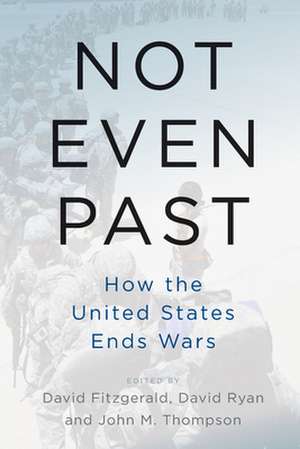
Not Even Past
Editat de David Fitzgerald, David Ryan, John M. Thompsonen Limba Engleză Hardback – mar 2020
Preț: 762.38 lei
Preț vechi: 990.11 lei
-23%
Puncte Express: 1144
Carte tipărită la comandă
Livrare economică 02-16 decembrie
Livrare prin curier în România Termenul estimat este afișat lângă disponibilitate.
Transport gratuit pentru acest produs Plată online sau ramburs, în funcție de opțiunile comenzii.
Retur gratuit în 14 zile Comandă securizată și suport în română.
Specificații
ISBN-13: 9781789202151
ISBN-10: 1789202159
Pagini: 288
Dimensiuni: 157 x 235 x 20 mm
Greutate: 0.57 kg
Editura: BERGHAHN BOOKS
ISBN-10: 1789202159
Pagini: 288
Dimensiuni: 157 x 235 x 20 mm
Greutate: 0.57 kg
Editura: BERGHAHN BOOKS
Notă biografică
David Fitzgerald is a Lecturer in the School of History, University College Cork, Ireland. His books include Learning to Forget: US Army Counterinsurgency Doctrine from Vietnam to Iraq (Stanford, 2013) and Obama, US Foreign Policy and the Dilemmas of Intervention (with David Ryan, Palgrave Macmillan, 2014).
Cuprins
Acknowledgments
Introduction
David Ryan and David Fitzgerald
Part I: Vietnam
Chapter 1. The Importance of Being Popular: Richard Nixon, Henry Kissinger, and Domestic Support for the Vietnam War
Sarah Thelen
Chapter 2. The Things They Carry: Vietnam and the Legacies of the American War
Edwin A. Martini
Chapter 3. "His Epitaph Is Also Ours": Robert McNamara, the Iraq and Afghanistan Wars, and the Vietnam War's Contested Usable Past
David Kieran
Chapter 4. After the Fall of Saigon: Strategic Implications of America's Involvement in Vietnam
Robert K. Brigham
Part II: Iraq and Afghanistan
Chapter 5. The Ironies of Overwhelming "Victory": Exits and the Dislocation of the Gulf War
David Ryan
Chapter 6. Failing to End: Obama and Iraq
David Fitzgerald and David Ryan
Chapter 7. A "Responsible End" to the Afghan War: The Politics and Pitfalls of Crafting "Success" Narratives
Jeffrey H. Michaels
Chapter 8. Flawed Afghanization: Underestimating and Misunderstanding the Taliban
Antonio Giustozzi
Part III: The Cultural and Strategic Costs of War in the Early Twenty-First Century
Chapter 9. Changing the Subject: How the United States Responds to Strategic Failure
Andrew J. Bacevich
Chapter 10. How Wars Do Not End: The Challenges for Twenty-First Century US Foreign Policy and Intervention
Scott Lucas
Chapter 11. Coming Home: Soldier Homecomings and the All-Volunteer Force in American Society and Culture
David Fitzgerald
Chapter 12. How the United States Ends Wars
Marilyn B. Young
Index
Introduction
David Ryan and David Fitzgerald
Part I: Vietnam
Chapter 1. The Importance of Being Popular: Richard Nixon, Henry Kissinger, and Domestic Support for the Vietnam War
Sarah Thelen
Chapter 2. The Things They Carry: Vietnam and the Legacies of the American War
Edwin A. Martini
Chapter 3. "His Epitaph Is Also Ours": Robert McNamara, the Iraq and Afghanistan Wars, and the Vietnam War's Contested Usable Past
David Kieran
Chapter 4. After the Fall of Saigon: Strategic Implications of America's Involvement in Vietnam
Robert K. Brigham
Part II: Iraq and Afghanistan
Chapter 5. The Ironies of Overwhelming "Victory": Exits and the Dislocation of the Gulf War
David Ryan
Chapter 6. Failing to End: Obama and Iraq
David Fitzgerald and David Ryan
Chapter 7. A "Responsible End" to the Afghan War: The Politics and Pitfalls of Crafting "Success" Narratives
Jeffrey H. Michaels
Chapter 8. Flawed Afghanization: Underestimating and Misunderstanding the Taliban
Antonio Giustozzi
Part III: The Cultural and Strategic Costs of War in the Early Twenty-First Century
Chapter 9. Changing the Subject: How the United States Responds to Strategic Failure
Andrew J. Bacevich
Chapter 10. How Wars Do Not End: The Challenges for Twenty-First Century US Foreign Policy and Intervention
Scott Lucas
Chapter 11. Coming Home: Soldier Homecomings and the All-Volunteer Force in American Society and Culture
David Fitzgerald
Chapter 12. How the United States Ends Wars
Marilyn B. Young
Index
Descriere
This volume brings together international experts on American history and foreign affairs to assess the cumulative impact of the United States' efforts to end wars. It offers essential perspectives on both the Cold War and post-9/11 eras and demonstrates just how high the stakes are as the US confronts the possibility of war without end.