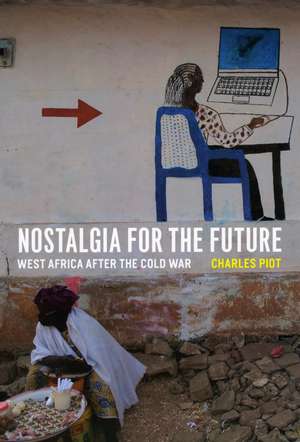
Nostalgia for the Future: West Africa after the Cold War
Autor Charles Pioten Limba Engleză Paperback – iul 2010
Nostalgia for the Future este o lucrare de referință academică, esențială pentru nivelurile de licență și master în antropologie culturală și studii africane. Apreciem modul în care Charles Piot reușește să cartografieze un peisaj politic și social radical transformat în Africa de Vest după încheierea Războiului Rece, folosind Togo ca studiu de caz central. Ne-a atras atenția analiza sa asupra „statului privatizat”, unde birocrația tradițională este înlocuită de influența ONG-urilor neoliberale și de o dorință cvasi-universală de emigrare, simbolizată prin obsesia națională pentru loteria vizelor americane.
Putem afirma că lucrarea extinde cadrul propus de Contemporary West African States de Donal Cruise O'Brien cu date noi din perioada post-1990, marcând tranziția de la teoriile dependenței și analizele marxiste către realitățile economiei de piață și ale noilor mișcări religioase. În timp ce volumul lui O'Brien se concentra pe maturitatea statelor, Charles Piot investighează fragilitatea acestora și ascensiunea Pentecostalismului sau a acuzațiilor de vrăjitorie ca răspunsuri la insecuritatea neoliberală.
Structura cărții urmărește o progresie logică de la „stările de urgență” și „sfârșitul istoriei” către strategii de ieșire și transformări culturale profunde. Autorul integrează observațiile de teren cu teoria critică, dialogând cu gânditori precum Mbembe sau Agamben pentru a explica cum biopolitica remodelează identitățile într-una dintre cele mai sărace regiuni ale lumii. Față de lucrarea sa ulterioară, The Fixer – Visa Lottery Chronicles, care se concentrează pe mecanismele specifice ale emigrării, acest volum oferă fundamentul teoretic și contextual pentru înțelegerea întregului ecosistem social vest-african.
Preț: 225.44 lei
Carte tipărită la comandă
Livrare economică 08-22 decembrie
Specificații
ISBN-10: 0226669653
Pagini: 216
Ilustrații: 16 halftones
Dimensiuni: 152 x 229 x 13 mm
Greutate: 0.31 kg
Editura: University of Chicago Press
Colecția University of Chicago Press
V-ar putea interesa
-
 Magical Criticism: The Recourse of Savage PhilosophyChristopher BrackenPreț: 261.04 lei
 -
 Culture Troubles: Politics and the Interpretation of MeaningPatrick ChabalPreț: 323.34 lei
 -
 Dawn in Arctic AlaskaDiamond JennessPreț: 155.40 lei
 -
 Remotely Global: Village Modernity in West AfricaCharles PiotPreț: 226.54 lei
 -
 The Feeling of History: Islam, Romanticism, and AndalusiaCharles HirschkindPreț: 229.27 lei
 -
 The Senses StillC. Nadia SeremetakisPreț: 325.76 lei
 -
 Preț: 243.00 lei
 -
 Darfur AllegoryRogaia Mustafa AbusharafPreț: 209.06 lei
 -
 Preț: 228.95 lei
 -
 HonorFrank Henderson StewartPreț: 207.74 lei
 -
 Watershed Politics and Climate Change in PeruAstrid B Stensrud-23%Preț: 608.67 lei790.48 lei
 -
 -8%Preț: 671.26 lei729.64 lei
 -
 Islam and Anarchism: Relationships and ResonancesMohamed Abdou-8%Preț: 674.74 lei733.41 lei
 -
 Preț: 219.59 lei
 -
 The FixerCharles PiotPreț: 223.63 lei
 -
 The Names of ThingsJohn Colman WoodPreț: 127.11 lei
 -
 Preț: 202.33 lei
 -
 Preț: 122.78 lei
 -
 Valeurs religieuses et developpement durable. Une approche díananlyse des institutions des Bamileke du CamerounCelestine Colette Fouellefak KanaPreț: 290.22 lei
De ce să citești această carte
Recomandăm această carte cercetătorilor și studenților interesați de transformările politice globale. Cititorul câștigă o înțelegere profundă a modului în care neoliberalismul a alterat structura socială în Africa, dincolo de clișeele postcoloniale. Este un instrument teoretic prețios care explică legătura dintre precaritatea economică, noile forme de spiritualitate și dorința de conectare globală prin tehnologie și migrație.
Despre autor
Charles Piot este profesor de antropologie culturală și studii africane și afro-americane la Duke University. Expertiza sa se concentrează pe istoria și cultura Africii de Vest, cu un interes deosebit pentru procesele de globalizare și biopolitică. În opera sa, care include titluri precum The Fixer – Visa Lottery Chronicles și Doing Development in West Africa, Piot explorează intersecția dintre politicile de stat, economiile informale și aspirațiile individuale ale cetățenilor africani în era post-Război Rece, fiind un nume de referință în antropologia contemporană.
Descriere scurtă
In a country where playing the U.S. Department of State’s green card lottery is a national pastime and the preponderance of cybercafés and Western Union branches signals a widespread desire to connect to the rest of the world, Nostalgia for the Future makes clear that the cultural and political terrain that underlies postcolonial theory has shifted. In order to map out this new terrain, Piot enters into critical dialogue with a host of important theorists, including Agamben, Hardt and Negri, Deleuze, and Mbembe. The result is a deft interweaving of rich observations of Togolese life with profound insights into the new, globalized world in which that life takes place.
Notă biografică
Cuprins
Introduction
One / States of Emergency
Two / The End of History
Three / Exit Strategy
Mise En Scène
Four / Charismatic Enchantments
Five / Arrested Development
Six / The Death of a Culture
Notes
Bibliography
Index
Recenzii
“This book is not merely bold and timely; it brims with imagination and insight. Charles Piot makes the vibrant cultural politics of contemporary West Africa speak directly to key questions of our late modern world. In his hands, tireless Togolese efforts to escape an inauspicious past yield new theoretical possibilities for a generation of social scientists, themselves nostalgic for an era of more confident understanding.”