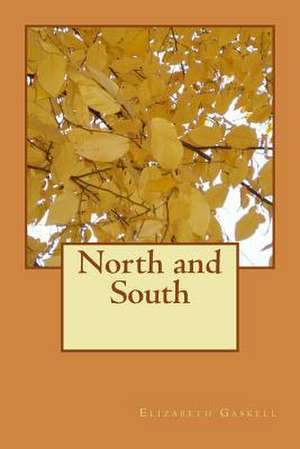
North and South
Autor Elizabeth Cleghorn Gaskellen Limba Engleză Paperback
Preț: 127.91 lei
Puncte Express: 192
Cartea nu mai face parte din oferta noastră
Livrare prin curier în România Termenul estimat este afișat lângă disponibilitate.
Transport gratuit de la 400.00 lei Plată online sau ramburs, în funcție de opțiunile comenzii.
Retur gratuit în 14 zile Comandă securizată și suport în română.
Specificații
ISBN-13: 9781984269294
ISBN-10: 1984269291
Pagini: 460
Dimensiuni: 152 x 229 x 24 mm
Greutate: 0.61 kg
ISBN-10: 1984269291
Pagini: 460
Dimensiuni: 152 x 229 x 24 mm
Greutate: 0.61 kg
V-ar putea interesa
-
 CLASSICS NORTH AND SOUTHElizabeth GaskellPreț: 28.01 lei
 -
 Wives and DaughtersElizabeth Gaskell-16%Preț: 62.00 lei73.58 lei
 -
 The Best of WodehouseP. G. WodehousePreț: 285.19 lei
 -
 North and SouthElizabeth GaskellPreț: 109.66 lei
 -
 The Making of the English Working ClassE. P. ThompsonPreț: 161.69 lei
 -
 CranfordElizabeth Cleghorn GaskellPreț: 43.05 lei
 -
 The Moorland CottageElizabeth Cleghorn GaskellPreț: 40.29 lei
 -
 Wives and DaughtersElizabeth Cleghorn GaskellPreț: 88.76 lei
 -
 Mary BartonElizabeth Cleghorn GaskellPreț: 58.31 lei
 -
 The Road to Wigan PierGeorge Orwell-40%Preț: 51.06 lei85.36 lei
 -
 CranfordElizabeth GaskellPreț: 43.46 lei
 -
 Mary BartonElizabeth Gaskell-15%Preț: 135.14 lei158.85 lei
 -
 Mary BartonElizabeth Cleghorn GaskellPreț: 128.50 lei
 -
 Wives and DaughtersElizabeth GaskellPreț: 39.82 lei
 -
 Ragged Trousered PhilanthropistsRobert TressellPreț: 28.01 lei
 -
 Mary BartonElizabeth GaskellPreț: 28.01 lei
 -
 Gaskell, E: CranfordElizabeth GaskellPreț: 50.43 lei
 -
 North and SouthElizabeth GaskellPreț: 58.22 lei
 -
 ShirleyCharlotte BrontëPreț: 38.92 lei
 -
 This SlaveryEthel Carnie HoldsworthPreț: 143.96 lei
 -
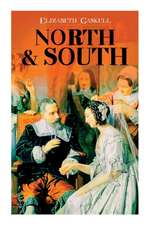 North & SouthElizabeth GaskellPreț: 116.46 lei
Notă biografică
Elizabeth Cleghorn Gaskell was an English novelist, short-story writer, and biographer whose fiction became one of the important achievements of Victorian literature. Born Elizabeth Stevenson in London in 1810 and raised largely in Knutsford, Cheshire, she drew on both provincial life and the industrial society of Manchester in works that combine social observation, moral intelligence, domestic detail, and sympathy for lives shaped by class, gender, labour, religion, and change. Her marriage to William Gaskell, a Unitarian minister in Manchester, placed her at the centre of a world where religious dissent, social reform, industrial conflict, and literary culture intersected.Gaskell's major works include Mary Barton, Ruth, North and South, Sylvia's Lovers, Wives and Daughters, and Cranford, as well as The Life of Charlotte Brontë, one of the landmark literary biographies of the nineteenth century. Her novels range from industrial fiction and social protest to domestic comedy, psychological study, and village portraiture. In Cranford, she turned her gift for close social observation toward a small community of women whose customs, economies, affections, and losses reveal both the comedy and dignity of ordinary life. Gaskell died in 1865, leaving a body of work central to Victorian fiction, women's writing, social realism, and classic English literature.
Textul de pe ultima copertă
From her home ground, her father's comfortably middle-class living in Hampshire and her aunt's establishment in Harley Street, Margaret is exiled to the ugly northern industrial town of Milton. Surprisingly, her social consciousness awakens. It is intensified by a relationship with the local mill-owner, Thornton, that combines passionate attraction with fierce opposition. The novel explores the exploitation of the working class, linking the plight of workers with that of women and probing the myth and reality of the 'north-south divide'.