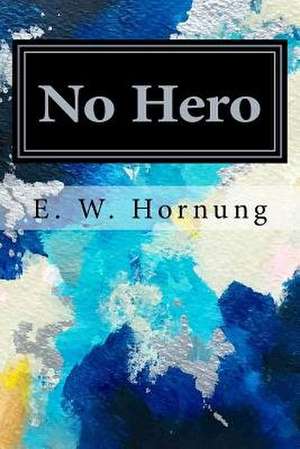
No Hero
Autor E. W. Hornungen Limba Engleză Paperback
Preț: 79.94 lei
Puncte Express: 120
Carte disponibilă
Livrare economică 16-30 noiembrie
Livrare prin curier în România Termenul estimat este afișat lângă disponibilitate.
Transport gratuit de la 400.00 lei Plată online sau ramburs, în funcție de opțiunile comenzii.
Retur gratuit în 14 zile Comandă securizată și suport în română.
Specificații
ISBN-13: 9781981886340
ISBN-10: 1981886346
Pagini: 144
Dimensiuni: 152 x 229 x 8 mm
Greutate: 0.2 kg
ISBN-10: 1981886346
Pagini: 144
Dimensiuni: 152 x 229 x 8 mm
Greutate: 0.2 kg
Notă biografică
On June 7, 1866, in Cleveland Villas in Marton, Middlesbrough, Ernest William Hornung was born. He was a poet and writer from England best known for his A. J. Raffles novels about a gentleman burglar in late 19th-century London. In 1898, he published "In the Chains of Crime," which introduced Bunny Manders and Raffles. In 1899, the collection of Raffles' short stories was published as a book for sale. In addition to his Raffles tales, Hornung was a prolific fiction author who produced a large number of works between 1890 and 1914. He wrote a lot when he was in France; his son, Oscar, was killed at the Second Battle of Ypres in July 1915. The strain of his wartime duties significantly deteriorated Hornung's already poor constitution. He and his wife traveled to the south of France in 1921 to help with his recovery. He became ill with influenza while traveling and passed away on March 22, 1921, at the age of 54. Though a large portion of Hornung's output has faded into oblivion, his Raffles tales have remained famous and served as the basis for countless film and television adaptations. In addition to criminality, Hornung's novels also tackled guilt, class, technological and medical advancements, and the uneven treatment of women in society.