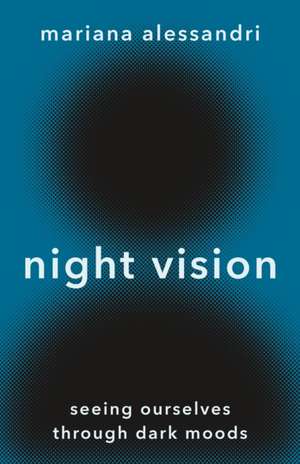
Night Vision
Autor Mariana Alessandrien Limba Engleză Hardback – 9 mai 2023
Relevanța lucrării Night Vision pentru studiile avansate de filozofie morală și psihologie fenomenologică rezidă în capacitatea sa de a deconstrui paradigma tradițională care prioritizează rațiunea în detrimentul afectului. Găsim în această carte un efort sistematic de a scoate din zona patologicului stări precum anxietatea, mânia sau durerea, oferind în schimb un cadru în care acestea devin instrumente de orientare existențială. Mariana Alessandri nu se limitează la o analiză teoretică aridă; ea propune o „ajustare a ochilor” la întunericul emoțional, argumentând că stigmatizarea acestor trăiri ne privează de resurse esențiale precum empatia și motivația.
Putem afirma că acest volum reprezintă o evoluție naturală a preocupărilor autoarei din The Religious Existentialists and the Redemption of Feeling, unde aceasta critica dependența filozofiei de rațiune ca singură cale către adevăr. În Night Vision, Alessandri extinde această critică, integrând gânditori existențialiști precum Unamuno sau Kierkegaard alături de voci contemporane ca bell hooks. Cititorii familiarizați cu The Dark Side: Philosophical Reflections on the “Negative Emotions” de Paola Giacomoni vor aprecia modul în care Alessandri mută accentul de la o istorie a conceptelor către o aplicabilitate practică, aproape terapeutică, a filozofiei în viața cotidiană. Spre deosebire de alte tratate care cataloghează emoțiile negative, această lucrare caută să le redea demnitatea pierdută, transformându-le din obstacole în punți de legătură cu ceilalți.
Preț: 158.92 lei
Carte disponibilă
Livrare economică 18 noiembrie-02 decembrie
Specificații
ISBN-10: 0691215456
Pagini: 216
Dimensiuni: 146 x 219 x 21 mm
Greutate: 0.45 kg
Editura: Princeton University Press
De ce să citești această carte
Această carte se adresează celor care caută o fundamentare intelectuală solidă pentru înțelegerea propriilor stări afective dificile. Cititorul câștigă o perspectivă eliberatoare asupra anxietății și tristeții, învățând să le privească nu ca pe defecte de caracter, ci ca pe componente vitale ale experienței umane. Este o recomandare esențială pentru studenții la filozofie și psihologie care doresc să exploreze limitele raționalismului în contextul sănătății emoționale.